Pittsfield Holds Second Master Plan Workshop
PITTSFIELD, Mass.— The city is about halfway through developing its new master plan, and held a second community workshop this past Thursday.
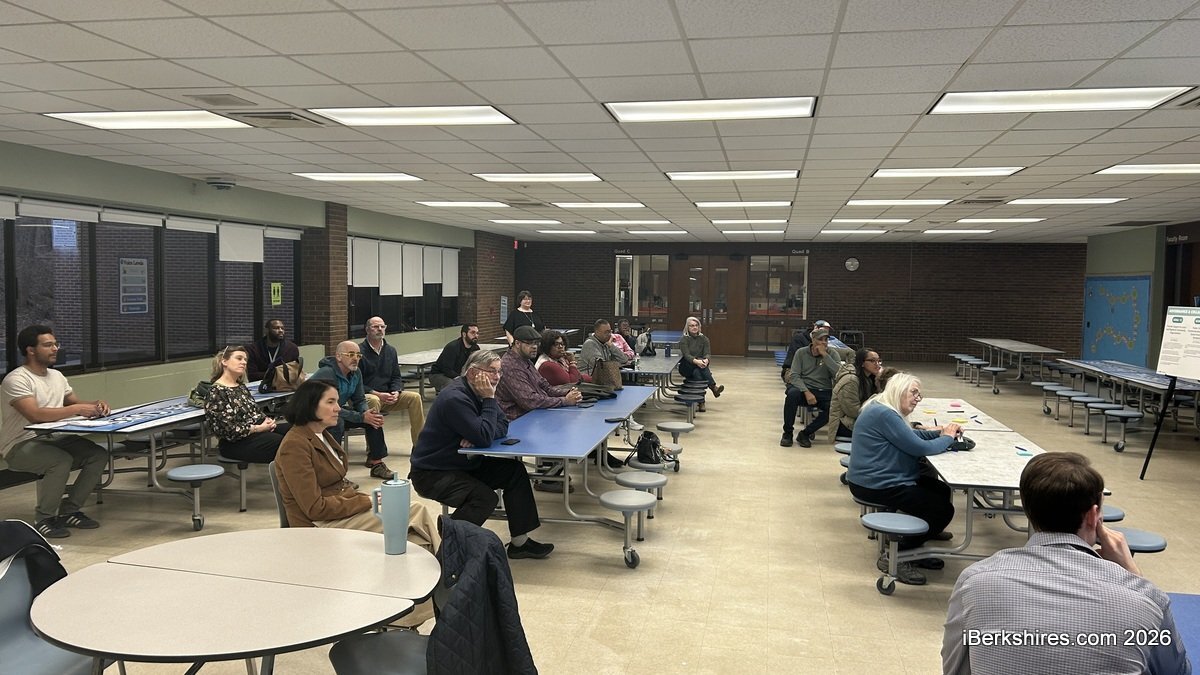
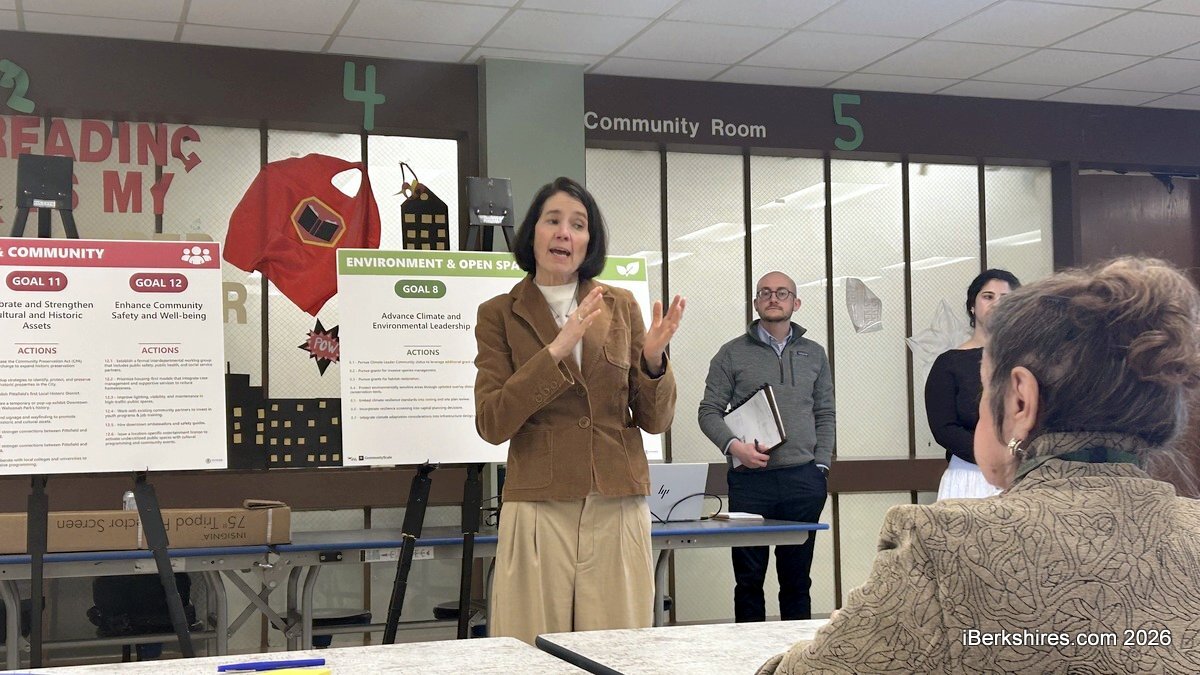
"Basically, we're talking to people from Pittsfield and trying to figure out, among a broad sector of issues that affect us, what is our goal and vision for the next 10 years, where we want Pittsfield to be in 10 years, and what changes do we want to see?" Director of Community Development Justine Dodds explained to about 20 community members and city staff at Conte Community School.
"That will be broken down into some goals and objectives and then some measurable action items that we can all take as a community to move that forward."
The Pittsfield Master Plan is the policy guide for future physical development, covering land use, infrastructure, sustainability, and more. The plan was last updated in 2009, and Pittsfield has engaged the VHB engineering firm and CommunityScale consultants to bring it through 2036.
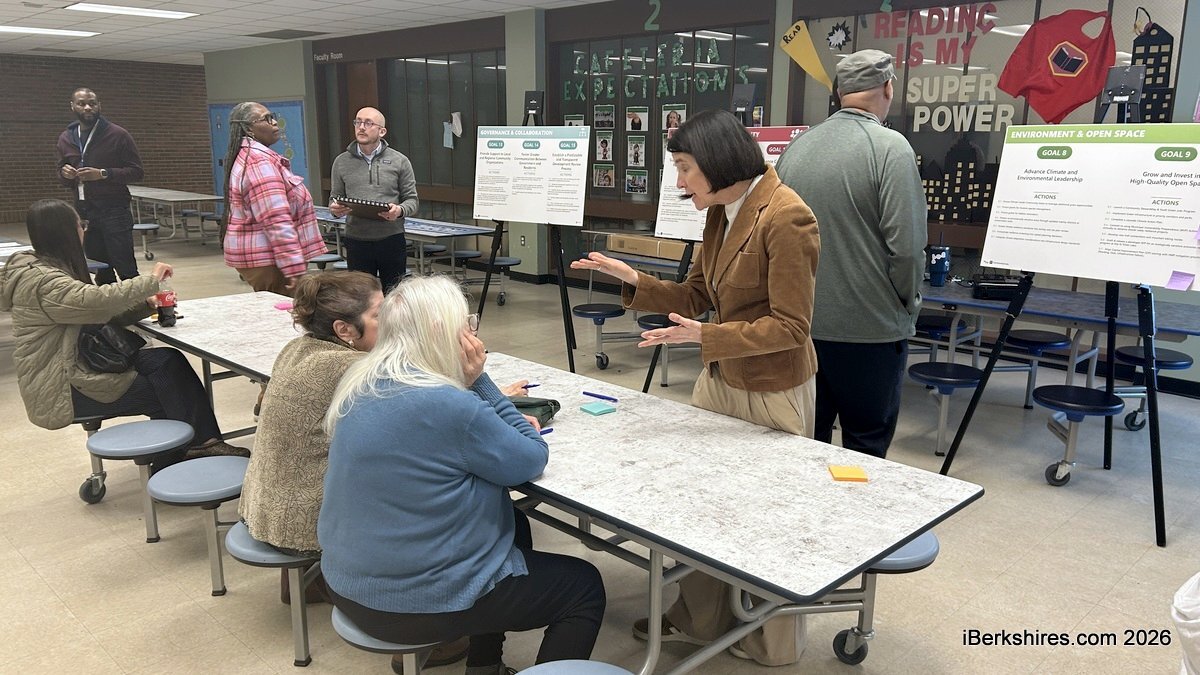
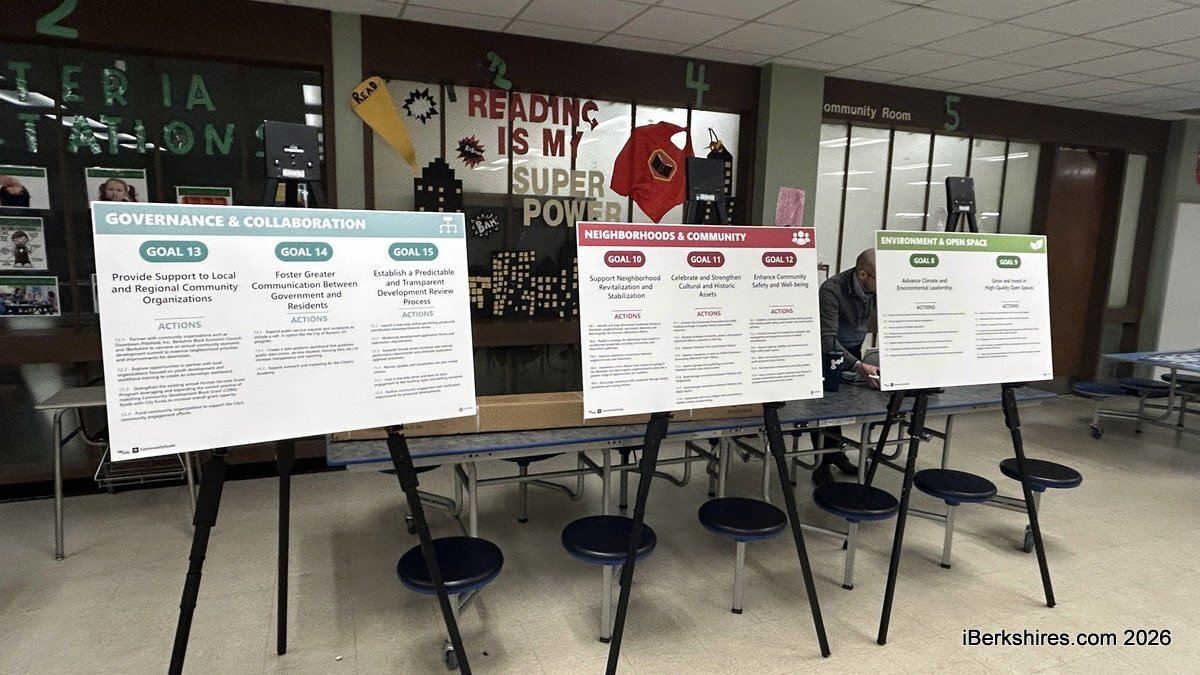
There have been two public listening sessions, a Master Plan Advisory Committee guiding the work, and small focus groups for each section. On poster boards, residents were able to see and mark the draft goals and actions under six themes: economic development, housing opportunities, transportation and infrastructure, environment and open space, neighborhoods and community, and governance and collaboration.
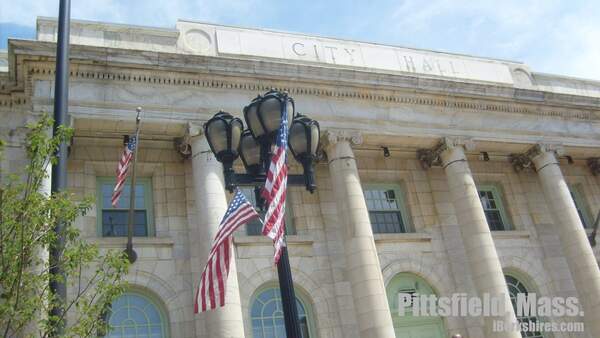
In November 2025, community members participated in a similar exercise at City Hall.
Transportation and infrastructure had several notes on them. Suggestions included using infrastructure to address the urban heat island effect, a light rail system, and continuing to implement Complete Streets standards for roadway construction projects.
"I want to ride my bike to my friend's house safely," one respondent wrote.
Under economic development, people suggested digital business infrastructure for the downtown, food hall opportunities, and nightlife opportunities.
Dodds pointed out that the master plan makes Pittsfield eligible for programs and must contain certain elements. The city has compiled a lot of input, she said, and Thursday's presentation is what they heard from the community so far.
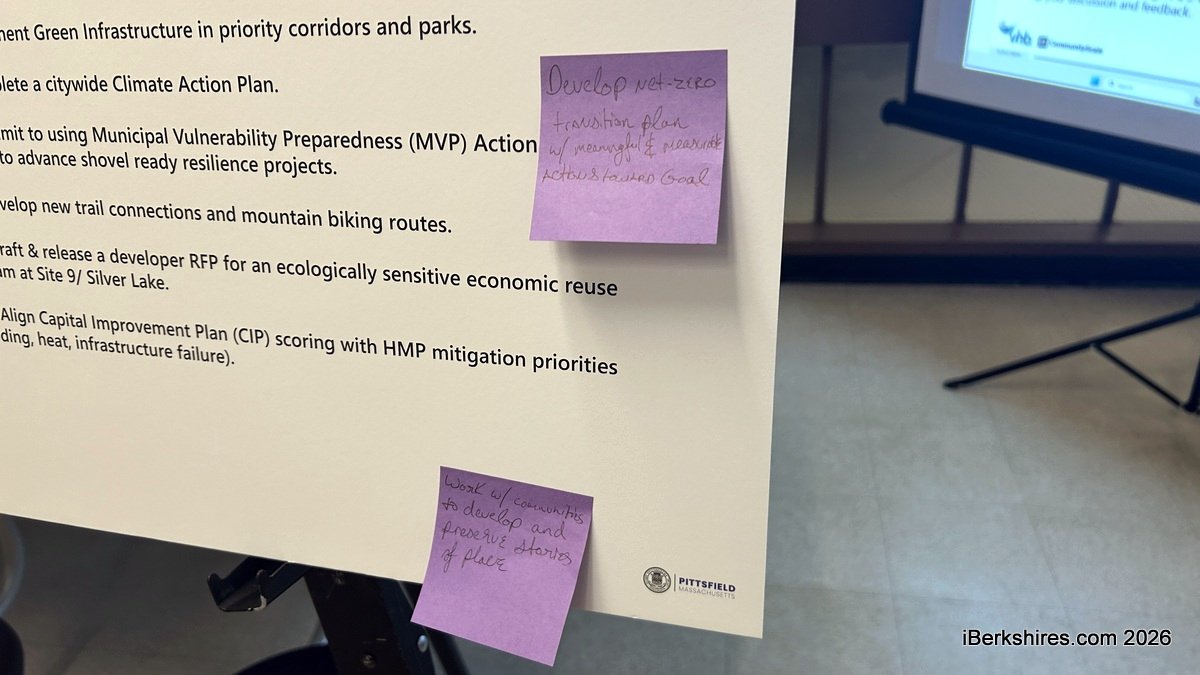
"These are movable. We want your input. If you think we're off track, let us know. If you think this is right, we also want you to provide some input," she said, pointing to the Post-its and pens on the tables for people to express their thoughts.
In a press release, the city referred to the plan as "Pathway to 2036," guiding Pittsfield's growth and change while preserving its unique character and reflecting shared community values.
Deputy project manager Julia Mintz, of VHB, explained that this is the first iteration of the goals and actions. A master plan will typically include a variety of topics and explore how they interact, and an assessment of baseline conditions, which the committee is in the process of reviewing in draft form.
"In thinking about the city's vision for the future, the plan will include higher-level goals and then more specific and actionable recommendations that can help the city to achieve its vision," Mintz explained.
"A master plan is not a binding regulatory document, so all of these initiatives that you see up front would go through the regular public process and would be carried out over a number of years. Master plans typically have a lifespan of about 10 years."
The project began in August 2025 and is expected to conclude in June. The team is a little over halfway through the planning process and is running it by the community before drafting the plan.
"So we're not quite at the end of the process yet, but following today, we'll be refining these goals and actions and thinking about implementation," Mintz said.
She pointed out that there is a lot of intersection between topics in the master plan, as what might be relevant for eliminating resilience also has to do with infrastructure and transportation, or governance and housing.
The team expects to begin documenting the final plan in May.
The Master Plan Advisory Committee:
- Elizabeth Herland, Community Development board member
- Simon Muil, parks commissioner
- Ricardo Morales, ublic works commissioner
- Tyler Shedd, City of Pittsfield engineer
- Michael Obasohan, City of Pittsfield chief diversity officer
- Marvin Purry, Westside Legends
- Rebecca Brien, Downtown Pittsfield Inc.
Tags: master planning,