Community Conversation for Opioid Response Funding
PITTSFIELD, Mass. — Massachusetts is expected to receive a billion dollars through settlements with various companies that have supplied opioids.
Sixty percent of these monies will go toward the Opioid Recovery and Remediation Fund to help manage state efforts with 40 percent going towards municipalities.
State public health officials have been holding listening sessions on how to best to use the settlement. Some of those ideas in Berkshire County were drug courts and mandatory treatment, recovery programs for mothers with small children, and lowering barriers for transitioning into treatment.
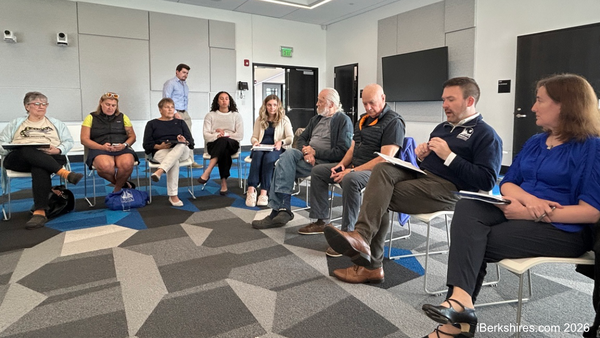
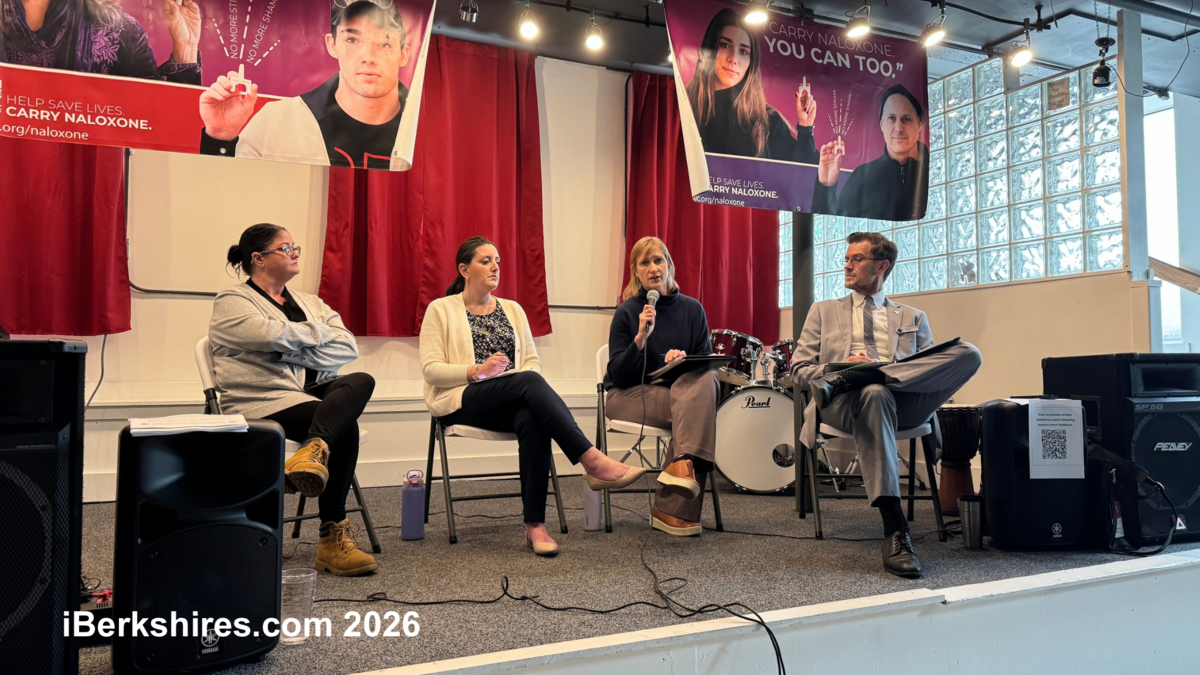
On March 12, epidemiologist Casey Leon and Director of Opioid Abatement Strategy and Implementation Julia Newhall from the Bureau of Substance Addiction Services, and Erika Hensel project manager for opioid response with the Attorney General's Office, attended a session at the Living in Recovery Center.
Andy Ottoson, who co-facilitates substance prevention and overdose reduction programs at the Berkshire Regional Planning Commissions through the Berkshire Overdose Addiction Prevention Collaboration, led the conversation.
In attendance were also District Attorney Timothy Shugrue, state Rep. Tricia Farley-Bouvier, Berkshire Athenaeum social worker Gabriela Leon, and city and recovery center representatives.
Shugrue said low-level drug cases should be diverted into treatment pretrial rather than prosecuted. He said many courts and counsels are not using the programs available or are unaware of diversion options. He asked if there could be training for judges to promote diversion as an option and to coordinate so that more people are diverted early, which could help reduce overdose risk.
"People don't know that we're not here as the prosecutor. You don't just prosecute. We are a preventive agency as well," Shugrue said. "So we want to get people into rehabilitation ... "It's a House of Correction. It's not a house of punishment. The idea is to get people back into the community, back working."
Hensel relayed that there is currently a bill in the Legislature, called an Act Relative To Treatment, Not Incarcerations, which would do what Shugrue asked. She said the Senate side changed a word so that the courts "may" propose treatment, instead of making it mandatory, for those coming in on petty drug charges. She urged those in the audience to call their representatives if they wanted it changed back.
Farley-Bouvier spoke about the programs for women who can continue to care for their infants.
Another gap is transportation to treatment and recovery centers, especially if some bus routes being eliminated in South County. It was also mentioned how there is limited bed space.
"It happens all the time. Like, people walk into the South County recovery center all the time, they're like, I need to get to detox, and we try to navigate that stuff. There's not enough beds, there's no transportation, you know," said an audience member with South County Recovery Center.
Many smaller organizations expressed how hard it is to get grant funding. They often have to write and administer grants themselves, but don't have the same pull as bigger organizations.
"So the challenge for us is that we don't have the visibility of some of the bigger organizations. We don't have the funding behind us, so we search for every dollar we can get to keep our services operating and challenging staff or grant writers," said Aaron Elzner, president of the the George B. Crane Memorial Center.
"The impact is direct as the money is provided. But how do we adequately communicate that? And I think we have the metrics to demonstrate that, but to put ourselves in position for that type of funding that will allow us to expand improvement program."
It was also brought up that many people are not ready to seek treatment so there is a need to "meet them where they are." There were suggestions for non-clinical, low-barrier work that helps people who don't seek a clinic or who keep using.
It was also suggested to that there are many stigmatizations that are happening that need to be fixed especially with those in shelters and libraries, etc, which are not substance use providers. It might be helpful to have "Addiction 101," a trauma-informed and de-escalation training. As well as funds to help develop stigma reduction campaigns.
"I would love to have training for my staff, because I've had to have conversations with one person over their reaction to somebody coming in," said an audience member. "You are going to make them feel welcome. What do I have to do to convince you that this is the time this person needs you to be nice, like they're walking in the door, we want them to walk in the door again tomorrow. So like an Addiction 101, for employees."