Pittsfield Council Revisiting DEI Office Rename
PITTSFIELD, Mass. — The conversation about the DEI office renaming that was halted by a charter objection will resume on Tuesday.
The City Council will discuss a request from Mayor Peter Marchetti to rename the Office of Diversity, Equity, and Inclusion.
It proposes to rename the DEI office to the Office of Equity, Access, and Opportunity and merge the Human Rights Commission and Affirmative Action Committee into an Equity, Access and Opportunity Commission.
The Ordinance and Rules Subcommittee supported the changes in August, and in September, Ward 2 Councilor Cameron Cunningham delayed the vote with a charter objection.
Pittsfield's City Code prohibits charter states that "if a single member present objects to the taking of the vote, the vote shall be postponed until the next meeting of the city council." It also stipulates that at least four members must object if it is an emergency measure.
Cunningham also submitted a petition, which was referred to O&R under Rule 27, to replace the DEI Office and the Human Rights Commission with an equity, access, and opportunity coordinator in the Department of Community Development, with formal complaints and Equal Employment Opportunity and Affirmative Action functions assigned to Human Resources.
At the last meeting, he spent more than an hour querying the mayor and chief diversity officer about functions and effectiveness of the department, wanting more quantitative data. Cunningham proposed an ordinance that he says keeps Pittsfield's commitment to equity, access, and opportunity, "refocuses it on measurable results for our residents, and delivers it at a fraction of the current cost."
Under this petition, the equity, access, and opportunity coordinator would be a $60,000 to $80,000 per year position.
The DEI Office's fiscal year 2027 budget was about $200,000 after cuts during budget season; $106,700 for the chief diversity officer and $58,000 for the administrative assistant. The coordinator would be appointed by the director of community development and the mayor.
"The current DEI appropriation is approximately $206,000 per year ($193,000 in salaries and $13,000 in expenses). The intended funding for the appropriate Coordinator salary is a $60,000-$80,000 line item within the Department of Community Development, with any additional funding to be requested by the Mayor through the ordinary budget process. That frees roughly $126,000 per year, before fringe benefits, for other resident services," Cunningham wrote.
"… I support the mission this office was created to serve. This proposal is about making sure the money we spend on it is effective and reaches the people it is meant to help, and that we can show it does."
He wants the coordinator to be a technical staff position charged with identifying and reducing barriers that limit residents' access to city services, programs, and opportunities and preparing city employees to carry out duties with this purpose.
"The Coordinator is not a department head, shall not supervise a separate department or budget, and shall report to the Director of Community Development," the proposed ordinance reads.
The equity, access, and opportunity coordinator would be expected to submit a needs assessment within the first year of work, develop annual work plans, apply for and administer grant funds, assess policies when requested, and provide trainings and consultations, among other responsibilities.
This change would also place all formal complaint handling, investigations, and EEO/AA compliance with the director of human resources; another member of the department could be designated for this role. The coordinator would be available to employees as an informal resource, required to refer any allegation of unlawful conduct to HR.
At the last council meeting, Cunningham unsuccessfully motioned to strike the transition of the DEI director's title and budget, and to remove mandatory staff trainings. His ordinance makes training offered by the coordinator voluntary, and bars them from investigating complaints, making findings, imposing discipline, or participating in hiring and other personnel decisions.
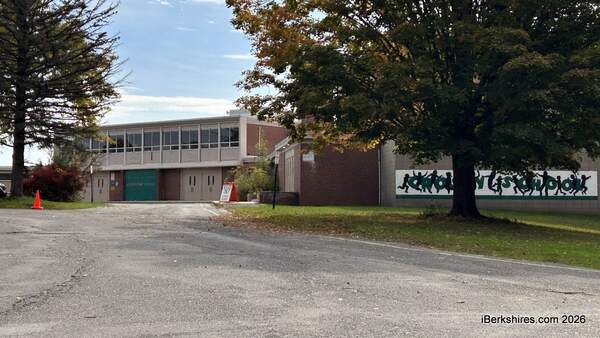
In July, the Ward 2 Councilor requested that Pittsfield explore turning the retired Morningside Community School into a police station. Marchetti reported that members of the administrative team recently toured Morningside to assess it for potential use as a police station and community space and agreed to pursue a feasibility study.
"The first step in this process is to issue a Request for Proposals (RFP) seeking a designer to examine the possibility of the building being converted to a new police station. This RFP will be issued on October 14th with proposals due back on November 4th. Once proposals are reviewed and a designer has been selected, community meetings will be scheduled. At these meetings, we will discuss the potential neighborhood impacts and gather input as to what the vision is for the community space," Marchetti wrote.
"Once public input has been gathered, the design team will work, over the next year, to create a proposed design. If a feasible design is presented and accepted, we will then need to determine what the funding structure is for this project."
Tags: DEI,