Pittsfield Man Creates Device to Clear Lakes of Algae Blooms
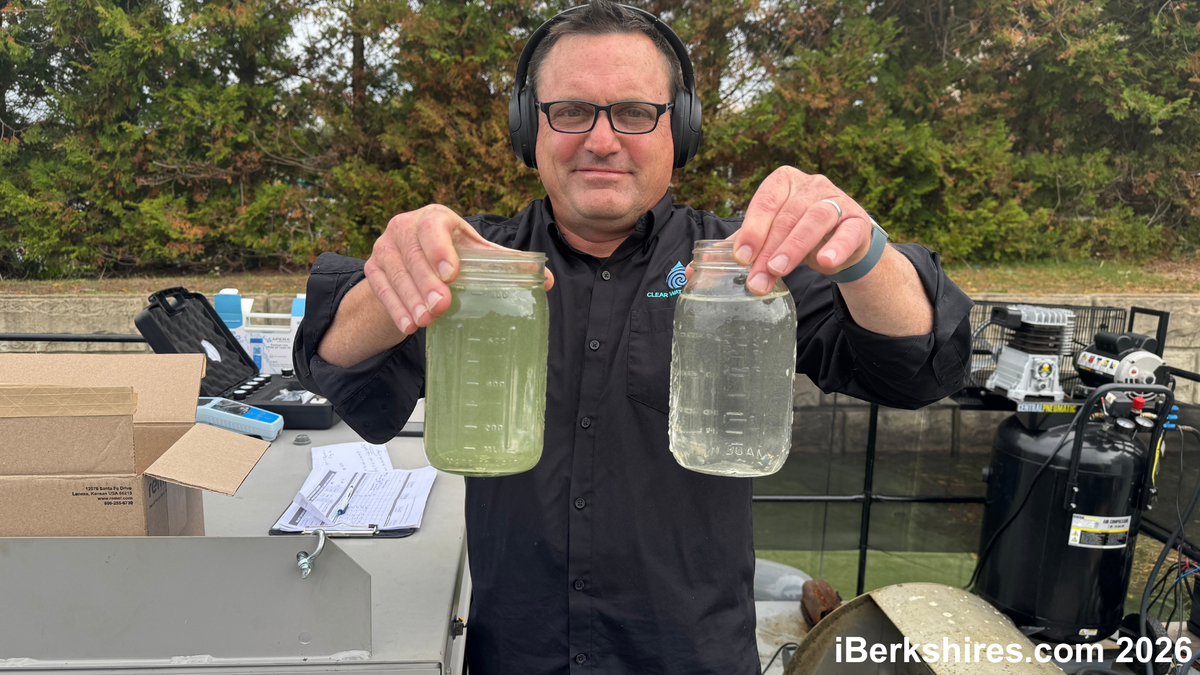
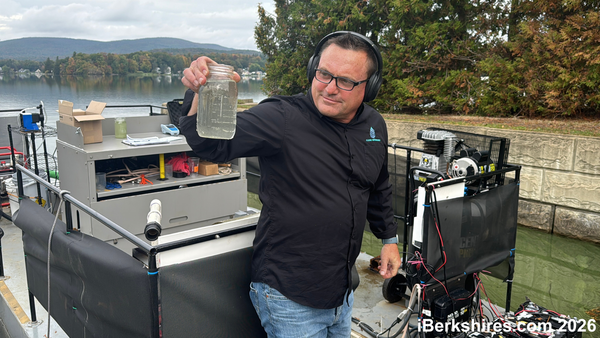
PITTSFIELD, Mass. — Marc Bellora has high hopes for a device he's created to treat lakes from harmful algae blooms.
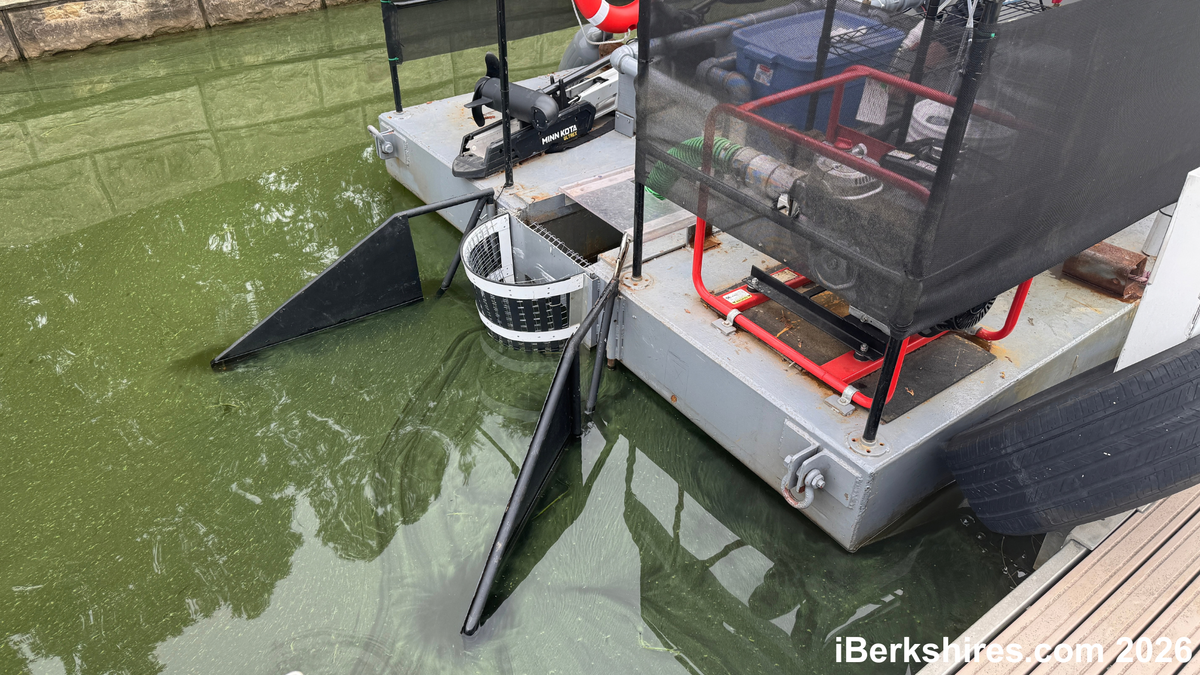
His patented water clarifier can physically remove captured material rather than letting the nutrient-rich material settle back into the lake, which occurs when herbicides are used.
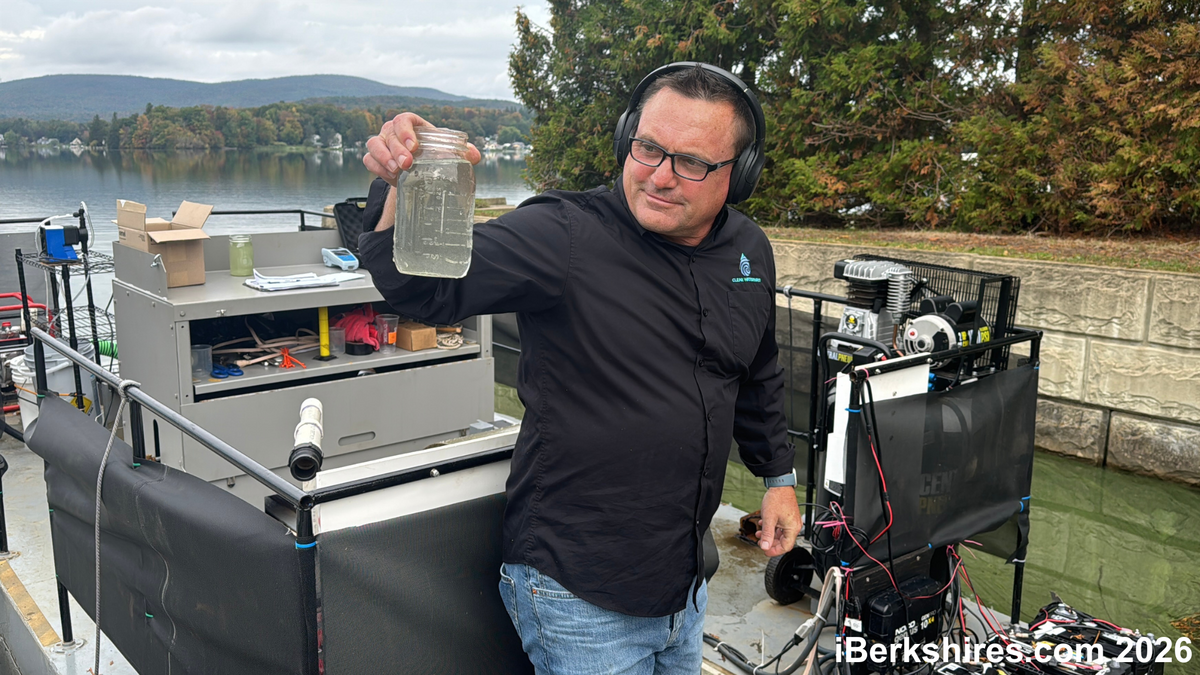
"It's a long-term lake management tool that can be used to reduce legacy nutrients in lakes and ponds over time," he explained. "We built the prototype, this is a prototype. It does approximately 65 to 70 gallons per minute. It's very environmentally friendly. Can be used with air only, or we can use a low-dose potable polyaluminum chloride (PACL) or chemical on board that can help improve results."
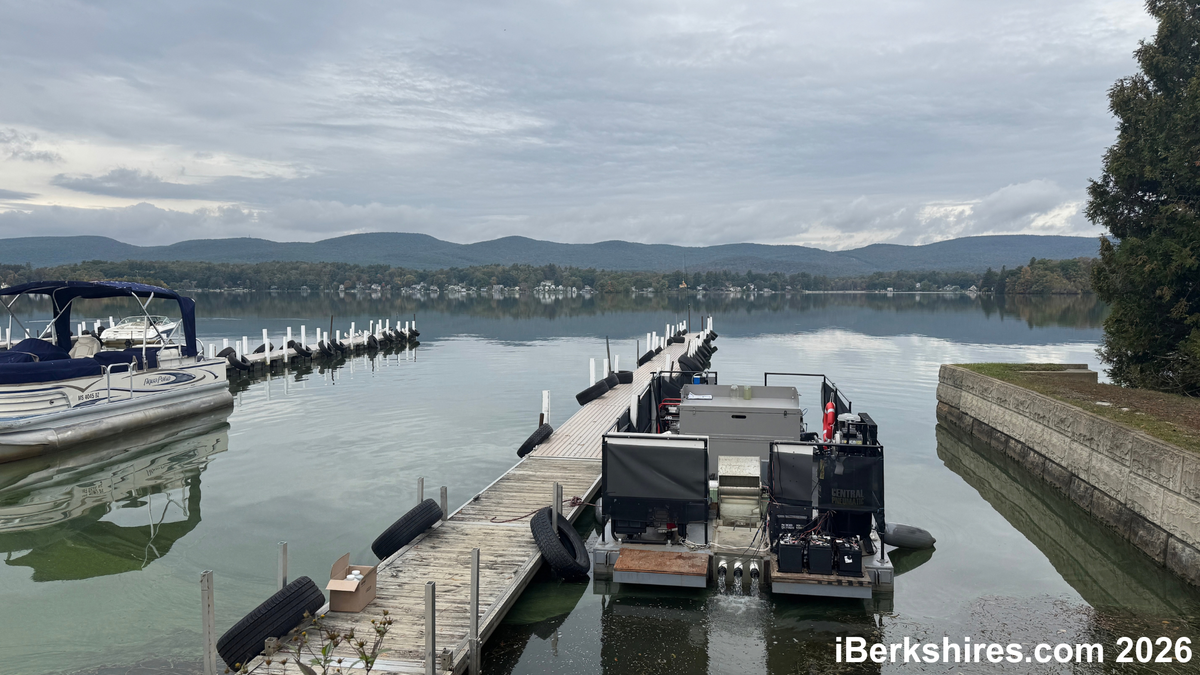
The water clarifier barge is based on well-proven technology for water treatment, he said. "It's a self-contained, portable, mobile unit that removes algae blooms, nitrogen, phosphorus, and the associated nitrogen and phosphorus within lakes."
Bellora founded Clear Waterways Group with business partner Mark Simon. They built a prototype mobile unit and are still working out the kinks. It's taken Bellora about five years to bring the project to fruition as he is also a full-time Realtor.
He says the repurposed barge they use has a device that uses air to filter the water to separate harmful bacteria or uses a chemical at low doses. They are testing both to see how well each does at cleaning the water.
"They would do the same thing here, except they would spray it, and it blocks all that stuff together," Bellora said of the use of herbicides. "But then it drops to the bottom. So now all the nutrients that are attached in that plot go to the bottom and contribute to the legacy nutrients only to fuel next year's bloom. Ours removes it."
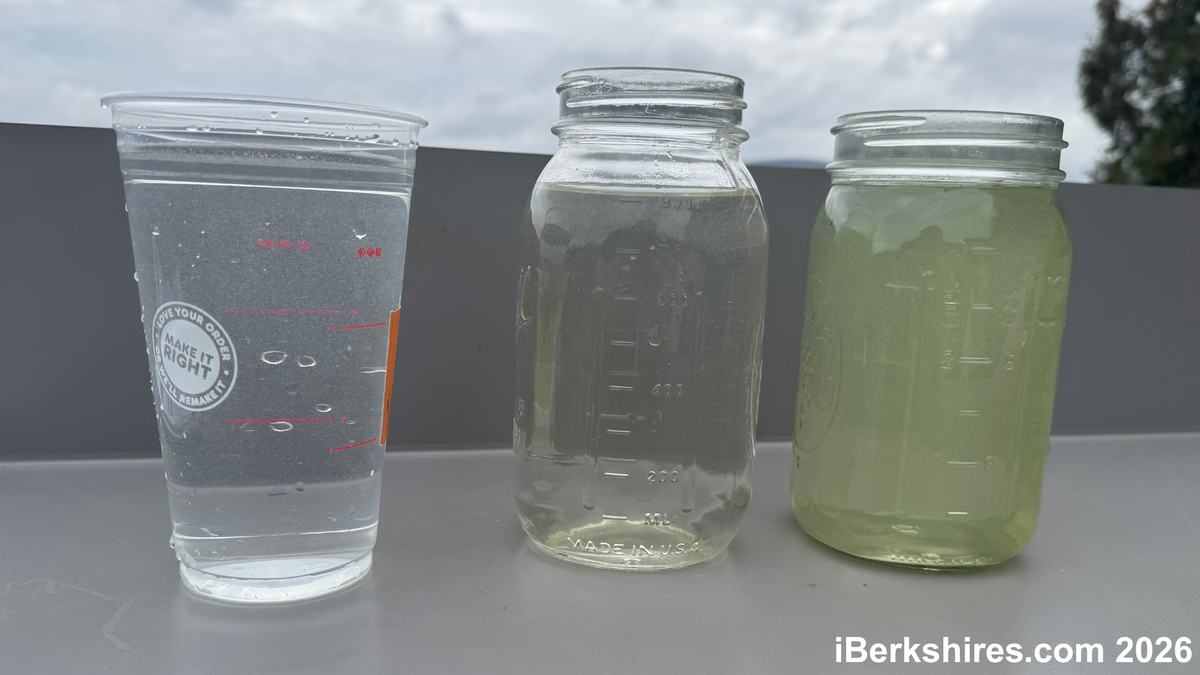
He said just using air alone has removed 70 to 90 percent of harmful algae where he has been operating on the south end of Pontoosuc Lake.
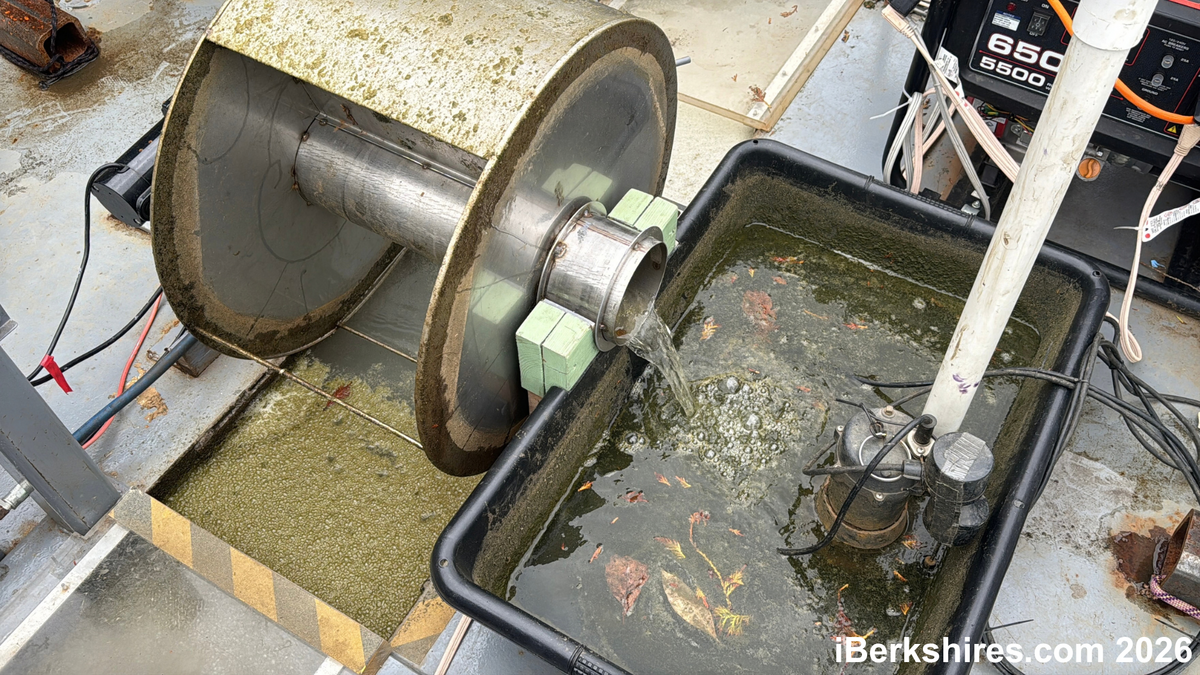
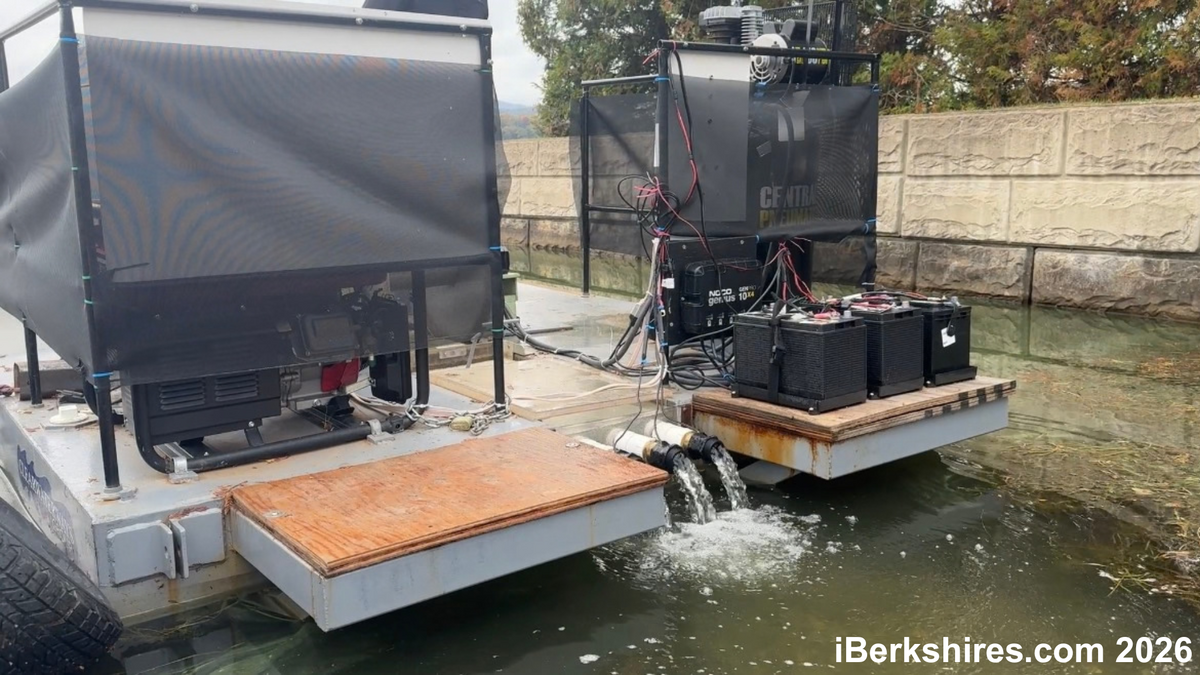
"Essentially, we take in the bad stuff, we take in the lake water. We separate the good stuff from the bad stuff. Clean water goes back into the lake, and the bad stuff can either be composted, or it can be taken to the wastewater treatment plant, which is what we're doing here," he said.
Bellora explained that tiny air bubbles attach to particles in the water, making them buoyant so they rise and can be removed. The unit can operate with air alone, or with a low dose of potable polyaluminum chloride.
PACL helps through flocculation: it gathers small particles into larger clumps that are easier for air bubbles to capture. He said this can help remove dissolved nutrients that air alone may not capture as effectively.
Bellora said he was inspired to build something like this after noticing the lakes he enjoys being shut down because of algae blooms.
The city issued a health advisory for Pontoosuc in August, warning residents not to swim or come in contact with the lake water because of an algae bloom. The cyanobacteria can cause skin irritations, vomiting and diarrhea and nerve or liver problems.
Bellora previously worked for a company that used traditional dissolved air flotation (DAF) systems to treat water. In that role, he traveled around the country to work at paper mills and food-processing plants.
That experience gave him a practical understanding of DAF, and while flying between jobs, he would see green ponds and wonder whether the technology could be adapted to treat lakes.
He also majored in environmental science and economics at Ithaca (N.Y.) College.
"I've been an outdoor person all my life. I enjoy the lakes. I enjoy the streams. I'm a fisherman, and I noticed about 10 years ago that harmful algae blooms and the quality of our water was going downhill," Bellora said. "And based on previous experience with dissolved air flotation technology, I knew that it was a powerful technology that was underutilized, and I felt that if we could put this on a mobile clarifier like we did, it could be used for many applications."
Bellora has been working with the city's parks manager James McGrath and Friends of Pontoosuc Lake for his testing of the lake. He hopes to reach out to others who may need their water managed of algae.
He has also been working with the Berkshire Innovation Center, which has helped him with access to resources such as 3D printers and professional contacts.
"People come here to the Berkshires to enjoy the lakes that we have, we have real gems, and unfortunately, over time, the legacy nutrients, the buildup, the environment can only handle so much, and when you see blooms like this, this is a result of things like leaking septics or just having excess nutrients running into the watershed, and so this is a beautiful technology that can be set up at tributaries," he said.
"We can address coves, marinas."
The next major goal for him is to line up pilot studies for spring 2027 and collect measurable data on nitrogen, phosphorus, and solids removal. He also hopes to build larger-capacity units without losing the portability that lets them be moved between sites.
"Currently, there's not a lot of great solutions. This is just meant to be a tool for lake managers as a tool in their toolbox. And essentially, this technology can work with other technologies for lake management. And instead of treating every algae bloom as a crisis, this is a tool that manages it so that you're getting ahead of it," he said.
When we visited him at Pontoosuc Lake late last week, he said they had treated 20,000 gallons over the course of two days, only a couple hours each day. That turned into 120 gallons of sludge that they were able to take to the water treatment plant.
He said if anyone is interested in looking to treat their pond or lake, they can reach out to him to see how it works as he is eager to keep testing his technology.
He can be reached at marc@clearwaterwaysgroup.com; the website is clearwaterwaysgroup.com.
Tags: algae, lakes, ponds,