

Theaters Respond to Changing Customer Tastes, Studio Requirements
This is the last of three articles in a series on the evolution and current status of movie theaters in Berkshire County. Read Part I here; and Part 2 here.
Operating a movie theater of any size is a complex mix of art and business. It is not as simple as booking a film, opening the doors and selling tickets. It involves complex strategies.
Local theaters also have to adapt to constantly-changing conditions and trends in the film and theater industry. This requires balancing the often-convoluted requirements of movie studios and distributors with the preferences and tastes of local audiences.
Berkshire County is unusual in an era that is dominated by immense theater chains.
Following the closing of the Regal multiplex in the Berkshire Mall in Lanesborough in 2022 and the closing of the North Adams Movieplex, in 2023, there are now three remaining theaters.
Two of those — Images Cinema in Williamstown and the Triplex Cinema in Great Barrington — are operated by community-based non-profit organizations.
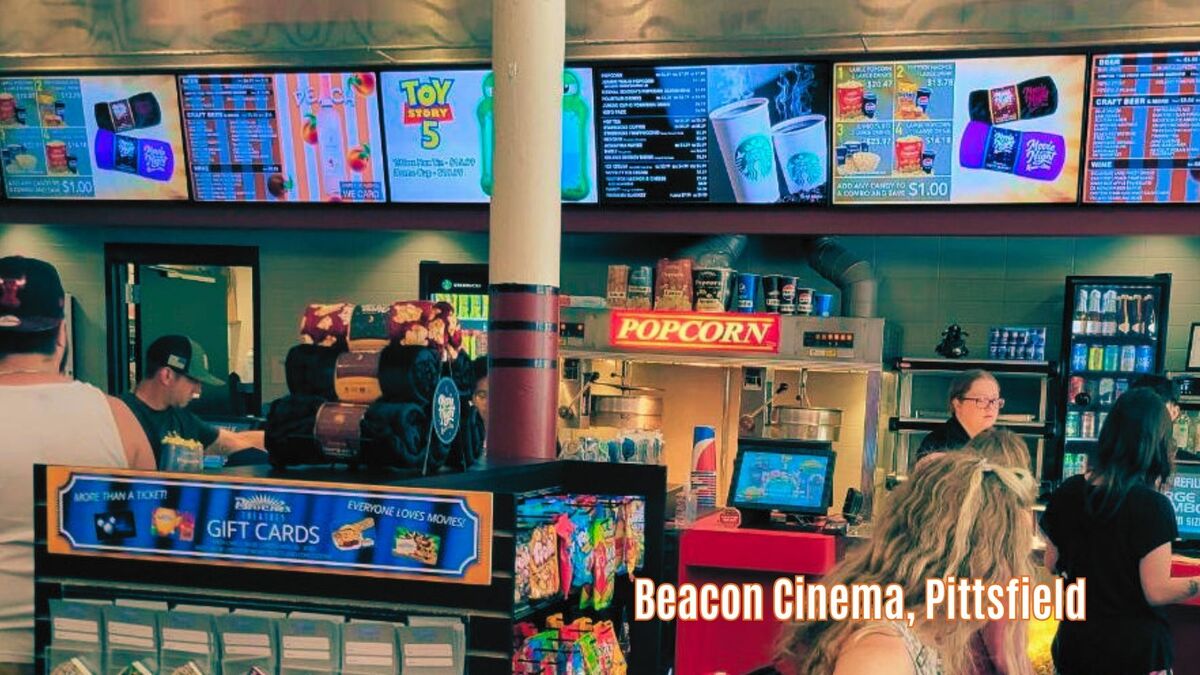
While the Beacon Cinema in Pittsfield is a for-profit multiplex owned by the Phoenix Theaters, chain, it is a relatively small company compared to major chains. Under its founder and President Cory Jacobson, Phoenix operates as a midsized independent business. It has 10 theaters in the Midwest, Tennessee and Massachusetts. By comparison, AMC Entertainment owns 855 theaters worldwide, and Cinemark operates 500 theaters.
Because of distribution costs and the variable size of audiences, theaters often have very tight financial margins.
"Between 40 to 60 percent of the revenue from our ticket sales goes to the distributor," noted Gail Lansky, board chair of the Triplex.
To adjust to this, theaters have traditionally relied heavily on other sources of revenue, such as the sale of popcorn and soda at the concession stand. It's estimated that concessions account for as much as 40 percent or more of the income of theaters.
The culinary aspect of the theater industry has been expanded in recent years, both to increase revenues and to attract audiences. Theaters have added sales of alcoholic beverages and a greater variety and quality of food items to their
concessions. Some even offer restaurant-style meal service within the theater.
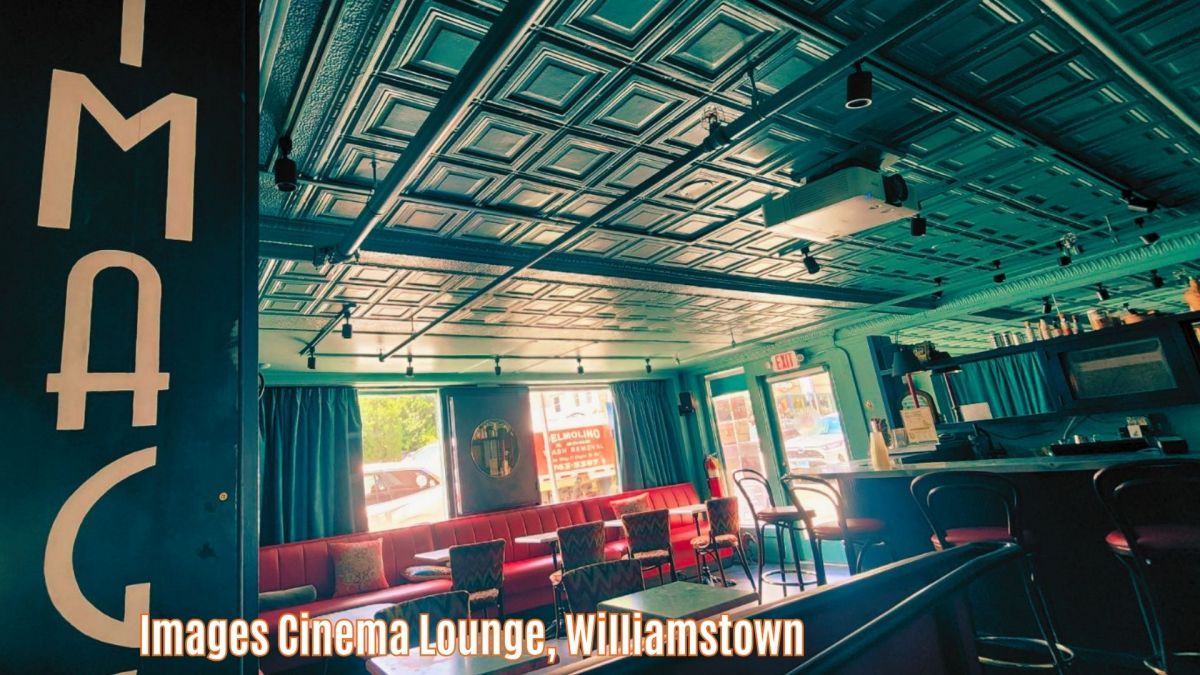
Images, for example, has added a lounge with a bar, that also doubles as a venue for events like movie discussions, author appearances, karaoke and other activities.
"The bar has been financially successful, and is also as a community gathering space," noted Executive Director Dan Hudson.
In addition, movie theaters have had to continually adapt to technical progress since the transition from silent films to talkies in the 1920s, to wide-screen formats like VistaVision to compete with television in the 1950s and '60s. This has intensified with today's high-tech projection equipment, digital audio systems, and immersive formats.
Theaters have also been upgraded to lounge-style seats. Keeping up with these changes can be expensive.
The recent remodeling of Images included the installation of Dolby Atmos immersive sound and 4K laser projection in one theater and 7.1 surround sound and 2K laser projection in the other. In December, the Triplex unveiled the renovation of one of its four auditoriums, which includes a larger screen, new seating and a 7.1 Dolby surround sound system.
Theaters have also had to adjust to changes in the evolution of the film industry. Since the early years of movies, there have been concerns and legal challenges about monopoly powers, as studios and theaters consolidated. Originally, studios also owned theaters, but anti-trust laws broke that up in a 1948 ruling that prohibited studios from owning theaters.
However, with deregulation after the 1980s, the industry has consolidated in a different form.
Movie studios are now owned by immense media conglomerates such as Disney, Paramount/CBS and Warner Discovery that also include streaming services, television channels and other sources of production and distribution. This gives a handful of corporations a high degree of control over all aspects of the media and entertainment industry.
In another recent change, the former restrictions of studios owning theaters have been removed, as Sony Columbia recently purchased the Alamo Drafthouse theater chain.
Further adding to this, tech giants have also taken a large role in the film industry. Amazon, which owns the streaming service Prime, acquired the MGM studio several years ago. The streaming service Netflix also moved into the production of original films.
This has had many implications for theaters. This gives studios increased leverage to benefit their own interests over those of theaters.
For example, movies were traditionally shown exclusively in theaters for a certain period of time before being released on video or other media. But that has changed and many films are directly released to streaming services. This was partially because of the temporary closing of theaters during the pandemic. However, it was also a strategy to push people to subscribe to streaming services.
Also, there was a belief that the audience for theatrical movies was older, and that younger people preferred watching films at home or on their phones. However, the pendulum has recently started to swing back.
"Studios are coming to the realization that they still need theatrical distribution," said Jacobson. "There is a ceiling to how many people you can attract to streaming subscriptions. Theatrical releases bring additional revenue. And younger people still want the experience of seeing movies in theaters."
As independent theaters struggled in this environment, the strategy of saving them by converting them into non-profit community-based organizations like Images and the Triplex has been occurring in other locales. There are currently an estimated 250 non-profit movie theaters, including the Crandell in Chatham, N.Y., and the Moviehouse in Millerton, N.Y.
While this alleviates the need to make a profit, it does require support from the community beyond earned income from tickets and food. They also rely on memberships, fund raising campaigns and events, grants and other sources. So far, the communities have supported the Triplex and Images, according to their management.
Images was established as a non-profit in the 1990s. In 2022, the board decided it would be necessary to add another screening room and other renovations and launched a major fundraising campaign to fund it.
"We took a swing and the public accepted it and supported us," said Hudson
The Triplex and Images have to be especially nimble and creative because of their role as community-based organizations, and the only theaters within their sections of the county.
They serve both as venues for mainstream commercial films and as arthouse cinemas featuring foreign and independent films. They also offer specialized programming such as themed film series, special screenings with guest appearances by people involved in a production. They also have other special programming, such as films and discussions related to local or global topics and issues.
"Our motto is movies for all," said Ben Elliott, artistic director of the Triplex. "We want to be home to the whole spectrum of film. That includes popular movies of the moment that people already know about and lesser-known films that they discover here. We also do things like present older films, so they can be seen as they were meant to be seen in a theater."
As an example of this variety, during one recent week, the Triplex schedule included mainstream films, such as "Supergirl," "Toy Story 5," and "Disclosure Day." It also featured "Silent Friend," a small award-winning drama from Germany and Hungary. In addition it had a screening of "Pretty Ugly: The Story of the Lunachicks," a documentary of the reuniting of a punk-rock band followed by a live Q&A with lead singer Theo Kogan.
Elliot said the period when the Triplex was converted and re-opened was a difficult.
"The industry was still trying to get on its feet after COVID, and when we opened there was also a writer's strike, so the supply of films was very limited," he said. "Fortunately the situation has improved and there is a greater variety available."
He agreed with Jacobson that studios are again making films available theatrically. He also noted that another change seems to be occurring. For a period, studios had concentrated more on expensive blockbuster event movies and placing less emphasis on more modest films for specific audiences, such as rom-coms or small-scale dramas.
"There was a time when a film like "The Devil Wears Prada 2" would probably have gone directly to streaming, but it was released to theaters and became a hit," he said. "So they are seeing the pent-up demand and starting to put more mid-budget movies like that into theaters again,"
Images takes a similar approach to its programming, according to Hudson.
"It's important to have something for everyone," said Hudson. "We try to have an 'all of the above' approach. My own tastes reflect that. I like the big popcorn blockbusters, but I also like small challenging films."
Hudson added that Images also has collaborations with other organizations to present films at other sites. For example, he noted, they partnered with the Adams Theater, a live performing arts center in Adams, on film presentations there.
While acknowledging the challenges, both Hudson and Elliot expressed optimism that there will continue to be a place for smaller locally-based theaters like the Triplex and Images
"We're apples and oranges compared to commercial theaters," said Hudson. "It's like comparing a mom-and-pop store to a Best Buy. People see us as a community resource. We have to be responsive to that and offer what matters to people. They also know who works here, and they can make suggestions. We don't just program films according to an algorithm."
Tags: deep dive, movie theater,