MassWildlife: Traveling wildlife need bed and breakfasts too
Imagine taking a long trip where the hotels, gas stations, and restaurants have closed—except for a scattered few that are far apart and hard to reach. You might still make it to your destination, but you'd arrive exhausted, stressed, and with few options if something went wrong. For wildlife, conserved lands are not just destinations; they are the inns, layovers, and refueling spots that make movement, survival, and resilience possible.
As habitat loss and degradation threaten our native species, MassWildlife and conservation partners are working to strategically protect a network of places that wildlife need to survive. The conservation community has committed to conserving 30 percent of Massachusetts by 2030. Achieving this goal will require doubling the current pace of land protection.
But not all land provides the same conservation benefit. Just like planning a trip, there are many variables to consider when selecting lands to conserve to help wildlife thrive. How do different animals and plants move, migrate, or propagate? Where do they rest and eat along the journey? Do they have narrow habitat requirements or are they generalist species that will "lodge" anywhere?
Let's learn about how strategic land conservation can help wildlife species flourish as they travel across the landscape.
American woodcock: following the thaw line
The American woodcock is a plump, short-legged bird with a long bill whose call and elaborate mating dance signal the arrival of spring. While found across most of the eastern United States, the woodcock depends upon areas of young forests and shrubby old fields, where it probes wet, unfrozen soil for earthworms, snails, millipedes, and other invertebrates to eat.
Each spring, as the thaw line moves northward, woodcock migrate in short spurts just behind the thaw's leading edge. What is their motivation to follow the thaw line? Birds that arrive first are most likely to secure the best breeding habitat and have the most success attracting a mate. This logical-but-precarious strategy puts these birds at the mercy of changing weather that threatens to shift and trap them within cold and frozen conditions. There is little room for error with this strategy, making it critical that suitable habitat for feeding is continuously available throughout their entire journey.
Conserving land and maintaining patches of young forest habitat across the landscape is key to ensuring woodcock continue to thrive as an important and beloved element of our local and regional heritage.
New England cottontail: the local tourist
New England cottontails are active all year and make their homes in shrubs and young trees that offer dense cover and food. This specialized rabbit is tied to this single habitat type and cannot survive without it—often remaining in the same patch their entire lives. Occasionally, some individuals do pack their bags and travel locally in search of new "accommodations" and potential mates.
This is where landscape connectivity becomes essential. A network of shrubland and regenerating trees gives cottontails the option to disperse. If only one habitat patch exists, the entire population is vulnerable to threats, including disease, land development, or natural habitat succession. Relying on a single site, no matter how large, is like putting all the bunnies in one basket.
MassWildlife, private landowners, and many organizations are working together to create and maintain multiple young forest "homes" across the landscape to conserve New England cottontails and the many species that rely on young forest habitat. Maintaining a network of high-quality habitat helps cottontails move, mix, and expand—boosting genetic diversity and improving their chances of long-term survival.
Moths and bees: stepping-stone travelers
Pollinators, including specialized moths and bees, travel short distances over their lifetimes. They rely on closely situated habitats to feed, reproduce, and disperse. When suitable habitat is not available within flying distance, populations become vulnerable to habitat loss and fragmentation, making targeted land protection and connectivity essential for their survival.
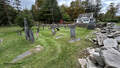
MassWildlife and our partners are working to conserve declining moths and bees, such as the pink sallow moth, that require ridgetop heathland habitats (see photo at the top of the page). The strategy focuses on protecting and restoring pollinator habitat in a network of patches spaced closely enough to support movement between them. These habitats serve as critical rest stops or stepping-stones for winged travelers, enabling them to reproduce and disperse over time across the landscape. As a result, populations grow stronger and more resilient, with greater genetic diversity and reduced vulnerability to localized stressors.
The journey towards resilience
Landscape conservation does not always require protection of physically adjacent parcels. It can be achieved by thoughtfully aligning land protection and habitat restoration with the life history and movement patterns of the species most in need of conservation.