

Costs, Supply & Regulations Factors in Affordable Housing Scarcity
The strategies to produce more affordable housing in Berkshire County are a response to national, statewide and local conditions and issues that have been brewing for decades
These pressures boiled over with the pandemic of 2020, which sparked an influx of people moving from cities to areas like the Berkshires to escape the impact of the virus. It also prompted outside private equity groups and other investors to snap up housing.
This triggered a frenzy in the housing market that rapidly escalated prices and reduced the supply of homes. Although it has begun to settle down, the effects are still being felt. It also heightened awareness of the vulnerability of housing in the Berkshires.
A statewide needs assessment prepared by the the Executive Office of Housing and Livable Communities (EOHLC) for the state's new Comprehensive Housing Plan had a stark analysis of the current status of housing throughout Massachusetts.
"Median home prices have risen 73 percent since 2000, while median household income has risen only 4 percent over the same period, after adjusting for inflation," it stated. "As a result, fewer than one quarter of home sales from 2010 to 2019 were affordable to low-moderate income households. Lower-cost rentals are also vanishing."
Before the late 1970s, the overall dynamics of the housing market followed comparatively straightforward patterns and a balanced mix of supply-and-demand. There were fluctuations and specific issues in housing, such as racial discrimination. But overall the value of properties rose on a gradual basis that matched the overall economy and income levels.
Builders and developers constructed housing in varying categories and price ranges, from inexpensive starter houses to larger upscale homes. The cost of construction enabled builders and the sellers of existing
properties to earn a profit, while providing an adequate supply of affordable housing to buyers at most income levels.
This also supported Naturally Occurring Affordable Housing (NOAH) which refers to apartments and other rental properties priced at rates affordable to moderate-income households and seniors without public subsidies.
In addition, government programs supplemented the private markets. The Federal Housing Act of 1937 initiated large-scale nationwide construction of public housing for low-income occupants.
In 1938, Congress created Fannie Mae (and later Freddie Mac) to help ensure a reliable and affordable supply of mortgage capital. Other programs and organizations offered special financing options for targeted buyers, such as the 1944 GI Bill that enabled returning veterans to purchase homes.
However, in more recent decades, the situation became more volatile, complex, and problematic.
The cost of constructing housing increased significantly because of the rising prices of materials, labor and other services.
Also, more stringent building codes, zoning and environmental restrictions, and other regulatory requirements made the process of gaining approval for construction projects more complex and expensive — and less certain.
Some proponents of housing also blame a "not in my back yard" (NIMBY) attitude of neighbors challenging proposed developments for stifling housing construction.
Other factors added further pressure. The emphasis in the housing market became increasingly oriented to high returns on investments and construction of expensive units. Deregulation of the financial sector also led to some questionable financing arrangements in housing, which was a major factor in the recession of 2008.
Another manifestation of this is the process of "gentrification." Investors bought up properties in previously affordable, modest or poor urban neighborhoods and redeveloped them for affluent buyers. Smaller rural towns also attracted wealthier buyers. This transformed these communities and neighborhoods into expensive upscale enclaves that were no longer accessible to their original residents.
The history and characteristics of the Berkshires have been particularly vulnerable to gentrification. A segment of the housing market has long been oriented to wealthy part-time residents, since the era of the Berkshire Cottages.
In the past, this was limited to specific communities and represented a relatively small number of buyers and properties. However in recent decades this market of affluent seasonal buyers has steadily become more dominant. In addition, more urbanites have moved here full time.
On the positive side, this contributed to tourism and the local economy, led to a more diverse population, and stimulated the county's identity as a hub for recreation and cultural activity.
However, prices for many properties increasingly reflected the higher incomes of outside urban buyers and reduced the supply of housing available for local residents.
"The presence of seasonal homeowners is healthy and they are an important part of the community," said Jim Harwood, president of Community Development Corp. of South Berkshire (CDC). "However, it's important to balance that that with the housing needs of the local population."
Another more recent factor has been the rise of short-term vacation rentals, through services such as Airbnb, which has removed many rental properties from the market for year-round occupants.
"Recent reports highlight a rise in speculative purchases by investors to transform homes into short-term rental properties, compounding the existing shortage of quality year-round housing supply in the region," stated the Housing Snapshot, an analysis of Berkshire County housing prepared by the state's EOHLC.
The report cited figures from the Department of Revenue that indicated one-eighth of homes in Berkshire County are actively used as short-term rentals.
National and local employment patterns have also fueled the problem of affordability. Most notably, long-term employment at well-paying jobs has been replaced for many people by underemployment in less predictable jobs at lower wages or freelance work in the "gig economy." In the Berkshires this became acute since the departure of major industrial employers such as GE.
This has also caused a difficult chicken-and-egg dilemma. Efforts to diversify and revitalize the Berkshire economy and employment base have had successes.
However, the shortage of affordable housing is also one reason young people leave the region. It also makes it more difficult for employers to attract a workforce.
Adding to the complexity have been ideological and practical differences of opinion regarding the roles of the public and private sectors in housing and other forms of development.
A major shift in national housing policy occurred in 1973, when the Nixon administration imposed a temporary federal moratorium on construction of public housing. The administration contended that public housing projects were financially wasteful, and the physical condition and other problems in them were detrimental for tenants and surrounding communities.
Housing advocates contend that this stopped the construction of public housing, and even led to the demolition of some, which has created a shortage of units for low-income population.
Greater emphasis was placed on the private sector as a provider of lower-cost housing through incentives and partnerships. This is also when the system of rent vouchers, such as Section 8, emerged.
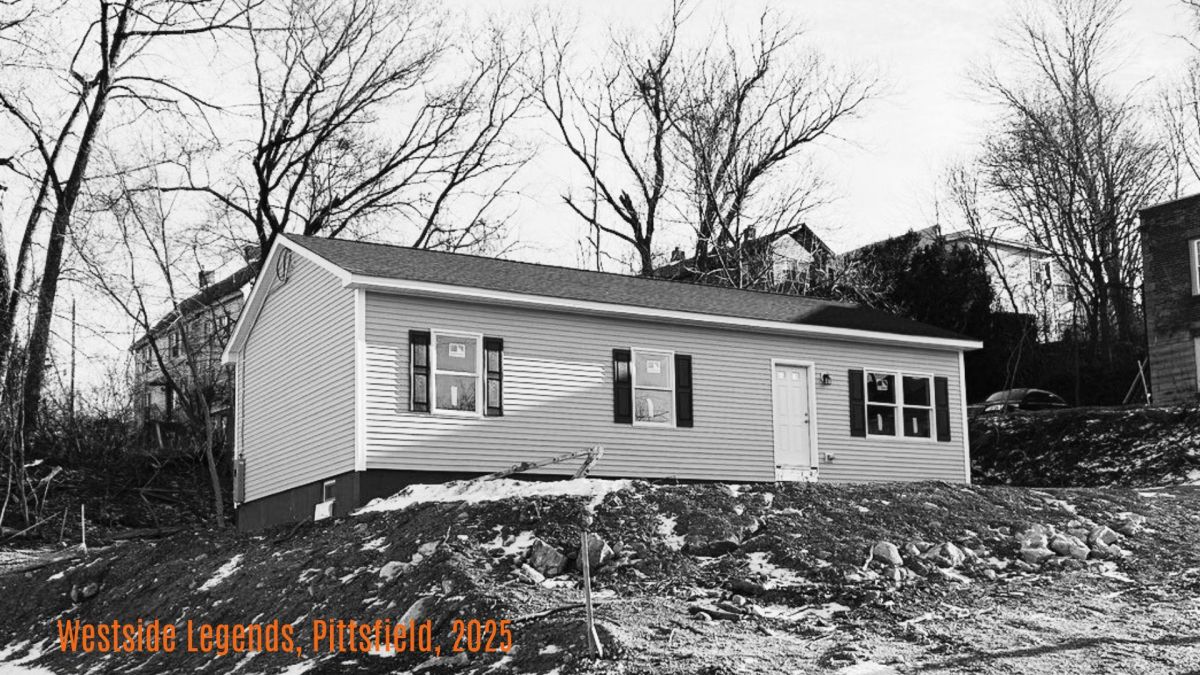 As the price of market-rate housing rose, the need to increase the supply of affordable housing has broadened to other income groups. Some form of subsidies have become necessary to meet the need for housing that is affordable to working and middle-class buyers and renters.
This has led to a wide variety of programs and initiatives to stimulate both private sector and subsidized construction of new housing, rehabilitation of existing structures and meet other goals.
Non-profit organizations, such as the CDC of South Berkshire, Construct, Habitat for Humanity, Hearthway (formerly Berkshire Housing Development Corp.) and others have become prominently involved in creating f affordable housing.
The state has long been active in affordable housing. The Massachusetts Housing Partnership (MHP), for example, was created in 1985 to pioneer new development and financing models.
It has significantly expanded that role with the Affordable Homes Act of 2024 to counter rising housing costs caused by high demand and limited supply. The act authorized $5.16 billion in spending and includes 49 policy initiatives to support the production, preservation and rehabilitation of more than 65,000 homes statewide over the next five years.
However, the resources and support of the federal government for housing are more uncertain, because of the Trump administration's goal of reducing domestic spending. Its proposed FY2027 budget is requesting $73.5 billion for the Department of Housing and Urban Development (HUD), which is a 13 percent reduction
from FY2026.
Balancing both the opportunities and challenges of making housing widely affordable again will require a mix of ingenuity, public will and resources.
"We should not have a homeless crisis, and the shortage of affordable housing is undercutting communities," said Brad Gordon, executive director of UpSide413, a nonprofit housing services agency (formerly the formerly the Berkshire County Regional Housing Authority). "As a nation and a region, we need to make it a priority to ensure adequate housing for everyone. I believe it should be the equivalent of a national moonshot project."
Tags: affordable housing, deep dive,