Adams Applies for CDBG Grant to Address Blight
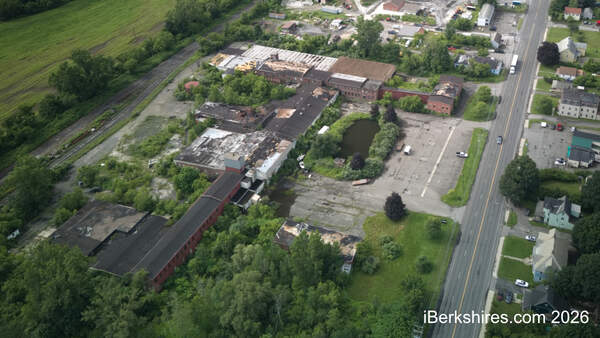
ADAMS, Mass. — The town continues its efforts to address blight in the community by applying for funds through the Community Development Block Grant, as it has done years prior.
The Select Board recently approved the grant application requesting $950,000 to fund the highly anticipated Winter Street reconstruction and the town's Adams Housing Rehabilitation Program.
CDBG is a federally funded competitive grant program administered by the state. It can be used for activities that address blight, housing, beautification, demolition and economic development.
The need for these funds is substantial as towns work to balance addressing high-cost infrastructure repairs with limited state and federal funding, such as Chapter 90, said Donna Cesan, community development director.
"Adams is one of the poor communities in the commonwealth. Here in the Northern Berkshires, we're still recovering from the '60s and the loss of our manufacturing base, so it's been a slow recovery," she said.
Cesan has been working with the town for more than 20 years and during that time has seen improvements but there are still setbacks, including the rising costs to address the communities needs.
"To continue to work on projects like this to improve the community. So, I think Adams is very deserving of this. I think the community needs this," she said.
During its April 1 meeting, several community members attended to highlight the urgent need for Winter Street's reconstruction. If the town gets the grant, Cesan hopes to see the work done by next fall.
Thomas Abate, owner of a property on Winter Street, showed the board a video of water rushing into his building from Summer Street after a 2023 rainstorm as an example of water intrusion from the street's runoff.
This experience is not uncommon for residents in the area. Daniel Harding, who owns a home on Hoosac Street, shared a similar experience, saying he has photos of flooding in the neighborhood and has, on multiple occasions, had to clean out the grate on the street or in front of his house.
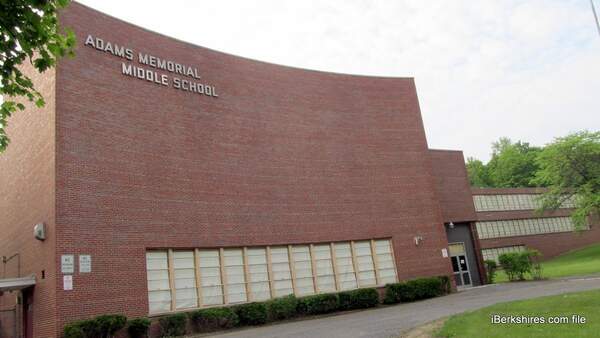
The area is also more high traffic than some might think because of the additional traffic from the school, he said.
Currently, the Winter Street project is estimated to cost $760,000. The town will need to use Chapter 90 road funds because it's expecting to get $550,000 to $600,000 from CDBG, Cesan said during a previous meeting.
The grant application is requesting $550,000 for the project's construction and $53,020 for its administration costs.
Cesan reiterated what she said at the previous board meeting — that the super elevation has changed over the years, directing water toward the buildings rather than away.
An engineering and design firm proposes major rehabilitation of Winter Street between Summer Street and Hoosac Street, including reconstructing 300 feet of road, installing a new sidewalk and curb, and converting part of Winter Street to one-way northbound traffic.
The plan aims to improve drainage by lowering the road profile and adding new catch basins, sumps, and a reinforced concrete trunk pipe.
Additional work includes repairing sidewalks, overlaying pavement, and ensuring ADA compliance. More information on the project here.
Of the total requested amount, $322,080 would be used for the town's income-based Housing Rehabilitation Program which provides low-to-moderate income homeowners funds to repair and bring homes up to code, through a wide variety of rehabilitation projects.
The program is townwide and accepts applications on an ongoing basis, operating primarily on a first-come, first-served system. However, there have been cases where the town has been able to move applicants up the list for emergency cases.
Eligibility for funding is based on the state Department of Housing and Urban Development income limits, calculated using the total gross income for all individuals aged 18 and older residing in the rehabilitated unit, excluding full-time students.
Income limits are as follows:
- 1 person: $68,800
- 2 persons: $78,600
- 3 persons: $88,450
- 4 persons: $98,250
- 5 persons: $106,150
- 6 persons: $114,000
- 7 persons: $121,850
- 8 or more persons: $129,700
Interested applicants submit paperwork to the Community Development Office, where staff can provide guidance throughout the process.
"You do have to gather information and bring it back to us, but we're very user-friendly," Cesan said in a follow-up.
Tags: blight, CDBG, road project,