Wahconah Students Join Statewide 'SOS' Call for Rural School Funding
DALTON, Mass. — Students at Wahconah Regional High School are urging the state to fully fund Rural School Aid that supports essential services that shape their future.
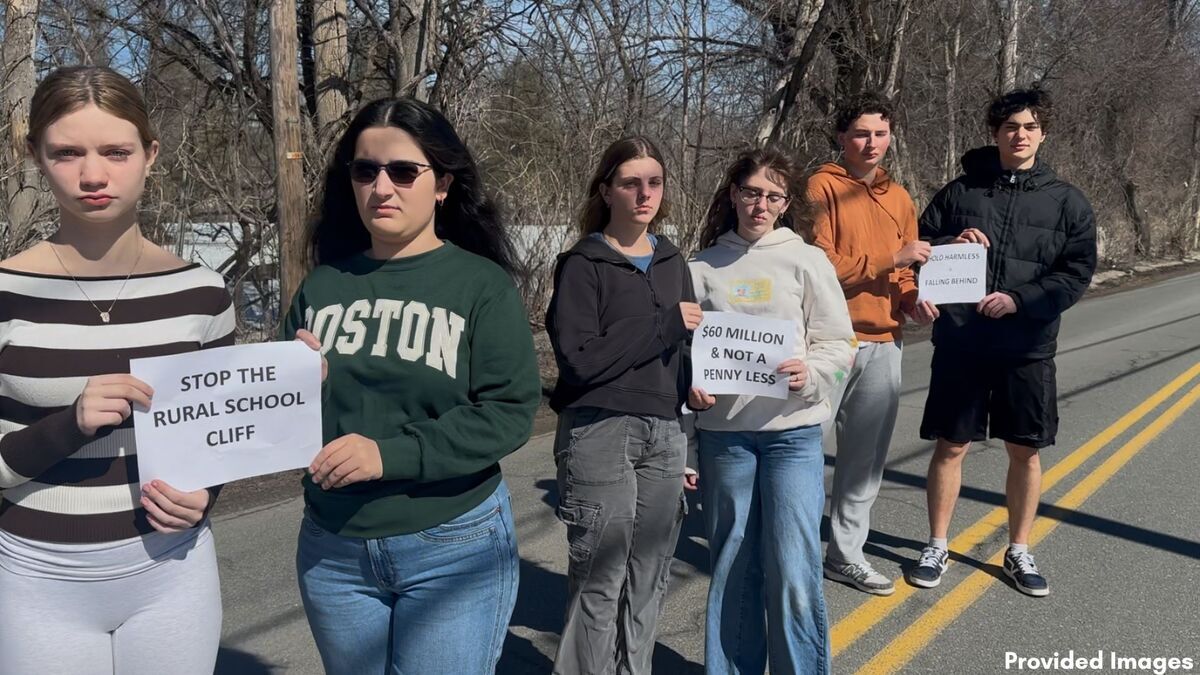
Rural districts across the state participated in Rural and Declining Enrollment Schools Week of Action to insist Beacon Hill fully fund rural aid at $60 million.
Schools across Massachusetts sent their pleas for aid to lawmakers through letter-writing campaigns, sign-making, and coordinated gatherings where students and educators formed the letters "SOS."
Wahconah students did something different — they created an educational video detailing the need for increased funding for rural schools with the school's music teacher Brian Rabuse, who edited the video, Assistant Superintendent Aaron Robb said.
The advocacy efforts move the issue from spreadsheets to show the human cost of a funding formula previously described as "remarkably wrong."
During an interview with iBerkshires, students expressed how districts without rural aid would have to make reductions in world language programing, mental health support, extracurricular opportunities, and other areas they find essential.
"Our students deserve the same quality of education as any child in Massachusetts, regardless of their ZIP code," Superintendent Mike Henault said in a press release.
"The week of action is an opportunity for our communities to come together and make it clear to Beacon Hill that the status quo is no longer acceptable."
Rural schools attempt to create the same quality education as urban and suburban areas while balancing high fixed costs of transportation and operations of geographically large, low-population districts.
A rural schools report in 2022 found smaller school districts cost from nearly 17 percent to 23 percent more to operate, and recommended "at least" $60 million be appropriated annually for rural school aid.
Gov. Maura Healey has filed for more Chapter 70 school aid, but that often is little help to small rural schools with declining or static enrollment. For fiscal 2027, she's budgeted $20 million for rural schools, up from around $13 million this year but still far below the hoped for $60 million.
Unlike urban and suburban regions, which benefit from easily accessible public transit such as buses or subways, rural areas often lack these resources, resulting in much longer commutes— sometimes over an hour each way, said Paetyn Tatro, senior and co-chair of the Western Mass Regional student advisory council.
Students are already feeling the pressure from the financial strain, with the recent cut of the French department after the retirement of its French teacher, which the district could not fill because of funding constraints, said senior Alexandra Rougeau.
Several districts have a looming fear of what Robb described as the "death spiral" for rural districts, resulting in closing schools, cutting positions, and eliminating programming.
While we haven't reached the breaking point, the concern that it could happen is real and Central Berkshire Regional School District is being proactive so they do not reach that point, he said.
In this year's budget, the goal has been to cut things rather than people, because staff are what make programs possible and cutting positions directly impacts students. More information here.
Students are already feeling the pressure from the financial strain, with the recent cut of the French department after the retirement of its French teacher, which the district could not fill because of funding constraints, said Senior Alexandra Rougeau.
Town assessments fund more than half of the district's budget, while state aid only accounts for about 27 percent. The remaining costs are met through other funding sources, including grants.
The low contribution from the state puts the financial strain on the communities, students said.
Wahconah Regional High School is known for its athletic programs. However, students must engage in ongoing fundraising efforts to sustain them, said Junior Class President Ryan Falcone.
"These are the people who are paying the taxes for the school and the school budget, and then also we need to ask them for additional money so that we can continue to play sports — trying to scrounge money out of the same empty pocket, which isn't really fair," Tatro added.
The financial constraints require teachers to get creative to cover the shortfalls, students said.
For example, the high school's Apollonian Players are borrowing materials from Lee High School for its production of "The Addams Family."
Producing a show involves significant expenses — including costumes, set materials, and performance rights — and the school has not had a sold-out show in several years, senior Sophie Alsmaan said.
"We have been told numerous times in the past, two to three years, that we simply can't afford a lot of stuff," said junior Kendall Bolduc.
"We went without a lot of paint and stuff for our fall show just because we didn't have the money to buy it. So, our tech crew has been really struggling with that."
One of the overarching problems is that districts were not meant to rely on rural aid for operating costs; its intention was for it to be an additional financial support to school districts. However, it has become a vital part of operational costs, Robb said.
The district has identified possible cuts, based on what would have the least amount of impact on student opportunity.
If rural aid is higher than anticipated those things can be restored, however if it is lower then further reductions would need to be made, he said.
Another concern is the language change in the governors definition that could be interpreted to mean more than just rural areas.
Recent changes to the government's definition could broaden eligibility beyond rural areas. As a result, some funds may now be allocated to suburban and urban districts, potentially leaving rural areas with even less support, Robb said.
Community members, parents, educators, and local officials are encouraged to contact their state representatives, and to share their stories using #RuralSchoolsMA on social media.
More information on the Rural and Declining Enrollment Schools Week of Action week here.
Tags: education funding, education initiative, rural policy,