Williamstown Fin Comm Hears from Police Department, Library
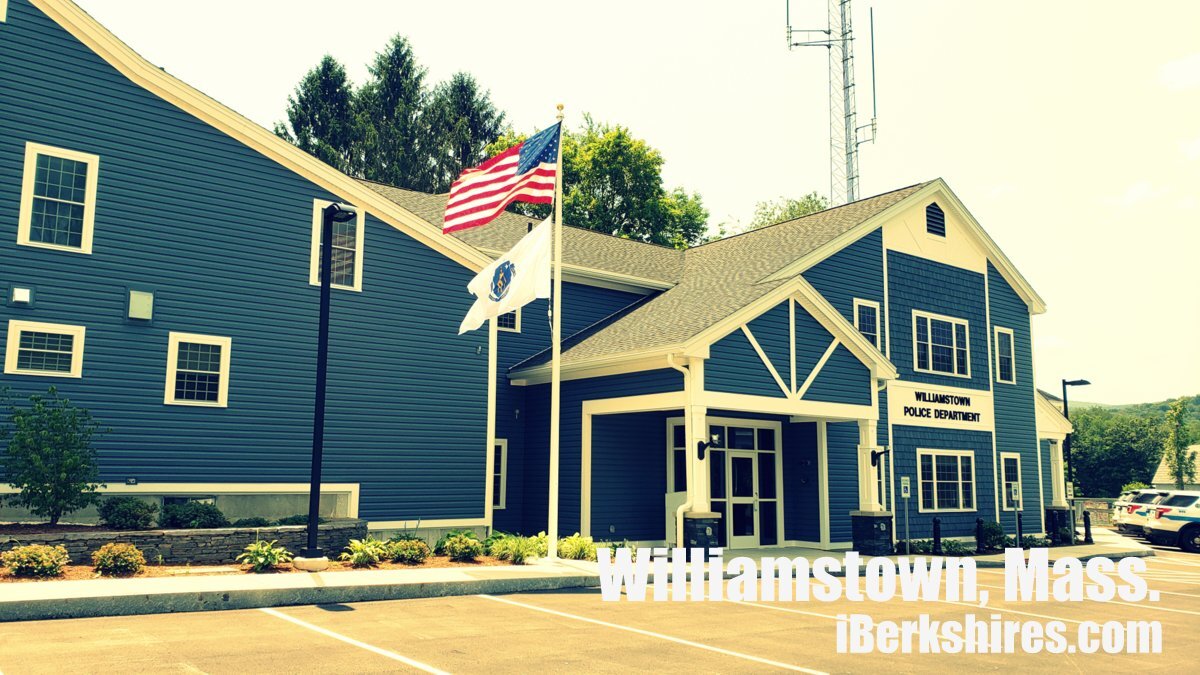
WILLIAMSTOWN, Mass. — Police Chief Michael Ziemba last week explained to the Finance Committee why an additional full-time officer needs to be added to the fiscal year 2027 budget.
The 13 officers in the Williamstown Police Department are insufficient to maintain the department's minimal threshold of two officers on patrol per shift without employing overtime and relying on the chief and the WPD's one detective to cover patrol shifts if an officer is sick or using personal time, Ziemba explained.
Some of that coverage was provided in the past by part-time officers, but that option was taken away by the commonwealth's 2020 police reform act.
"We lost two part-timers a couple of years ago," Ziemba told the Fin Comm. "They were part-time officers, but they also worked the desk. So between the desk and the cruiser shifts, they were working 40 hours a week, the two of them. We lost them to police reform.
"We have seen that we're struggling to cover shifts voluntarily now. We're starting to order people to cover time-off requests. … We don't have the flexibility when somebody goes out for a surgery or sickness or maternity leave to cover that without overtime. An additional position, I believe, would alleviate that."
Ziemba bolstered his case by benchmarking the force against like-sized communities in Berkshire County.
Adams, for example, has 19 full-time officers and handled 9,241 calls last year with a population just less than 8,000 and a coverage area of 23 square miles, Ziemba said. By comparison, Williamstown has 13 officers, handled 15,000 calls for service, has a population of about 8,000 (including staff and students at Williams College) and covers 46.9 square miles.
"We are dramatically understaffed compared to similarly-sized departments," Ziemba said.
The shortage of officers comes at a time when calls for service are increasing, he said. The Williamstown Police Department responded to about 12,000 calls in 2023, 14,000 in 2024 and 15,376 in 2025, he told the committee.
On-boarding a new officer means getting him or her enrolled in the commonwealth's six-month police academy. When they graduate, they need another three months of field training before they can serve on their own, Ziemba said.
"You're typically looking at a minimum of a year from start to finish," he said.
For example, following the retirement of an officer last August, a student officer was placed at the academy in October, Ziemba said. That officer is scheduled to graduate in April and will be ready to start patrolling solo in August.
Ziemba does not want to wait that long to fill the new position that he hopes will be added to the budget that goes into effect on July 1.
"In a perfect world, if this position gets approved, first I'd try to get a lateral [transfer] from another department, someone who is already trained," Ziemba said. "I think we're in a position, after some changes, where we're fairly attractive now in terms of salary and work load and the building. Last week, we were awarded certification toward accreditation. So we're continuing to build the department.
"Hopefully, none of the local chiefs are watching this," the chief added with a chuckle, referencing his desire to recruit a transfer from another department.
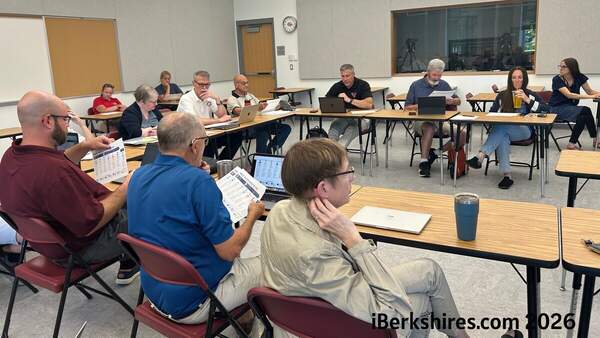
Ziemba was in front of the Finance Committee as part of its annual review of the town's proposed spending plan for the next fiscal year. After a series of meetings — several with department heads and superintendents of the local schools — the Fin Comm will decide whether to recommend the budget with any amendments to May's annual town meeting for final approval.
In addition to the officer, at a cost of close to $100,000 including benefits, the WPD's FY27 budget includes about a $10,000 increase for body cameras.
"Those were grant-funded initially and then [partially grant-funded] after that, Ziemba said. "We're now on our own with those. … They're helpful for evidentiary purposes. They're an added asset for sure."
But, Fin Comm Chair Frederick Puddester noted, the cameras are a "cautionary tale" about municipalities starting initiatives with grant funds.
"Eventually, the grants run out," Puddester said.
The other department reviewed at the Feb. 28 Fin Comm meeting had no significant increases in its operational budget but does have a large capital need for which officials hope to be seeking grant support and bonding authority from town residents in the not-too-distant future.
"It's an old building," Milne Library Board of Trustees Chair Micah Manary told the Fin Comm. "It's a building that's not designed to be a library. It's a building that's not energy efficient. It's not easily made energy efficient. Replacing windows, that's tens of thousands of dollars. … The basement is not usable as a public space. And it's a huge basement. It's annoying. It would need a fair amount of work."
The basement of the former Pine Cobble School — and now town library — would need, among other things, handicapped accessibility or an elevator in order to be used as public space.
"At the same time, Robin [Lenz] and I and the rest of the board have been good at pushing the library in new directions," Manary said. "We've felt for years we're at the limit of what that building can do."
For example, the Milne's meeting rooms are booked solid by community members and there frequently are scheduling conflicts, Manary said.
"Our circulation numbers are up, and they've been up for many years," he said. "It's not like we're circulating less things.
"That makes everyone on the board think it's time for a library building that meets what the town wants. And we would all love to be in here pitching that to you. But we're also all cognizant that there's a lot of financial pressure on the town. We just built a new high school, a police station and a fire station."
To that end, the library trustees intend to let the community drive the conversation.
"What we don't want to do as a board is pitch to the town why we need a new library," Manary said. "We're not trying to do that. We'd rather the town would want a new library. We're all public servants, and we're not trying to sell the town on something."
The library is due for an updated strategic plan, he said. That process has begun and will include gathering input from residents about what the library could be doing or should be doing.
"Let that drive the decision in town about what's happening to the building," Manary said.
He also recognized that the town has other infrastructure needs, including Town Hall and the Harper Center, home of the Council on Aging. Manary agreed with Fin Comm member Suzanne Stinson that those needs could be addressed in a single building, but that brings issues that need to be addressed with the Massachusetts Board of Library Commissioners, which administers state grants to support local library building projects.
The library board, for example, will fund space for meeting rooms in a shared building but only for the percentage of time those rooms are used by the library. Parking also is an issue. The MBLC grant would need to be used only for parking needed for the library.
"We want to be thinking about [potentially sharing a building with other town services]," Manary said. "We have no philosophical issues with that."
Manary told the Fin Comm that the MLBC, which does not accept grant applications every year, expects to open the grant process in 2027 or 2028. After submitting an application, shovels go in the ground, typically, after five to 10 years, he said.
In other business last week, the Fin Comm heard a report from Mount Greylock Regional School District superintendent, who represents the district on the Berkshire Health Group board, about the board's Jan. 28 meeting, and discussed the town's overlay balance.
The overlay balance is a sum that the town carries to cover revenue lost because of property tax abatements and exemptions. The five-year average for those shortfalls is just more than $46,000; the current overlay balance is about $671,000.
Puddester has suggested the town may want to make a one-time adjustment to reduce the overlay balance and use the money to reduce the tax levy that will be required to fund the FY27 budget. He said that would invite the town's assessor to talk about whether there are other potential liabilities that warrant maintaining a higher balance.
"It's not a huge amount of money, but, again, every $200,000 is 1 percent off the tax rate increase this year," Puddester said. "[Assessor Christopher Lamarre] may warn us we can't dip into this too far, but, when I saw the numbers, I thought it was worth asking."
Tags: fiscal 2027, williamstown_budget,