Williamstown READI Committee Transitions Away From Select Board
WILLIAMSTOWN, Mass. — The Select Board on Monday voted unanimously to transition the town's diversity committee away from the role it has served since its inception in 2020.
On a 4-0 vote, the board voted to formally dissolve the body recently renamed the Race, Equity, Accessibility, Diversity and Inclusion Committee and allow its members to work directly with the town manager to advance the issues that the former DIRE Committee addressed over the last six years.
When the then-Diversity, Inclusion and Racial Equity Committee was formed in the summer of 2020, it was conceived as an advisory body to the Select Board.
Over the years, the relationship between the Select Board and DIRE became strained, to the point where READI Committee members last year were openly discussing whether their group should remain a town committee at all or become a grassroots organization on the model of the town's Carbon Dioxide Lowering (COOL Committee).
"I just don't think that previous Select Boards have been the best guides in the process of getting things accomplished in the community," said Shana Dixon, who served on DIRE before her election to the Select Board last May. "Not that this panel, right now, could be better.
"What I'm saying is that it has been a hindrance to work under the Select Board."
It was not immediately clear whether the next incarnation of the READI Committee would continue to comply with the provisions of the Open Meeting Law.
On one hand, the DIRE and then READI Committees have embraced the process of public participation and always welcomed discussion from residents of all viewpoints. On the other hand, the OML specifically carves out an exception for the kind of work READI now will be doing.
"Bodies appointed by a public official solely for the purpose of advising the official on a decision that individual could make alone are not public bodies subject to the Open Meeting Law," reads the Attorney General's Office's guide to the OML.
Chair Noah Smalls said late Monday night that the committee would continue to operate as it has.
"Currently, based on discussions with my fellow READI member Andrew [Art] and our Select Board liaison Shana [Dixon], my intention is to keep the OML for our meetings, demonstrating an example of transparency," Smalls said. "This change will allow flexibility for more work to take place outside of meetings but meetings will remain OML."
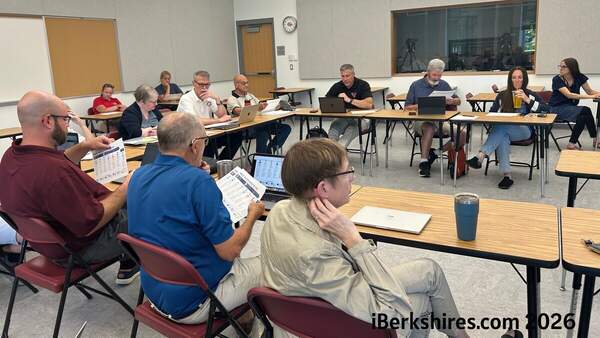
Monday's meeting was to have been a joint meeting between the Select Board and READI Committee to discuss the future of the latter panel. Only Dixon, who serves the seat on READI designated for a Select Board member, attended the meeting.
Town Manager Robert Menicocci said the time has come to move the work of the READI Committee from the discussion phase to the action phase.
"Action takes two forms," Menocci said. "One is just making our town government as responsive as possible in light of what's expected of us. I think that was part of the root cause of why this all came about. There were external things happening that pushed this along with more urgency. But also, minute-to-minute, things change. And I think the thing we do know is there's never a moment of rest. We always have to be diligent about doing it. And I think bringing that work into Town Hall will help us do that, in terms of creating the right framework for the work we need to do.
"A lot of that has been taking place in terms of our day-to-day scope of what we do to be responsive and ensure our work is dialed in. But, also, there's the greater need of where the community can come for dialogue when situations arise. To the extent that we have a well-practiced group of people working on this on a day-to-day basis, this is not one-and-one. … It's ongoing, and we always need to know how to respond."
Select Board Chair Stephanie Boyd said that, by her count, about 17 people have served on DIRE/READI since its inception.
"I do want to thank all the people who have worked on READI over the years, and I hope you all stay involved," she said.
In other business on Monday, the Select Board finalized a memorandum of understanding with the town's Public, Educational and Governmental Access station, Willinet, that preserved the language the station's board included to clarify that the station will provide streaming and social media programming, "as long as doing so is financially feasible."
The board also began a conversation about proposing to town meeting that Williamstown accept a "Seasonal Communities Designation" created by the commonwealth.
Menicocci explained that the designation was created to help communities where seasonal variations in housing impact things like workforce housing. If town meeting approve of Williamstown's entry in the program, it would stand to benefit from access to state grants for planning and "housing development projects," according to a memo drafted for the board by former Select Board member Andrew Hogeland.
Menicocci said if conversations with the Planning Board and Select Board indicate support for the initiative, town meeting members could get a chance to decide on the issue this May.
The Planning Board also factored into Monday's meeting on another front. Cory Campbell was back before the Select Board to discuss the planners' work to develop a proposal for overlay districts that would encourage mixed-use development in the town's Planned Business and Limited Business zoning districts.
"I'd suggest anyone with more questions go to Planning Board meetings and send emails to Cory," Boyd said, before turning to Campbell. "You're not going to bring anything to this town meeting, right?"
"Never say never," Campbell replied.
The Planning Board is scheduled to continue work on the mixed-use development proposal at its Feb. 10 meeting.
Tags: advisory committee, DEI,