Williamstown Community Preservation Panel Weighs Hike in Tax Surcharge

By Stephen DravisiBerkshires Staff
Print Story | Email Story
WILLIAMSTOWN, Mass. — The Community Preservation Committee is considering whether to ask town meeting to increase the property tax surcharge that property owners currently pay under the provisions of the Community Preservation Act.
 
Members of the committee have argued that by raising the surcharge to the maximum allowed under the CPA, the town would be eligible for significantly more "matching" funds from the commonwealth to support CPA-eligible projects in community housing, historic preservation and open space and recreation.
 
When the town adopted the provisions of the CPA in 2002 and ever since, it set the surcharge at 2 percent of a property's tax with $100,000 of the property's valuation exempted.
 
For example, the median-priced single-family home in the current fiscal year has a value of $453,500 and a tax bill of $6,440, before factoring the assessment from the fire district, a separate taxing authority.
 
For the purposes of the CPA, that same median-priced home would be valued at $353,500, and its theoretical tax bill would be $5,020.
 
That home's CPA surcharge would be about $100 (2 percent of $5,020).
 
If the CPA surcharge was 3 percent in FY26, that median-priced home's surcharge would be about $151 (3 percent of $5,020).
 
The Community Preservation Committee is the body that each year vets applications for CPA grants and recommends grants that then get an up or down vote at town meeting in May.
 
In the last couple of years, the CPC has seen funding requested — by non-profits or Town Hall — far exceed the CPA funds available. Those funds are generated by the local surcharge and state matching funds.
 
In consultation with the Boston-based Community Preservation Coalition, the local committee has learned that the state match varies, dramatically, based on the level at which a municipality sets its CPA surcharge.
 
How dramatically will depend on two things: the number of towns and cities that implement a 3 percent surcharge and the total dollar amount of state funds allocated to the CPA program in a given year.
 
But based on the most recent data available, the town would have nearly doubled its CPA "pie" had its surcharge been 50 percent higher than 2 percent, the committee learned last week.
 
"Here's what I can tell you," said member Alison Bost, who worked with representatives from the Boston non-profit coalition. "Under fiscal year 2024 numbers, when we had a 2 percent surcharge, the local revenue was about $319,000. We got a match from the state of roughly $57,000. Our total was $376,000 for money to distribute. The state match was 18 percent.
 
"If we had had a 3 percent match, then our revenue from local [taxpayers] would have been $478,000. And we would have gotten a lot more state match. … The total of local plus state match under a 3 percent surcharge in FY24 would have been $670,000."
 
The state each year has several rounds of funding for purposes of matching the local CPA collections. Towns and cities with a 3 percent surcharge are eligible for rounds of funding that towns like Williamstown (at 2 percent) are not.
 
"So we're clearly leaving money on the table by having less than the maximum [surcharge] allowed under the statute," Boat told her colleagues. "We would have had a 40 percent match from the state if we were at 3 percent.
 
"I think it's important to think about this in the context of the applications we have this year that far exceed the funds available."
 
Some members of the committee said it could be difficult to convince town meeting members to increase the CPA assessment at a time when the cost of municipal services already is on the rise and stagnant growth in the tax base drives up the demand on existing property owners.
 
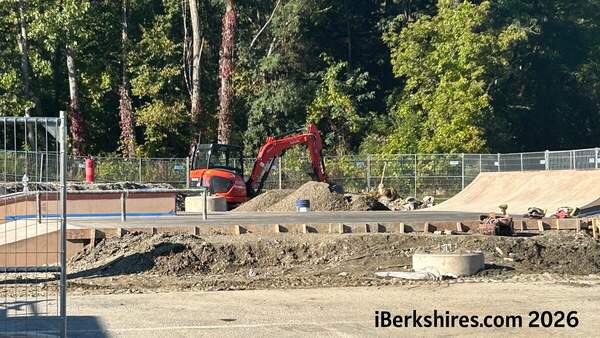
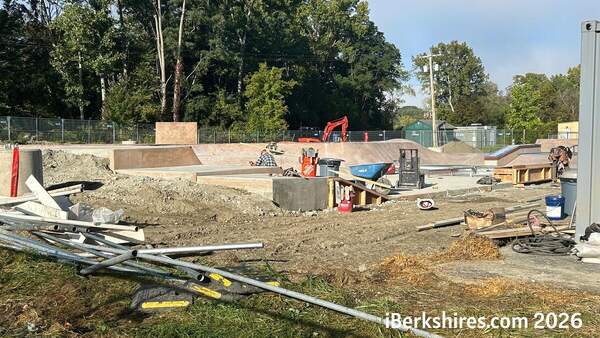
Others pointed out that the case for bringing in more state matching funds would be compelling, particularly when some of the CPA projects under consideration this year — a renovation of the Broad Brook Park play areas and a new skate park on town-owned land — address needs that otherwise would be funded by local tax dollars.
 
Committee members Nate Budington and Molly Magavern both said they were leaning toward putting the surcharge increase question before town meeting.
 
"We're pretty high impact," Budington said, referring to the town projects that have been funded by the CPA over the years. "We give the best case we can and hope for the best. The worst that can happen is we end up where we began."
 
CPC Chair Philip McKnight said that the committee would try to reach a decision at its Feb. 4 meeting, in time to get the ball rolling on an article that can be included on the warrant for the May meeting.

Tags: CPA,   

If you would like to contribute information on this article, contact us at info@iberkshires.com.

Puppets Teach Resilience at Lanesborough Elementary School

By Breanna SteeleiBerkshires Staff

The kids learned from puppets Ollie and a hermit crab.

LANESBOROUGH, Mass. — Vermont Family Network's Puppets in Education visited the elementary school recently to teach kids about being resilient.

Puppets in Education has been engaging with young students with interactive puppets for 45 years.  

The group partnered again with Bedard Brothers Chevrolet, which sponsored the visit. 

Classes filtered through the music class Thursday to learn about how to be resilient and kind, deal with change and anxiety, and more.

"This program is this beautiful blending of other programs we have, which is our anxiety program, our bullying prevention and friendship program, but is teaching children the power of yet and how to be able to feel empowered and strong when times are challenging and tough," said program manager Sarah Vogelsang-Card.

The kids got to engage with a "bounce back" song, move around, and listen to a hermit crab deal with the change of needing a new shell.

"A crab that is too small or too big for its shell, so trying to problem solve, having a plan A, B and C, because it's a really tough time," Vogelsang-Card said. "It's like moving, it's like divorce of parents, it's changing schools. It's things that children would be going through, even on a day to day basis, that are just things they need to be resilient, that they feel strong and they feel empowered to be able to make these choices for themselves."

The resiliency program is new and formatted little differently to each of the age groups.

"For the older kids. We age it up a bit, so we talk about harassment and bullying and even setting the scene with the beach is a little bit different kind of language, something that they feel like they can buy into," she said. "For the younger kids, it's a little bit more playful, and we don't touch about harassment. We just talk about making friends and being kind. So that's where we're learning as we're growing this program, is to find the different kinds of messaging that's appropriate for each development level."

This programming affirms themes that are already being discussed in the elementary school, said school psychologist Christy Viall. She thinks this is a fun way for the children to continue learning. 

"We have programs here at the school called community building, and that's really good. So they go through all of these strategies already," she said. "But having that repetition is really important, and finding it in a different way, like the puppets coming in and sharing it with them is a fun way that they can really connect to, I think, and it might, get in a little more deeply for them.

Vogelsang-Card said its another space for them to be safe and discuss what's going on in their life. Some children are afraid because maybe their parents are getting divorced, or they're being bullied, but with the puppets, they might open up and disclose what's bothering them because they feel safe, even in a larger crowd. 

"When we do sexual abuse awareness that program alone, over five years, we had 87 disclosures of abuse that were followed up and reported," she said. "And children feel safe with the puppets. It makes them feel valued, heard, and we hope that in our short time that we're together, that they at least leave knowing that they're not alone."

Bedard Brothers also gave the school five new puppets to use. Viall said the puppets are a great help for the students in her classroom, especially in the younger grades. 

"Every year, I've been giving the puppets to the students. And I also have a few of the puppets in my classroom, and the students use them in small groups to practice out the strategies with each other, which is really helpful," she said. "Sometimes the older students, like sixth graders, will put on a puppet show. They'll come up with a whole theme and a whole little situation, and they'll act it out with the strategies for the younger students. It's really cute, they've done it with kindergarteners, and the kids really like it."

Vogelsang-Card said there are 130 schools in Vermont that are on the waiting list for them to come in. Lanesborough Elementary has been the only Massachusetts school they have visited, thanks to Bedard Brothers. 

"These programs are so critical and life-changing for children in such a short amount of time, and we are the only program in the United States that does what we do, which is create this content in this enjoyable, fun, engaging way with oftentimes difficult subjects," she said. "Vermont is our home base, but we would love to be able to bring this to more schools, and we can't do this without the support of community, business funders or donors, and it really makes a difference for children."

The fourth-grade students were the first class to engage with the puppets and a lot of them really connected with the show.

"I learned to never give-up and if you have to move houses, be nervous, but it still helps," said William Larios.

"I learned to always add the word 'yet' at the end," said Sierra Kellogg, because even if she can't do something now, she will be able to at some point.

Samuel Casucci was struck by what one of the puppets talked about. "He said some people make fun of him if he dresses different, come from different place, brings home lunch, it doesn't matter," Samuel continued. "We're all kind of the same. We're all kind of different, like we have different hairstyles, different clothes. We're all the same because we're all human."

"I learned how to be more positive about myself and like, say, I can't do this yet, it's positive and helpful," said Liam Flaherty.

The students got to take home stickers at the end of the day with contact information of the organization.

View Full Story

More Williamstown Stories