DPU-Approved Municipal Aggregation Plans Save Electric Customers Money

Print Story | Email Story

BOSTON — The Massachusetts Department of Public Utilities (DPU) has made headway in approving Municipal Aggregation Plans (Plans), leading to millions of savings for enrolled customers. 

Since the DPU issued guidelines in July 2024, the agency has approved 47 Plans, 35 of which have entered into contracts with suppliers. This incredible effort demonstrates the ways in which the DPU has streamlined its processes and improved regulatory efficiency to provide real-time savings for customers. 

"Municipal aggregation is a critical energy affordability tool," said Chair Jeremy McDiarmid. "Our experience to date shows that customers who participate in their city or town's Plan can save money on their electric bills while taking advantage of the environmental benefits produced by each Plan's clean energy supply. I am proud of the tremendous work the Department has done to expedite the approval process and unlock greater savings." 

Participants enrolled in one of the 35 Municipal Aggregation Plans will see $2.36 to $18.60 in monthly savings through July 2026. Residential electric customers enrolled in these Plans will have saved roughly $25 million from December 2024 to July 2026, compared to the basic service rates offered by the investor-owned electric utilities. July 2026 is the latest month for which basic service prices are known; electric utilities procure their supply in six-month periods. Accordingly, whether customers continue to experience savings after July 2026 will not be known until basic service prices are approved for the period of August 2026 through January 2027.    

The DPU's streamlined approach has not only lowered enrolled customers' bills but has equipped more homes and businesses with a higher percentage of clean, renewable energy, by purchasing clean energy. Many of the 35 executed Plans require the purchase of clean energy in amounts that exceed the state's Clean and Renewable Energy Portfolio Standards.  

The DPU's current approach has improved regulatory efficiency and includes a commitment to a four-month period to review the Plans and issue an order, with many decisions occurring in less than four months. This approach allows municipalities to stand up their Municipal Aggregation Programs quickly, taking advantage of the energy market to optimize savings for their residents and local businesses. 

To date, the DPU has approved 245 Municipal Aggregation Plans since the approval of the first plan in August 2000: close to 70 percent of the state's municipalities can offer their residents and businesses clean and affordable electricity. 

All municipalities with approved Municipal Aggregation Programs and customers who choose to switch electricity suppliers are advised to be aware of recent scams and stay informed by visiting the DPU's page.  

Background on Municipal Aggregation 

Municipal aggregation was first established in 1997 following the passage of the Electric Industry Restructuring Act. Municipal aggregation, also known as community choice aggregation, allows a municipality to solicit bids for and purchase electricity supply on behalf of its residents and businesses. Massachusetts state law requires municipalities to submit municipal aggregation plans to the DPU for review and approval.  

According to data from the Massachusetts Department of Energy Resources as of June 2025, 52 percent of residential customers, 37 percent of low-income customers, and 42 percent of small commercial and industrial customers are supplied from municipal aggregation programs. 
If you would like to contribute information on this article, contact us at info@iberkshires.com.

Pittsfield School Committee OKs $87M Budget for FY27

By Brittany PolitoiBerkshires Staff

PITTSFIELD, Mass. — The School Committee has approved an $87 million budget for fiscal year 2027 that uses the Fair Student Funding formula to assign resources. 

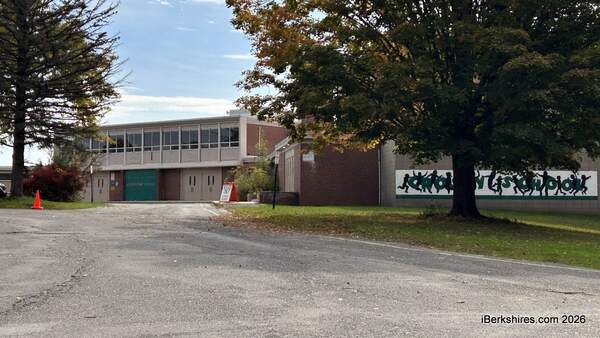
On Wednesday, the committee approved its first budget for the term. Morningside Community School will close at the end of the academic year and is excluded. 

"This has been quite a process, and throughout this process, we have been faced with the task of closing a $4.3 million budget deficit while making meaningful improvements in student outcomes for next year," interim Superintendent Latifah Phillips said. 

"Throughout this process, we've asked ourselves, 'What should we keep doing? What should we stop doing? And what should we start doing?' I do want to acknowledge that we are presenting a budget that has been made with difficult decisions, but it has been made carefully, responsibly, and collaboratively, again with a clear focus first on supporting our students."

The proposed $87,200,061 school budget for FY27 includes $68,886,061 in state Chapter 70 funding, $18 million from the city, and $345,000 in school choice and Richmond tuition revenues.  It is an approximately $300,000 increase from the Pittsfield Public Schools' FY26 budget of $86.9 million. 

The City Council will take a vote on May 19. 

Thirteen schools are budgeted for FY27, Morningside retired, and the middle school restructuring is set to move forward. The district believes important milestones have been met to move forward with transitioning to an upper elementary and junior high school model in September; Grades 5 and 6 attending Herberg Middle School, and Grades 7 and 8 attending Reid Middle School. 

"I also want to acknowledge that change is never easy. It is never simple, but I truly do believe that it is through these challenges that we're able to examine our systems, strengthen our practices, strengthen our relationships, and ultimately make decisions that will better our students," Phillips said. 

Included in the FY27 spending plan is $2.6 million for administration, $62.8 million for instructional costs, $7.5 million for other school services, and $7.2 million for operations and maintenance. 

Assistant Superintendent for Business and Finance Bonnie Howland reported that they met with Pittsfield High School and made two additions to its staff: an assistant principal and a family engagement attendance coordinator.

In March, the PHS community argued that a cut of $653,000 would be too much of a burden for the school to bear. The school was set to see a reduction of seven teachers (plus one teacher of deportment) and an assistant principal of teaching and learning, and a guidance counselor repurposed across the district; the administration said that after "right-sizing" the classrooms, there were initially 14 teacher reductions proposed for PHS. 

View Full Story

More Pittsfield Stories