Governor Announces Federal Heating Assistance Funding is Now Available

Print Story | Email Story
BOSTON – Governor Maura Healey announced that the Trump Administration has released federal funding for the Low Income Home Energy Assistance Program (LIHEAP).
 
After more than a month's delay, the federal funding was released, and all applications can now be processed, stated a press release.
  
"For more than a month, President Trump has forced American families to wait in the cold," said Governor Healey. "As we hit cold winter weather, we are relieved that funds are finally flowing now, and families can apply for help heating their homes. Our team has worked to make this funding available immediately, because our families cannot afford to wait.  I'm grateful to Secretary Augustus and the team at the Executive Office of Housing and Livable Communities for taking the necessary steps to ensure we were prepared to get the program started again as soon as the federal funding was made available." 
 
LIHEAP is a federal program, referred to as the Massachusetts Home Energy Assistance Program (HEAP) in Massachusetts, that typically helps more than 150,000 Massachusetts households, representing over 300,000 people, afford to heat their homes during the winter each year. This federal funding usually becomes available in early November, but it was delayed due to the federal government shutdown.
 
Even after the government reopened on November 13, it took the Trump Administration nearly three weeks to release funding.
 
During the pause, the Healey-Driscoll Administration utilized leftover federal funding from last year to support households with a heating emergency. The Department of Public Utilities also extended its shut-off moratorium to October 27, 2025 – April 1, 2026.
If you would like to contribute information on this article, contact us at info@iberkshires.com.

CBRSD Makes Cuts to Lower Town Assessments

By Sabrina DammsiBerkshires Staff
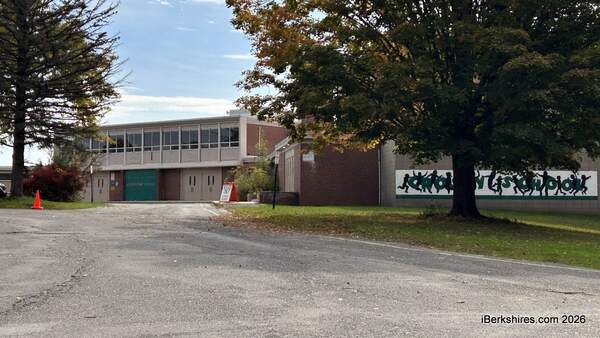
DALTON, Mass. — School officials say reductions in the Central Berkshire Regional School District's budget will be felt, but remain optimistic that it will not prevent them from being "the best regional district in the state."
 
Throughout the budgeting season, officials said they strived to keep the seven member towns informed amid contractual increases outside their control and concerns with a state aid funding formula described as "remarkably wrong."
 
The initial budget was about a 9 percent increase, but with "strategic reductions" the district was able to cut that down to 2.99 percent, bringing the total budget to $37,740,005. 
 
"This was no small feat," said Paul Farella, district's Finance Committee chair.
 
In earlier budget drafts, towns voiced concerns over significantly higher assessments, which ranged from approximately 7 to 15 percent, compared to prior years, when it was about 2 to 7 percent. 
 
With the revised budget, projected net town assessments are: 
  • Becket for $2,859,205, an increase of 5.49 percent
  • Cummington for $670,246, an increase of 5.11 percent 
  • Dalton for $10,106,445, an increase of 5.86 percent
  • Hinsdale for $3,277,495, an increase of 10.54 percent 
  • Peru for $1,083,751, an increase of 6.11 percent 
  • Washington for $826,774, an increase of 6.64 percent
  • Windsor for $995,438, an increase of 9.37 percent
"[The cuts] will be felt, but we believe that it is what is necessary for the time being to not overburden our towns while still being able to provide a quality education to our community," Farella said. 
 
Delivering high-quality education while responsibly managing public funds in a district, which like many rural areas, faces financial constraints is a duty Superintendent Michael Henault said he takes very seriously.
View Full Story

More Pittsfield Stories