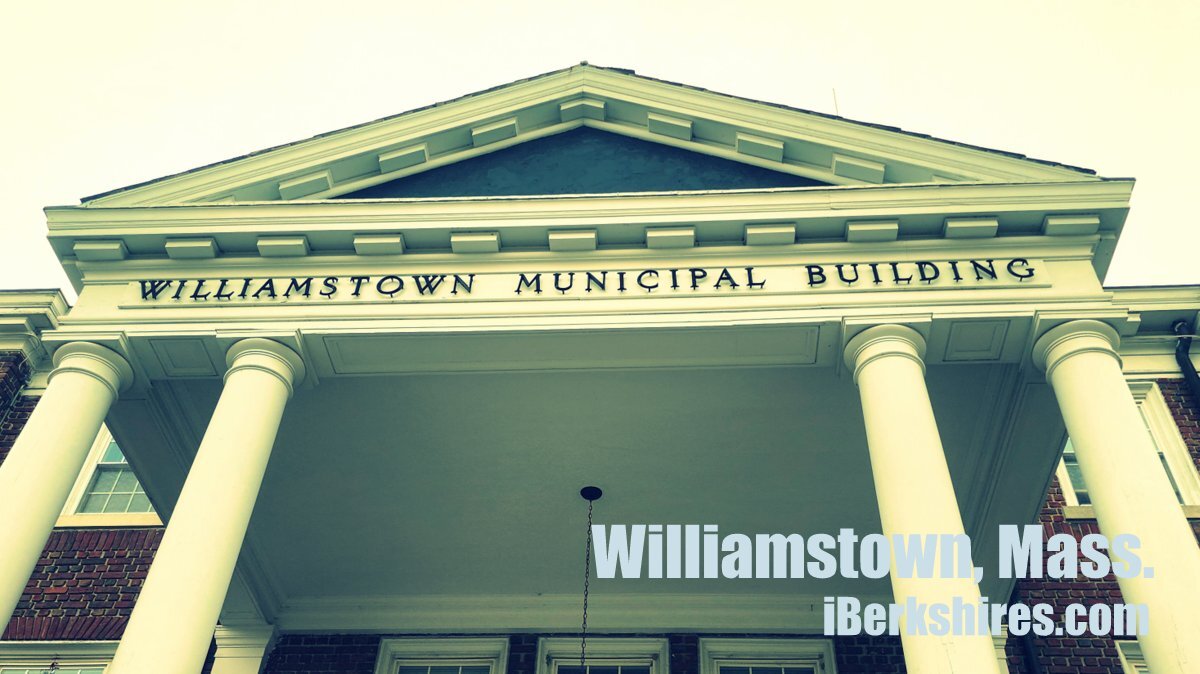
WILLIAMSTOWN, Mass. — The Attorney General's Office has approved a town meeting action to implement a smoking ban for apartments with more than four units.
Now it is up to the town to figure out how to implement the restriction.
In May, town meeting by a 148-56 margin, voted yes on a warrant article proposed by citizen's petition and endorsed by the town's Board of Health.
The Board of Health and the town's health inspector, would have the authority to impose fines of up to $300 for repeat offenders.
The primary responsibility for enforcing the ban on smoking within 25 feet of an apartment or condominium would fall on the landlord or "condominium/cooperative manager," who would be on the hook for the fines, which start at $100 for a first violation.
The AGO had asked the town for an extension to the standard period for the review made for all town meeting actions across the commonwealth.
On Monday evening, Town Manager Robert Menicocci told the Select Board that he received word at the close of business that the Attorney General's Office gave its blessing to what was listed as Article 30 on May's annual town meeting warrant.
"They essentially said: We can't find any reason not to approve this," Menicocci said, paraphrasing the official notification from Boston.
"We definitely have a lot of follow-up and questions for our counsel. The important takeaway is there aren't barriers to moving forward, but there are barriers on how to craft something that's workable."
Menicocci indicated that existing law and legal precedent surrounding housing rights make it a complex issue that will involve considerable help from town counsel to develop an enforcement action plan.
Although the primary enforcement lies with landlords in the ordinance as drafted, there are issues of consistency on how the ban is applied throughout town and how the health inspector will play "referee," Menicocci said.
The AGO also on Monday told the town that Article 27 before the 2025 annual town meeting was, "essentially approved with one condition," Menicocci said.
Article 27 dealt with the use of closed-loop geothermal wells, specifically regulating the use of systems that employ propylene glycol or "any other chemical heat transfer fluid other than potable
water" in the town's Water Resource District.
The town manager said he still needs time to study the notification received late Monday before getting into specifics. But he said the bylaw approved by town meeting, "largely ... can move forward with the exception of some text they disapproved of related to some environmental protection stuff superseded by some state regulations."
If you would like to contribute information on this article, contact us at info@iberkshires.com.
Your Comments
iBerkshires.com welcomes critical, respectful dialogue. Name-calling, personal attacks, libel, slander or foul language is not allowed. All comments are reviewed before posting and will be deleted or edited as necessary.
No Comments
Williamstown Studying Major Overhaul for Main Street
By Stephen DravisiBerkshires Staff
WILLIAMSTOWN, Mass. — The town is working with a Worcester civil engineering firm to redesign Main Street with an eye toward a major project sometime in the next decade.
Community Development Director Andrew Groff was before the Select Board on Monday night to talk about Town Hall's use of a $500,000 state grant to do preliminary design on major improvements to that portion of Route 2 that runs from Water Street west to the Field Park rotary, through the middle of Williams College's campus.
Groff introduced the elected officials to Amanda Bazinet of Worcester's Vanasse Hangen Brustlin, who is helping the town to develop a plan for Main Street that would align with the commonwealth's Complete Streets Program.
"Our project goals, in addition to the increased pedestrian and bicycle accommodations, is just, in general, improving the sightlines and improving the intersection geometry," Bazinet said.
"Complete Streets … has a lot of different facets to it. As Andrew had mentioned, the goal is to improve the safety for all of the roadway users — not just the motorists. We're looking at improving it for pedestrians, bicyclists, anyone using a mobility device. We want to create streets that are safe for all ages and abilities to use. So, while bicyclists will still be allowed, legally, to use the roadway, we want to look at providing a separate bicycle accommodation along the corridor, whether it's a shared use path along both sides of the streets that is a little more accessible to young children or older people with disabilities to look at all transportation options."
One goal is to encourage "active transportation." The Massachusetts Department of Transportation, who the town hopes one day might fund the construction, has a "healthy transportation policy," Bazinet said.
That MassDOT funding would come through the Transportation Improvement Program, which is managed locally by the Berkshire Regional Planning Commission. The design work underway now is being done with an eye toward going after TIP funding years down the road.
The town is working with a Worcester civil engineering firm to redesign Main Street with an eye toward a major project sometime in the next decade.
click for more
The elevated bridge between the Clark Art Institute's main museum and the Manton Research Center is being transformed into new gallery space and storage, and the permanent home of the Aso O. Tavitian collection. click for more
Nearly 90 towns and cities across the commonwealth have voted in favor or replacing the seal, which depicts an arm holding a sword above the head of a Native American. click for more