image description
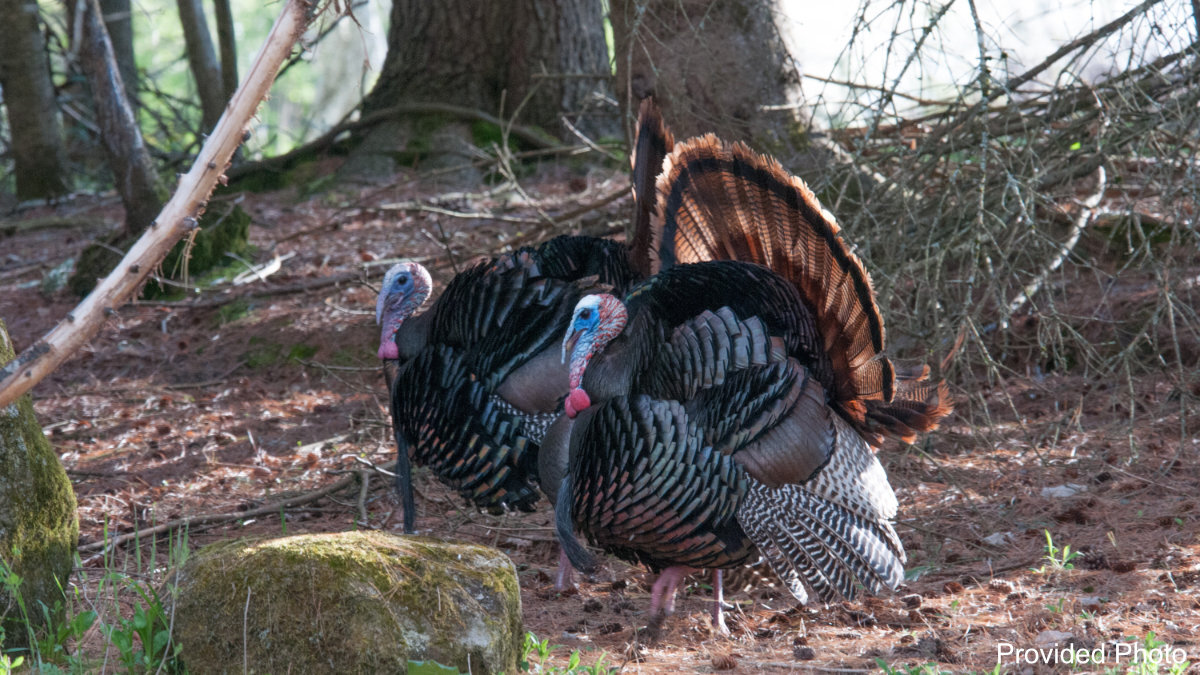
VTF&W photo by John Hall The Thanksgiving turkeys on our tables this holiday originated from native wild turkeys whose populations have been restored across much of North America thanks to scientific wildlife management by state fish and wildlife agencies.

The Wild Turkey's Contribution to Thanksgiving

Vermont Fish and WildlifePrint Story | Email Story
MONTPELIER, Vt.— One of our native wildlife species historically played an important role on Thanksgiving Day.   
 
North America's native wild turkeys were the ancestors of the Thanksgiving turkey on our dinner table. 
 
Originally found only in the wild, turkeys now exist as meat-producing domesticated varieties -- the broad breasted white, broad breasted bronze, white Holland, bourbon red, and a host of other breeds – all of them descended from our native wild turkey. 
 
More than 140,000 servings of Vermont wild turkeys are harvested each year – that's 140,000 servings of free-ranging, wild and sustainably harvested protein. 
 
Wild turkeys exist throughout Vermont today, but that was not always the case.  Wild turkeys disappeared from Vermont in the mid-to-late 1800s due to habitat destruction when land was cleared for farming and only 25 percent of the state was covered by forest.
 
The wild turkeys we see in Vermont today originated from just 31 wild turkeys stocked in Southwestern Vermont by the Vermont Fish and Wildlife Department in 1969 and 1970 when   Vermont's forest habitat was once again capable of supporting turkeys.  State wildlife biologists moved groups of these birds northward, and today Vermont's population of turkeys is estimated at close to 50,000.   
 
This is just one of many wildlife restoration success stories we can be thankful for in 2025.  Funding for Vermont's wild turkey restoration was derived from the sale of hunting licenses and a federal tax on hunting equipment. 
If you would like to contribute information on this article, contact us at info@iberkshires.com.

Pittsfield Celebrates Arbor Day at Taconic

By Brittany PolitoiBerkshires Staff

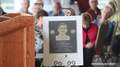
Mayor Peter Marchetti presented the framed original cover art for the day's program. 

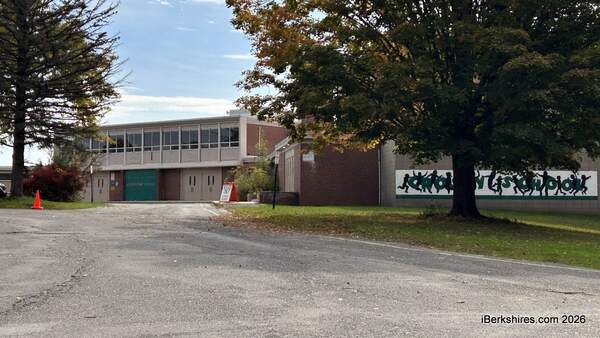
PITTSFIELD, Mass. — Generations of Taconic students will pass the tree planted on Arbor Day 2026 as they enter school. 

Pittsfield's decades-long annual celebration was held at a city school for the first time. Different vocational trades at Taconic High School worked together to plant the Amelanchier, or flowering serviceberry, mark it with a plaque, record the ceremony, create artwork for the program's cover, and feed guests. 

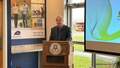
Parks, Open Space, and Natural Resources Manager James McGrath said the students' participation reflects the spirit of Arbor Day perfectly: learning by doing, serving the community, and helping Pittsfield grow greener for generations to come.

"It's not unknown that trees help shade our homes, help clean our air and water, they support wildlife, and make our neighborhoods and public spaces more beautiful and resilient," he said. 

"And Arbor Day is our chance annually to honor that gift and to remember that when we plant something today, we are investing in the future of our green world."

The holiday was established 154 years ago by J. Sterling Morton and was first observed in Nebraska with the planting of more than a million trees.

CTE environmental science and technology teacher Morgan Lindemayer-Finck detailed the many skilled students who worked on the event: the sign commemorating this Arbor Day was made by the carpentry and advanced manufacturing program, specifically students Ronan MacDonald and Patrick Winn; the multimedia production program recorded the event, and the culinary department provided refreshments. 

The program's cover art was created by students Brigitte Quintana-Tenorio and Austin Sayers. The framed original was presented to Mayor Peter Marchetti. 

View Full Story

More Pittsfield Stories