WILLIAMSTOWN, Mass. — The town's diversity committee last week discussed how it might advocate for directing more municipal spending toward social services.
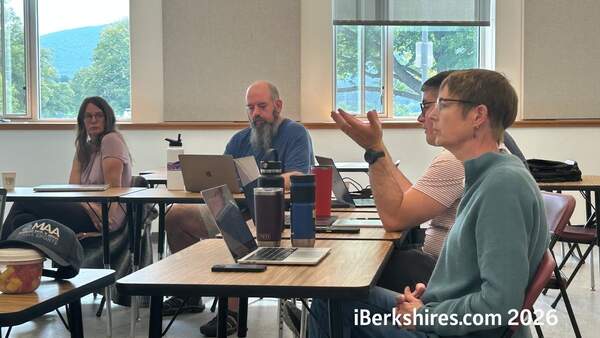
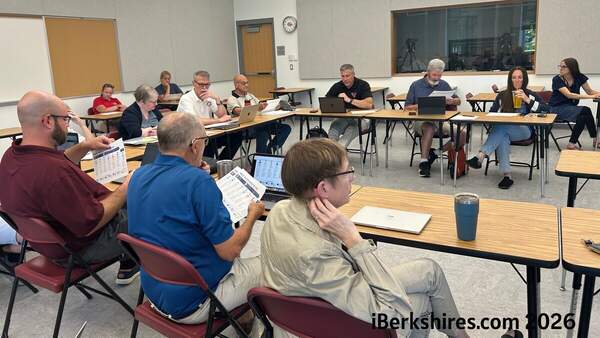
The Racial Equity, Accessibility, Diversity and Inclusion Committee began its meeting with a report from Shana Dixon, who occupies the READI chair dedicated to a member of the Select Board.
Dixon updated her colleagues on the Select Board's most recent meeting, when board members were encouraged to share their budget priorities for fiscal year 2027 with Town Manager Robert Menicocci.
Dixon noted that she chose not to say much at the Nov. 10 Select Board meeting, but one week later, she told her READI colleagues that she questioned whether the town's budget priorities served all residents equitably.
"The word 'services' was thrown around so much during that meeting," Dixon said. "They kept saying, 'We provide a lot of services.' Being a new Select Board member, I wondered how a marginalized person views 'services' that are actually being offered and how they benefit from them.”
Chair Noah Smalls said Williamstown has done a good job providing for services like road maintenance and fire protection, but it has done less to address the kind of social services Dixon pointed to.
"There's less, I believe, an understanding of what the need is in regard to social services, and that makes it way more difficult to provide them or to connect people with them," Smalls said. "Maybe we could pull whatever evaluation does exist, assuming some exists at the town level, around what the needs are for social services. And then, whatever isn't visible, we could work to make visible."
Dixon, not for the first time in either a READI or Select Board meeting, said the answer could lie in a September 2023 report from the Williamstown Community Assessment Research Project (CARES).
The CARES report, the result of months of study and interviews by paid and volunteer social workers, included seven pages with dozens of recommendations for town actions ranging from big-ticket items, like a new community center, to smaller steps, like training board and committee members in facilitating conversation at public meetings.
In the short term, Dixon said it would not be too late for the READI Committee to make requests for the FY27 budget, which will be hammered out by the Finance Committee this winter in preparation for the spring annual town meeting.
"We'd have to discuss what we want the money for," Dixon said. "With the political climate and everything going on, I don't know how it would play out for us to ask for funds."
"I'm never concerned how it will play," Smalls replied. "If it's something the town needs and it would help the town and it would help our mission, we should ask for it. If they throw me out the window for asking, it will be a long, proud fall.
"I think we do ourselves a disservice to not ask for what we believe is the right thing and what's needed for fear of being rejected."
Dixon reported that much of the Nov. 10 Select Board meeting was given to a discussion about the lack of growth in the town's property tax base and how revenues are not able to keep pace with rising expenses. Andrew Art noted that the work of the READI Committee is connected with economic development in town.
"Another area for development would be creating an environment where people feel they're welcome here," Art said. "That's where it intersects with our committee."
The READI committee on Monday did not vote on any specific funding requests for the next fiscal year at Monday's meeting, but the topic could come up when Smalls and committee member Andrew Art sit down with Select Board Chair Stephanie Boyd and Menicocci later this month.
The main discussion point at that meeting may be the future of the READI Committee — specifically whether it should continue as an advisory committee to the Select Board as it was conceived (and then called the DIRE Committee) in the summer of 2020.
Dixon said that in its current capacity, the panel is not being heard.
"I feel like we've been underutilized and swept under the rug," she said. "[The committee] is needed, but I don't know if it's wanted."
Art, who reiterated that he is "agnostic" on the question of whether READI should fall under the purview of the Select Board or town manager, said that the diversity committee has accomplished a lot in the last six years, even if it was, at times, swimming upstream.
"I think it was wanted, and there may be different reasons why it was wanted by different people," said Art, the lone remaining member of the original Diversity, Inclusion and Racial Equity Committee. "One reason may have been that the issues that came before DIRE were difficult, extremely difficult issues to work through, and they were the kind of discussions that never could have been handled by the Select Board.
"I think it was appreciated there was a venue for that, even by people who weren't going to take up the charge to advocate for those issues themselves. There was an appreciation that that work was being done and they didn't have to do it, for some people."
Smalls joined Dixon in expressing frustration at how the Select Board historically has listened to the advisory committee it created. And he said that perhaps it would be easier for the READI Committee to work with an individual, the town manager, as opposed to the five-person board.
"The strength of the committee here, as it stands today, seems to be this opportunity for a public audience," Smalls said. "It's a platform. People can come if they have an issue. They can say things out loud. If there is no requirement on any of the other town professionals to implement anything we say, then it's really dependent on social currency.
"They do get elected. And us presenting what our recommendations are and however they receive them and however they respond to them is the kind of transaction. Then they're on the public stage, and they're being given the recommendations that have been carefully developed, whatever they are, and they can decide how they want to go forward and represent themselves. And then the public can see that and decide how they want to support those people."
If you would like to contribute information on this article, contact us at info@iberkshires.com.
Your Comments
iBerkshires.com welcomes critical, respectful dialogue. Name-calling, personal attacks, libel, slander or foul language is not allowed. All comments are reviewed before posting and will be deleted or edited as necessary.
No Comments
Puppets Teach Resilience at Lanesborough Elementary School
By Breanna SteeleiBerkshires Staff
The kids learned from puppets Ollie and a hermit crab.
LANESBOROUGH, Mass. — Vermont Family Network's Puppets in Education visited the elementary school recently to teach kids about being resilient.
Puppets in Education has been engaging with young students with interactive puppets for 45 years.
Classes filtered through the music class Thursday to learn about how to be resilient and kind, deal with change and anxiety, and more.
"This program is this beautiful blending of other programs we have, which is our anxiety program, our bullying prevention and friendship program, but is teaching children the power of yet and how to be able to feel empowered and strong when times are challenging and tough," said program manager Sarah Vogelsang-Card.
The kids got to engage with a "bounce back" song, move around, and listen to a hermit crab deal with the change of needing a new shell.
"A crab that is too small or too big for its shell, so trying to problem solve, having a plan A, B and C, because it's a really tough time," Vogelsang-Card said. "It's like moving, it's like divorce of parents, it's changing schools. It's things that children would be going through, even on a day to day basis, that are just things they need to be resilient, that they feel strong and they feel empowered to be able to make these choices for themselves."
The resiliency program is new and formatted little differently to each of the age groups.
"For the older kids. We age it up a bit, so we talk about harassment and bullying and even setting the scene with the beach is a little bit different kind of language, something that they feel like they can buy into," she said. "For the younger kids, it's a little bit more playful, and we don't touch about harassment. We just talk about making friends and being kind. So that's where we're learning as we're growing this program, is to find the different kinds of messaging that's appropriate for each development level."
This programming affirms themes that are already being discussed in the elementary school, said school psychologist Christy Viall. She thinks this is a fun way for the children to continue learning.
"We have programs here at the school called community building, and that's really good. So they go through all of these strategies already," she said. "But having that repetition is really important, and finding it in a different way, like the puppets coming in and sharing it with them is a fun way that they can really connect to, I think, and it might, get in a little more deeply for them.
Vogelsang-Card said its another space for them to be safe and discuss what's going on in their life. Some children are afraid because maybe their parents are getting divorced, or they're being bullied, but with the puppets, they might open up and disclose what's bothering them because they feel safe, even in a larger crowd.
"When we do sexual abuse awareness that program alone, over five years, we had 87 disclosures of abuse that were followed up and reported," she said. "And children feel safe with the puppets. It makes them feel valued, heard, and we hope that in our short time that we're together, that they at least leave knowing that they're not alone."
Bedard Brothers also gave the school five new puppets to use. Viall said the puppets are a great help for the students in her classroom, especially in the younger grades.
"Every year, I've been giving the puppets to the students. And I also have a few of the puppets in my classroom, and the students use them in small groups to practice out the strategies with each other, which is really helpful," she said. "Sometimes the older students, like sixth graders, will put on a puppet show. They'll come up with a whole theme and a whole little situation, and they'll act it out with the strategies for the younger students. It's really cute, they've done it with kindergarteners, and the kids really like it."
Vogelsang-Card said there are 130 schools in Vermont that are on the waiting list for them to come in. Lanesborough Elementary has been the only Massachusetts school they have visited, thanks to Bedard Brothers.
"These programs are so critical and life-changing for children in such a short amount of time, and we are the only program in the United States that does what we do, which is create this content in this enjoyable, fun, engaging way with oftentimes difficult subjects," she said. "Vermont is our home base, but we would love to be able to bring this to more schools, and we can't do this without the support of community, business funders or donors, and it really makes a difference for children."
The fourth-grade students were the first class to engage with the puppets and a lot of them really connected with the show.
"I learned to never give-up and if you have to move houses, be nervous, but it still helps," said William Larios.
"I learned to always add the word 'yet' at the end," said Sierra Kellogg, because even if she can't do something now, she will be able to at some point.
Samuel Casucci was struck by what one of the puppets talked about. "He said some people make fun of him if he dresses different, come from different place, brings home lunch, it doesn't matter," Samuel continued. "We're all kind of the same. We're all kind of different, like we have different hairstyles, different clothes. We're all the same because we're all human."
"I learned how to be more positive about myself and like, say, I can't do this yet, it's positive and helpful," said Liam Flaherty.
The students got to take home stickers at the end of the day with contact information of the organization.
Students got to showcase their art at the Clark Art Institute depicting their relationship with the Earth in the time of climate change. click for more
The 100th annual meeting will be held on March 10, 2027, the Community Chest's birthday (there will be cake, he promised) and a gala will be held at the Clark Art Institute on Sept. 25, 2027.
click for more