Adams Board Offers Town Administrator Post to Caccamo
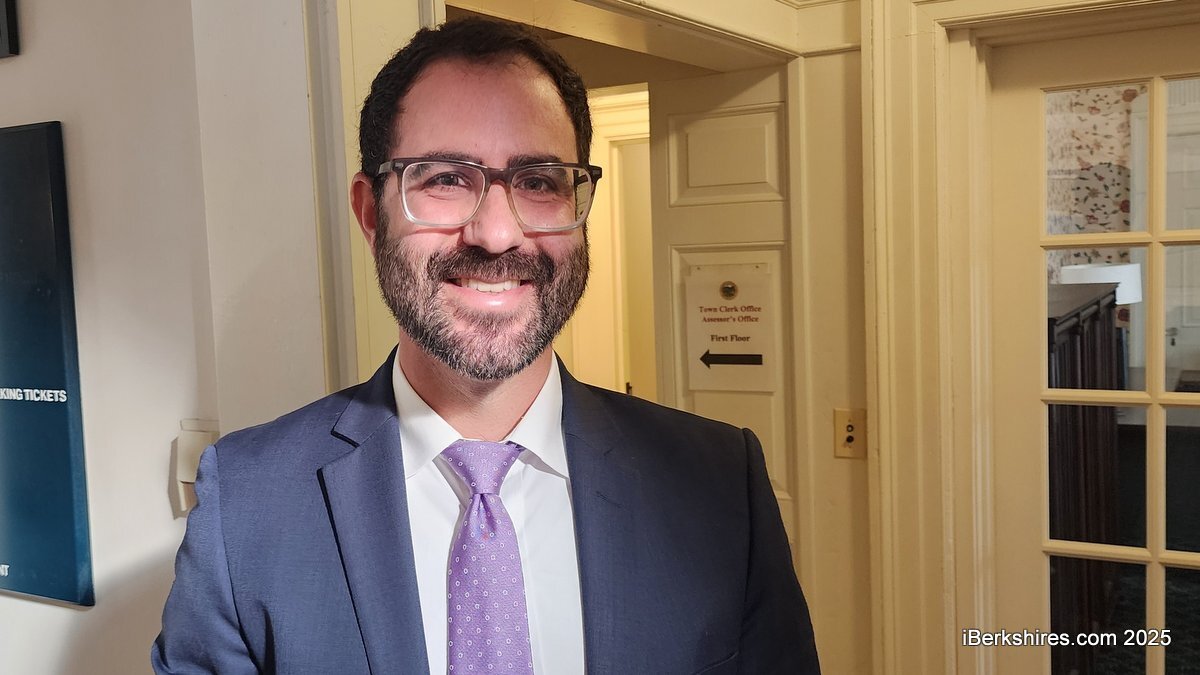
ADAMS, Mass. — The Board of Selectmen voted on Wednesday to offer the position of town administrator to Nicholas Caccamo, current town administrator in Williamsburg.
The 4-1 vote came after about a half-hour of discussing the merits of each candidate.
Chair John Duval said afterward that Caccamo had accepted the position and that he had been designated by the board to negotiate a draft contract. The board held an executive session following the regular meeting to discuss contract negotiations.
Caccamo is expected to start in January once fulfilling the 60-day notice in his contract with Williamsburg. Library Director Holli Jayko, who has taken on double duty as interim town administrator, will continue in that role until Caccamo takes over.
He has been with Williamsburg for four years and served three terms on the Pittsfield City Council. A former teacher, he also holds a master of science in public policy and administration and in regional planning.
Caccamo was chosen over MassAbility placement specialist and Pittsfield City Council President Peter White and Easthampton Associate Planner Dillon Maxfield. All three had been interviewed by the board on Saturday.
The main reason the board voted for Caccamo was his experience as a town administrator, specifically in working with budgets. One of the questions the board members posed to the three during Saturday's interviews was about their ability to step in to develop the fiscal 2027 budget.
Duval, who was the deciding vote on Wednesday, said, "seeing what the interims have gone through to keep the town running, they've really made it happen."
He supported Caccamo because while he does not have the same responsibilities that the role has in Adams, "he does know what a town administrator's responsibilities are, and he does do the budget, and we have a budget coming up, starting in December. ... hopefully, with his experience, we can get started right away, instead of having to bring him up to speed very much in that area."
Members Jay Meczywor and Ann Bartlett had also supported Caccamo, with Bartlett making the motion to offer him the post and Meczywor seconding.
Mezcywor said while White was the type to build consensus and Maxfield in large part shared his view of Adams, Caccamo was "someone that understands budgeting, and someone who will be able to look at things in an analytical way and use specific metrics to help make a plan that will guide us in the future."
"The town needs a leader that can guide this board with comprehensive understanding of policy and procedure and deliver in a thoughtful, thorough and careful way," he said.
Bartlett said he had "the educational experience needed to be our town administrator, and would have no problem with the issue of being a resident of our town and focusing fully on our town."
Both White and Maxfield are running in their local elections next week and asked that, if elected, the board allow them to serve out their terms.
Joseph Nowak and Christine Hoyt had supported White, though Hoyt voted for Caccamo on seeing which way the board was going.
Nowak preferred White as "knowing the players" because of his political experience as a city councilor and cited his focus on Adams.
"We're going to need somebody during the economics times we have and social uprising that we may have, someone who's been in the ring before and coming from Pittsfield, it's somewhat of a microcosm of what Adams is," he said. "They share those same type of problems we do."
Hoyt pointed to White's involvement in Pittsfield's $150 million budget as a councilor and his experience in management and supervising employees. In particular, she pointed to his communication skills, "Pete has done a tremendous job, through various channels, communicating what is going on with his municipality, how people can get involved. He's gotten people engaged in the process, and I've seen that happen."
All the board members said the three candidates were suited for the position and it had been difficult to make a decision. They thanked the candidates for their interest and to Richard White of Groux-White Consulting LLC, which led the search.
Caccamo replaces Jay Green, who was hired as Lenox town manager late last year .
Tags: town administrator,