image description
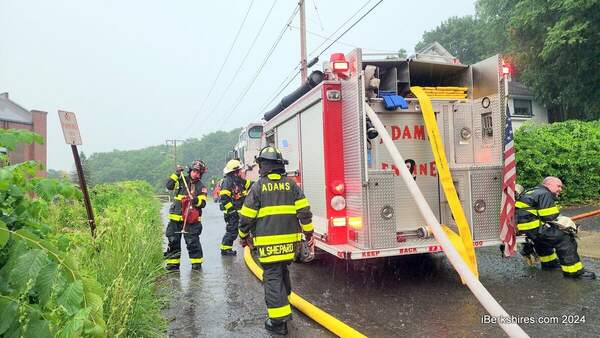
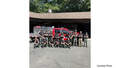
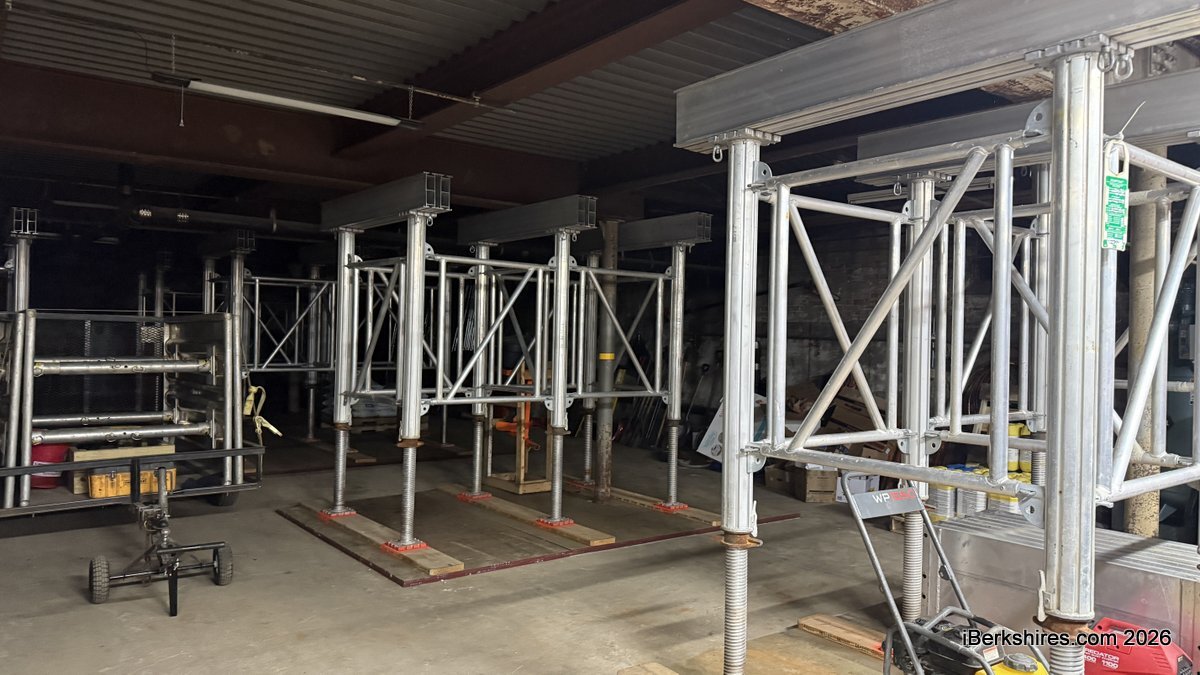
The Adams Fire District district is renting a shoring system to hold up the floor of the fire station on Park Street. It will be asking the annual district meeting to purchase the system.

Adams Firehouse Shored Up While District Seeks Options
By Sabrina DammsiBerkshires Staff
Print Story | Email Story

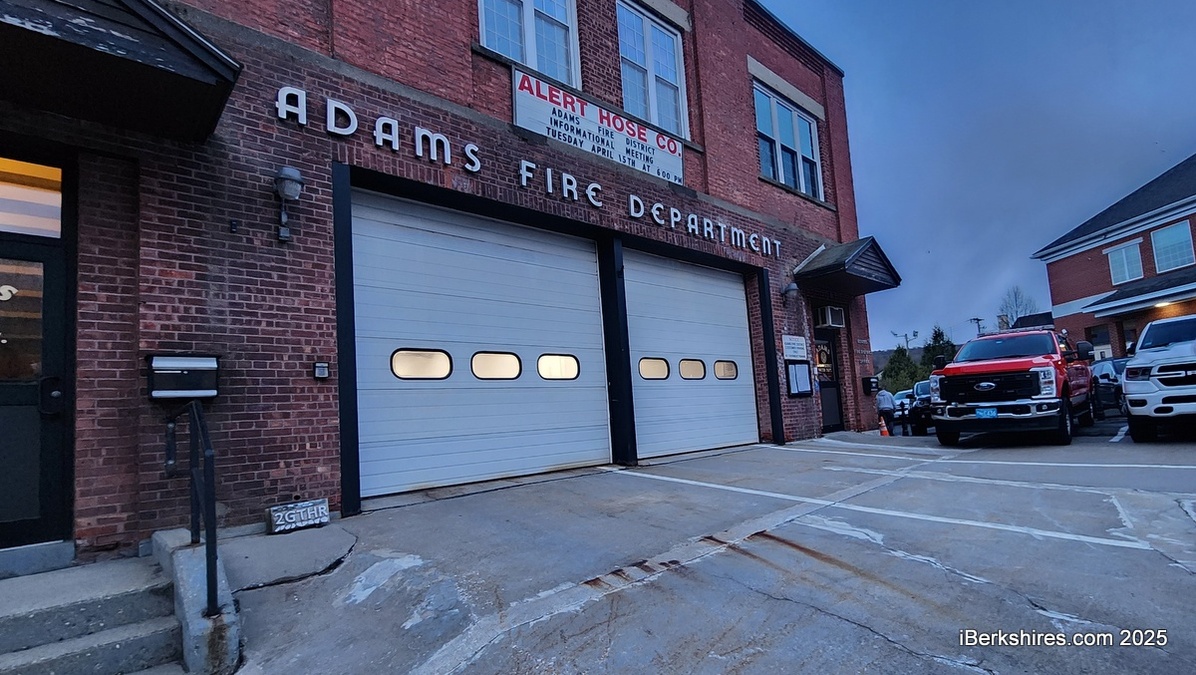
Officials say the 60-year-old fire station is obsolete in terms of space and conditions to house the Fire and Water Departments. 
ADAMS, Mass. — Like many public safety organizations in the Berkshires, the Adams Fire District is looking for ways to address its building's deteriorating condition. 
 
The 65-year-old firehouse on Columbia Street houses both the fire station and Water Department and has myriad issues including leaking and rotting windows, improper ventilation, outdated and obsolete electrical panels, minimal storage, two undersized bays, no sprinkler system or carbon monoxide detectors, and no space for training. 
 
Last year, the Fire Department worried its new engine would fall through the floor of the firehouse so the district invested in renting a shoring system to hold the structure up. 
 
Prior to installing the system, the 2026 ladder truck could not be housed inside the station; with the temporary fix in place, it can now be stored indoors and is fully in service. 
 
Voters can expect warrant articles addressing the situation, including $8,000 for a space needs assessment and $44,000 from free cash to purchase the station's shoring support system.
 
Renting the system costs about $2,000 per month, and with long-term solutions — such as repairing the deteriorating building or relocating departments — expected to take several years, officials believe purchasing it may be the more feasible option.
 
Although the system holds up the structure, it also exacerbates another issue — space. 
 
The Water Department's trailers and equipment had to be relocated to several sites around town, as the system now occupies more than half of the space where they were previously stored.
 
"We lost about 70 percent of our garage … that was our everything. It has dramatically affected [operations] because we have trouble getting in and out now, we can't get our trailers down there, we moved equipment all over the place," Water Department Superintendent John Barrett said. 
 
"So, now to go and try to do something, we effectively have four locations that we may have to go to do one job now, because we can't keep all the stuff in here anymore." 
 
Some equipment remains at the station, while other items are scattered across multiple locations: the Water Department's back loader is at the Highway Department, pipes are stored at the well station in Cheshire, gravel is at the Adams construction facility, and gates and additional equipment are kept at Hoxie Brook, where the town's $2 million tank is located.
 
Depending on the equipment required, having to travel to multiple locations to collect materials can add 45 to 50 minutes to a job, Barrett said. 
 
"If we have a job planned, we can prepare for that, and we can do that … we're an emergency 24/7 service so it really impacts our response times and our repair times when we go out for any emergency water break," he said. 
 
First Assistant Engineer David Lennon previously went through the department's history from its founding with three hand-drawn carts in 1873, to the 1890 Park Street firehouse and to the current fire station in 1960.
 
The department was founded in 1876, as the Alert Hose Company No. 1, a volunteer organization tasked with providing fire suppression and other emergency service manpower. 
 
Officials have stated that the town's needs have grown over the years, leading to the department's expansion and a greater need for funding.
 
It no longer meets the needs of a modern fire service, with the growing number of regulations and standards, larger and heavier vehicles, increased equipment and training requirements, and a rising call volume.
 
Compounding these issues are limited parking and the difficult and dangerous need to cross traffic lanes to back trucks into the firehouse on a major road with obstructed views.
 
Modern fire departments also require decontamination areas, as it has been discovered that after returning from a fire, gear carries carcinogens and PFAS. The station becomes contaminated when firefighters put their gear away without proper decontamination, Fire Chief John Pansecchi said. 
 
"They're finding a lot of contamination in the older stations from that," he said. 
 
The space needs assessment will likely show that the fire station and Water Department need to relocate because of due to insufficient space to meet current needs and the lack of room for an addition, Pansecchi said. 
 
"We've just been managing the space that we have and trying to survive," he said. 

Tags: adams alerts,   fire district,   
If you would like to contribute information on this article, contact us at info@iberkshires.com.

State, Local Leaders Celebrate Funding Boost For Ashuwillticook Rail Trail Extension

By Sabrina DammsiBerkshires Staff

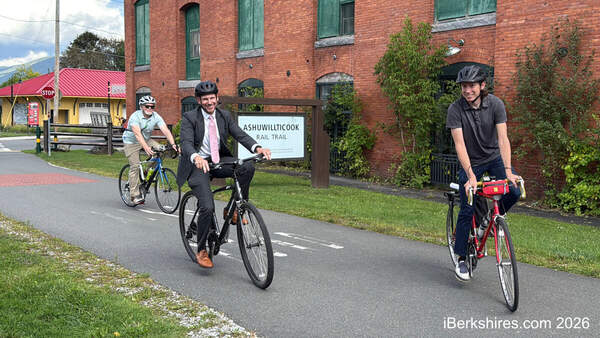
ADAMS, Mass. — State officials and local leaders kicked up their kickstands and took a ride along the final stretch of the Ashuwillticook Rail Trail on Thursday to celebrate new investments in rural communities.

Federal Funds and Infrastructure Office (FFIO) Director Quentin Palfrey joined local leaders, including State Rep. John Barrett III and Berkshire Regional Planning Commission (BRPC) Executive Director Laura Brennan, in Adams to highlight the newest round of FFIO funding. The grant will provide BRPC with $64,700 in state funds to help advance the Ashuwillticook Rail Trail expansion.

"When Governor Healey came into office, one of her big day-one commitments was to make sure that Massachusetts was fighting for every dollar possible coming out of Washington," Palfrey said, speaking about FFIO, a program created in 2023 to help the state aggressively pursue and coordinate federal funding opportunities.

This builds on a $17.3 million federal award secured last year for the project, dubbed the A2A project, which supports the design of a 9.3-mile shared-use path connecting the existing Ashuwillticook Rail Trail to the Williamstown Mohican Path.

"One of the things that she emphasized to me when we set up the Federal Funds and Infrastructure Office was that we need to make sure that these resources not only come into Massachusetts, but benefit all of Massachusetts," Palfrey added.

The additional $64,700 will allow BRPC to gather information about transportation needs in northern Berkshire County to help inform the design of the trail expansion. BRPC will partner with Williams College and Luminary Evaluation, LLC to use the University of Michigan's Transportation Security Index (TSI).

Brennan said BRPC will deploy a 16-question survey that will allow them "to research local and regional perspectives and surface the needs of our neighbors when it comes to transportation in the Berkshires."

"The best-case scenario would be if the survey turned up results that all needs are met and that everyone has access to the places and the things that they need to travel to – but we know that is not true," Brennan said. "We know that folks in Berkshire struggle to get to their place of employment, to be able to access important medical appointments, [and] other engagements. So, the transportation security index is going to help us really hone in on those specific needs, identify pockets of needs or areas where there is a strong concentration or depth of need."

She said FFIO's investment offers a "wonderful augmentation" to BRPC's current plans for the bike trail extension. It's also an investment that will make the region more competitive for other transportation opportunities.

"This is an incredibly multifaceted and valuable investment, and we deeply appreciate it," she said.

Barrett said these investments drive growth in the Berkshires.

"I've always found that if you're going to grow an area, you grow with what you have here to grow. You don't bring something in. We have a natural beauty. We have an environment that's second to none, and that's what we are going to grow on," he said.

Barrett said that in the First Berkshire District alone, 4,000 new people moved to the area.

"We're seeing that migration here. They're going to have activities. They're going to have jobs, and we're going to have a great educational system that goes with it with our two colleges that are here," he said.

Palfrey said it was clear during the initial creation of FFIO that federal funding often went to wealthier and more urban communities with larger planning departments and greater access to consultants. He added that FFIO helps reverse this trend and get projects in rural communities off the ground.

View Full Story

More Adams Stories