New Mount Greylock Handbook Outlines Restorative Practices for Discipline

By Stephen DravisiBerkshires Staff
Print Story | Email Story
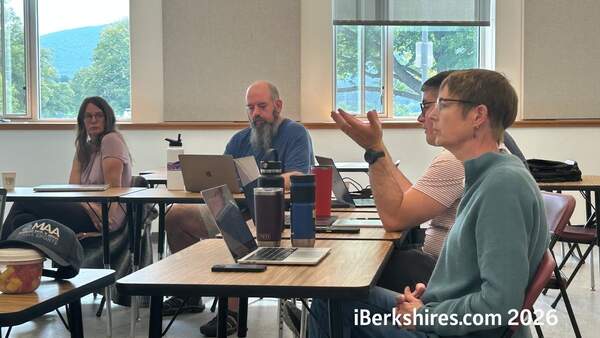
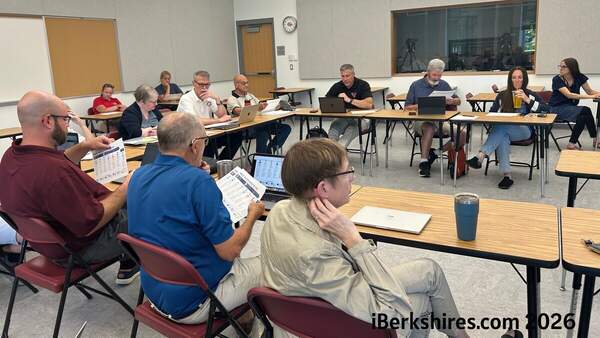
WILLIAMSTOWN, Mass. — The Mount Greylock Regional School Committee on Thursday reviewed an updated middle-high school student handbook that includes the new student behavior code the district has developed over the past year.
 
In conjunction with consultants from the Chicago-based non-profit The Equity Imperative, the district last year began a process of categorizing "disruptive or harmful behavior," outlining the district's responses and specifying how families will be notified.
 
"That involves three tiers of behavior and associated responses," Superintendent Joseph Bergeron told the committee. "These behavior matrices detail all we've workshopped both within the working group over the past year and, more publicly, as we worked through spring and summer."
 
The new content comes in the handbook's Section VIII, titled "Rules, Regulations and Procedures."
 
The first tier of offenses, labeled "Minor/Low-Level Behaviors" include things like "off-task behavior," "talking out of turn" and "profanity." Responses start with techniques like "verbal redirection" and a "classroom restorative circle" and elevate to "detention referral" and "loss of break/recess."
 
Tier 2 behaviors, dubbed "Moderate/Recurrent Behaviors," include "major or repeated documented defiance," "excessive classroom disruption," bullying and "verbal slurs, discrimination or harassment." Those cases would draw responses ranging from a "restorative conference" between the student, teacher and administrator or counselor, a family meeting and in-school or after-school detention.
 
"Major/High-Level Behaviors," Tier 3 in the district matrix, include assault, "ongoing threatening behavior or bullying, sexual harassment, "recording/photographing without explicit permission" and "theft or vandalism greater than or equal to $250." Tier 3 behavior also would lead to a family meeting at a minimum but also could include "restitution and apology process," in-school or out-of-school suspension, referral to the commonwealth's Department of Children and Families and, ultimately, alternative placement of the student.
 
"It reflects trying to make sure that we are addressing behavior in its root cause, that we are trying to take steps to restore relationships and education students as a first step, that we are putting communication with families in various forms very much up front and that all responses to behavior are progressive in nature — except the most severe, Tier 3-type behavior, where we really need to jump straight from being notified to taking action that is more traditional, which would involve separation from the school population to maintain safety," Bergeron explained.
 
The Student/Family Handbook is a product of the administration, meaning the School Committee did not need to vote to approve the document. But committee member Carolyn Greene noted that the handbook should align with the district handbook, which includes, among other things, a section on student discipline.
 
Bergeron told the committee that one of his goals for the year ahead is to find ways to pare down the handbook, which currently has more than 110 pages, and make it more user friendly for students and families.
 
"In Massachusetts, these handbooks are often the place for legal compliance and state compliance," Bergeron said. "We, as a school district, make sure that everything the state says we're required to have in there, everything our lawyer recommends we have so that we can do it or we make sure families know we're doing it. What that leads to, over the course of many years is just a lot of stuff.
 
"In time for next year, we'll be whittling away at this, working with state requirements and legal counsel and internally to figure out how we can make this a more immediately useful to families and staff document, rather than just being compliant, which it very much is."
 
Revising the handbook is an "informal" goal for the first-year superintendent.
 
The School Committee also voted to accept the state-mandated superintendent goals that Bergeron previously discussed with the elected panel at its September meeting. Among those goals are demonstrating "an increased student and staff sense of belonging through Panorama survey data responses," developing a way to share incident data with the community at large, creating a Community and Culture Committee to find ways to increase the sense of belonging in the three-school district, demonstrating students' progress through diagnostic assessment, rolling out a new math curriculum and examining the challenges of Mount Greylock's "current schedule and course offerings."
 
The School Committee will assess Bergeron's progress at addressing the stated goals when it conducts an annual performance review.
 
In other business on Thursday, the School Committee closed the books on fiscal year 2025 for the district, appointed Greene to represent the committee at the annual meeting of the Massachusetts Association of School Committees and discussed an addition to the district's graduation requirements to incorporate new state standards for "competency" in the wake of last November's statewide vote to get rid of the "high-stakes MCAS" as a requirement for a high school diploma.
 
"Right now, if someone wants to graduate from a high school in Massachusetts, they need to both meet both the local graduation requirements, which is you've taken the following courses and distribution of courses and so on, as well as they need to meet this competency determination bar, which is an assessment of what skills you've developed within specific areas," Bergeron said. "That's where this language comes in."
 
The proposed policy is being developed by the School Committee's Policy Subcommittee, working off a model policy put forward by the MASC in August, Bergeron said.
 
Policy Subcommittee Chair Jose Constantine said the group plans to bring a final draft to the School Committee for approval at its Nov. 6 meeting.

Tags: MGRSD,   

If you would like to contribute information on this article, contact us at info@iberkshires.com.

Puppets Teach Resilience at Lanesborough Elementary School

By Breanna SteeleiBerkshires Staff

The kids learned from puppets Ollie and a hermit crab.

LANESBOROUGH, Mass. — Vermont Family Network's Puppets in Education visited the elementary school recently to teach kids about being resilient.

Puppets in Education has been engaging with young students with interactive puppets for 45 years.  

The group partnered again with Bedard Brothers Chevrolet, which sponsored the visit. 

Classes filtered through the music class Thursday to learn about how to be resilient and kind, deal with change and anxiety, and more.

"This program is this beautiful blending of other programs we have, which is our anxiety program, our bullying prevention and friendship program, but is teaching children the power of yet and how to be able to feel empowered and strong when times are challenging and tough," said program manager Sarah Vogelsang-Card.

The kids got to engage with a "bounce back" song, move around, and listen to a hermit crab deal with the change of needing a new shell.

"A crab that is too small or too big for its shell, so trying to problem solve, having a plan A, B and C, because it's a really tough time," Vogelsang-Card said. "It's like moving, it's like divorce of parents, it's changing schools. It's things that children would be going through, even on a day to day basis, that are just things they need to be resilient, that they feel strong and they feel empowered to be able to make these choices for themselves."

The resiliency program is new and formatted little differently to each of the age groups.

"For the older kids. We age it up a bit, so we talk about harassment and bullying and even setting the scene with the beach is a little bit different kind of language, something that they feel like they can buy into," she said. "For the younger kids, it's a little bit more playful, and we don't touch about harassment. We just talk about making friends and being kind. So that's where we're learning as we're growing this program, is to find the different kinds of messaging that's appropriate for each development level."

This programming affirms themes that are already being discussed in the elementary school, said school psychologist Christy Viall. She thinks this is a fun way for the children to continue learning. 

"We have programs here at the school called community building, and that's really good. So they go through all of these strategies already," she said. "But having that repetition is really important, and finding it in a different way, like the puppets coming in and sharing it with them is a fun way that they can really connect to, I think, and it might, get in a little more deeply for them.

Vogelsang-Card said its another space for them to be safe and discuss what's going on in their life. Some children are afraid because maybe their parents are getting divorced, or they're being bullied, but with the puppets, they might open up and disclose what's bothering them because they feel safe, even in a larger crowd. 

"When we do sexual abuse awareness that program alone, over five years, we had 87 disclosures of abuse that were followed up and reported," she said. "And children feel safe with the puppets. It makes them feel valued, heard, and we hope that in our short time that we're together, that they at least leave knowing that they're not alone."

Bedard Brothers also gave the school five new puppets to use. Viall said the puppets are a great help for the students in her classroom, especially in the younger grades. 

"Every year, I've been giving the puppets to the students. And I also have a few of the puppets in my classroom, and the students use them in small groups to practice out the strategies with each other, which is really helpful," she said. "Sometimes the older students, like sixth graders, will put on a puppet show. They'll come up with a whole theme and a whole little situation, and they'll act it out with the strategies for the younger students. It's really cute, they've done it with kindergarteners, and the kids really like it."

Vogelsang-Card said there are 130 schools in Vermont that are on the waiting list for them to come in. Lanesborough Elementary has been the only Massachusetts school they have visited, thanks to Bedard Brothers. 

"These programs are so critical and life-changing for children in such a short amount of time, and we are the only program in the United States that does what we do, which is create this content in this enjoyable, fun, engaging way with oftentimes difficult subjects," she said. "Vermont is our home base, but we would love to be able to bring this to more schools, and we can't do this without the support of community, business funders or donors, and it really makes a difference for children."

The fourth-grade students were the first class to engage with the puppets and a lot of them really connected with the show.

"I learned to never give-up and if you have to move houses, be nervous, but it still helps," said William Larios.

"I learned to always add the word 'yet' at the end," said Sierra Kellogg, because even if she can't do something now, she will be able to at some point.

Samuel Casucci was struck by what one of the puppets talked about. "He said some people make fun of him if he dresses different, come from different place, brings home lunch, it doesn't matter," Samuel continued. "We're all kind of the same. We're all kind of different, like we have different hairstyles, different clothes. We're all the same because we're all human."

"I learned how to be more positive about myself and like, say, I can't do this yet, it's positive and helpful," said Liam Flaherty.

The students got to take home stickers at the end of the day with contact information of the organization.

View Full Story

More Williamstown Stories