Dalton Panel Talks ICE in Berkshire County
DALTON, Mass. — Police Chief Deanna Strout is stressing that Dalton residents should feel confident in calling police for help regardless of their immigration status.
Strout told the 50 or so people who attended a forum on U.S. Immigration and Customs Enforcement in the county that she was a little nervous to speak, as it has been hard to talk about the recent actions as a law enforcement officer.
The chief said personal opinions should not be raised in her profession and she realized it was important to just state the facts for those who are interested in the law enforcement side when it comes to ICE being in their community.
"I shared our immigration policy because I thought it would maybe reassure people to understand what local police are responsible for versus what immigration or ICE would do. So it was really important for me to get the message across to our community that every member in our community is safe," she said.
"We don't care what your immigration status is. That does not matter to us. We're not checking it. We're not asking. We want you to be safe. We want you to feel safe calling us. We want you to feel safe if you're a victim, if you're a witness."
The Dalton Police Department has included guidelines regarding immigration and federal authorities in its policy manual.
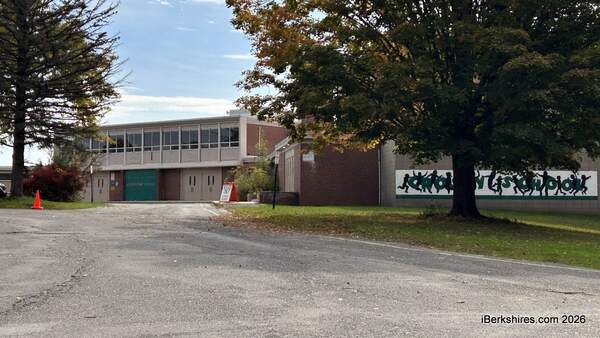
The information session was hosted last Monday by the Dalton Democratic Town Committee at Nessacus Regional Middle School with panelists Strout, immigration attorney Jessica David and Berkshire Interfaith Organizing community organizer Fernando Leon.
Leon, who is from Ecuador, spoke about what happens when someone gets detained and how it affects families. He confirmed that 23 people were taken by ICE in the county and that BIO has connected 17 of those detained to legal resources courtesy of funds raised by organizations like Greylock Together and Roots and Dreams and Mustard Seeds.
He explained that when people are picked up, it can be hard to track and find them. He also said conditions are reportedly bad in some detention centers.
"Thankfully, in the detention centers, especially in Massachusetts, they have the right to call people, to call family, to call friends, to call legal counsel, the conditions are humane," Leon said. "In other places, like in Texas, you got to put money for them to be able to call family or friends. They are just getting food and water, the bare minimum. There have been so many 911 calls asking for help because people are thirsty, people are hungry, people are not receiving medical care."
People who have been released from detention centers have spoken of overcrowding, inability to access legal resources, filthy conditions, and lack of food and water and medical care.
"With the new current administration, the policy seems to be to remove everyone they possibly can, no matter what, as long as they are not here without legal status," said David. "And the biggest problem with that definition is that legal status is actually a really gray area. People can be here without a permanent status, but be waiting in a line for a status that if they left the U.S., they would no longer be eligible.
"And those lines, unfortunately, are now 10 to 20 to 30 years long because we allocate so few visas to these people. So being in the United States without documentation is not a crime, it's a civil violation."
Since detainees are charged with a civil violation, they have a right to an attorney but not one paid for by the government, whereas if they were charged with a crime they would, she said. ICE is able to stop anyone they believe is here illegally but unable to do so in a private business or home without a judicial warrant.
"Currently, ICE can stop whoever they believe is here illegally. They can question the person and ask them to show documentation. They can do this out on the street and in public areas, or if they've been invited into a private business or home, they cannot enter a home without permission or without a judicial warrant," David said.
She said ICE will also racially profile people to ask them questions.
"A judicial warrant is a warrant that is specifically written to what the person is searching for and is signed by an actual judge," Davis said. "Immigration warrants are administrative warrants, which means they are produced by ICE and signed by ICE. They do not give them permission to enter a private home or business. Unfortunately, they currently can choose to racially profile people in order to stop them and ask them questions."
Strout told the audience that ICE does not communicate with her department and that local police cannot stop federal officers from doing their job.
"I've never met an ICE agent in my nearly 28 years as a police officer. I've never seen them in our community," she said. "We have no authority over what they do, which sometimes is difficult, you know, you're used keeping your town safe and kind of being able to be in charge of things like that. We don't have a say in what they do. They do not communicate with us."
An audience member asked if officers would intervene if they saw an agent taking someone down "brutally."
"If we saw someone being violently assaulted, yes, we would intervene 100 percent in that. I mean, there's no way, in good conscience any officer in our department would ever allow someone to be hurt or assaulted," she said.
Strout was also asked if officers are prepared to try to de-escalate a situation between ICE agents and someone whom they are speaking with.
"Every one of them [officers] is exceptionally skilled in de-escalation. They're very, very good with their verbal ability to deescalate people," The chief said. "I mean, it's the first thing we try to do is use communication instead of force, because we know that communicating is always going to be the best way to solve something, as opposed to using force."
Many of the attendees asked to what they could do to support immigrants. David sent out a list that mentioned organizations including the Berkshire Immigrant Center, the Massachusetts Immigrant & Refugee Advocacy Coalition, Habeas Project of Massachusetts, and the Berkshire Alliance to Support the Immigrant Community.
Tags: ICE, immigration,