Clark's Director to Step Down After 10-Year Run
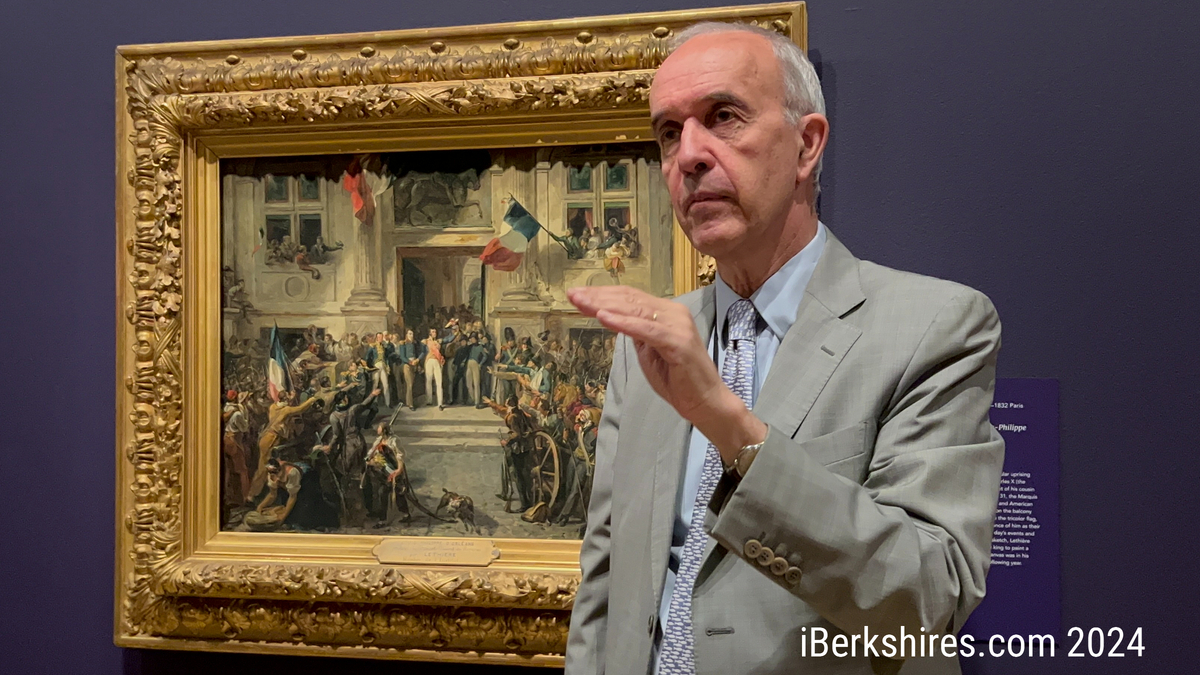
WILLIAMSTOWN, Mass. — Clark Art Institute Director Olivier Meslay will step down from his leadership role in July 2026, concluding a decade of change and growth that has seen the Clark flourish in international stature and engagement, the museum announced on Tuesday.
Meslay, a widely respected curator and art historian, will return to his native France to pursue a variety of independent projects.
"The Clark has long held a very special place in my heart," Meslay said in a news release. "Being entrusted to lead the organization and this exceptional staff has been one of the greatest honors and privileges in my life.
"My wife, Laure, and I first came to the Clark in 2000 when we were both invited to join the inaugural class of Fellows in the Research and Academic Program. Along with our three young children, we spent an incredible year in Williamstown, developing a true love for the Clark and for life here in the Berkshires. To have spent these years immersed in the art and scholarship that define this place and to have had a hand in helping to shape the Clark's future has been a true gift."
Meslay joined the Clark's staff in July 2016 at a pivotal moment in the Institute's history. While the Clark Center had opened to great acclaim in 2014, the campus expansion program was still underway with the renovation of the Manton Research Center nearing completion later that year. Under Meslay's leadership, the Clark embraced its new buildings and campus, and began developing exciting new exhibitions and programming in fulfillment of the Institute's goals of encouraging greater public engagement with art.
"Olivier Meslay is an exceptional leader who has made important contributions to the Clark's growth and continued relevance," said Denise Littlefield Sobel, chair of the Clark's board of trustees. "His expertise, his vision, and his commitment to excellence have continually inspired our visitors, our staff, our trustees, and our colleagues throughout the museum world."
Under Meslay's tenure, the Clark has enhanced its collections and special exhibitions, nurtured the continued development of its international Research and Academic Program, deepened its commitment to sustainability and environmental stewardship to preserve the Clark's 140-acre campus, expanded its community outreach initiatives to provide greater accessibility and broadened the scope of its public programming for its varied audiences.
Meslay was instrumental in securing one of the largest gifts in the Institute's history when the Aso O. Tavitian Foundation designated the Clark as the recipient of a major gift of 331 works of art including early Modern paintings, sculpture, drawings, and decorative arts objects, as well as more than $45 million to support the addition of a new wing to house the Tavitian Collection and provide for its care. The 2024 gift is rich in paintings and sculpture, and includes important works by Jan van Eyck, Parmigianino, Andrea della Robbia, Peter Paul Rubens, Gian Lorenzo Bernini, and Jusepe de Ribera, among others. The Aso O. Tavitian Wing, designed by Selldorf Architects of New York, is planned to open in 2028.
Over the last decade, the Clark has developed a number of important exhibitions including the groundbreaking Guillaume Lethière (in collaboration with the Musée du Louvre, Paris) and the highly acclaimed "Edvard Munch: Trembling Earth" (in collaboration with the Munchmuseet of Oslo, Norway, and the Museum Barberini in Potsdam, Germany), both of which debuted in Williamstown and traveled on to international venues.
Under his leadership, the Clark also realized one of Meslay's key curatorial objectives with the 2020 launch of its first outdoor exhibition, "Ground/work," and its sequel presentation, "Ground/work 2025" (currently on view), which underscore the natural beauty of the Clark's campus and encourage visitors to explore the connections between art and nature. Meslay has also worked to expand the Clark's engagement with contemporary art through its exhibition program, including the launch of its series of Public Spaces installations that have provided a platform for the work of emerging artists including Pia Camil, David-Jeremiah, and Elizabeth Atterbury.
Recognizing the importance of serving the needs of the local community, Meslay expanded the Clark's education and public programming initiatives, establishing a new Division of Learning and Engagement to provide a comprehensive approach to the wide variety of events, activities, and special services the Clark provides to its visitors and neighbors.
In 2023, Meslay made the decision to waive admission fees for all visitors from January through March to broaden engagement with the Clark's local and regional audience. Attendance during these typically slower winter months has increased by more than 60 percent since the free admission program was launched.
"When he arrived, the Clark was a fresh canvas with new facilities and big dreams — primed and ready to imagine an exciting future, take on interesting projects, and work hard to bring these dreams to life," Sobel said. "Thanks to Olivier's guidance, the Clark is full of ambition, enthusiasm, and creativity. The Clark today is stronger than ever, financially sound, and well-positioned to continue to share art and ideas with an ever-widening circle of people who recognize just what a special place this is. We will be forever grateful to Olivier for all that he has done for the Clark."
Meslay and his wife, the noted art historian Laure de Margerie and founding director of the French Sculpture Census, will continue their academic and curatorial pursuits after he concludes his tenure at the Clark.
"We came to the United States with a deep interest in learning about American museums and how they work, which is very different from the French system," Meslay said. "We have seen so much of this country and met so many wonderful people. We will leave the Clark with incredibly warm memories and deep gratitude for the opportunities and experiences we shared here."
The Clark Board of Trustees has formed a search committee to lead the process of selecting the institute's next director.
Tags: Clark Art, resignation,