Mount Greylock School Committee Seeks Input on Superintendent Hiring
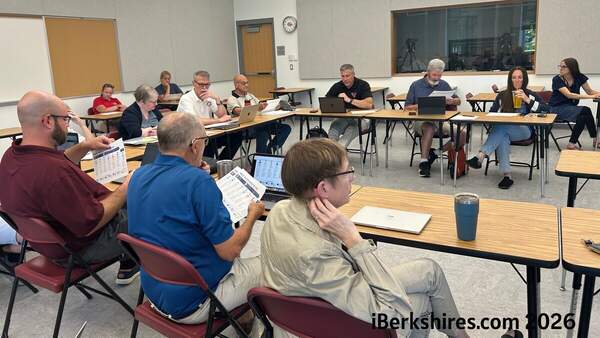
WILLIAMSTOWN, Mass. — Mount Greylock Regional School Committee delayed the decision on promoting the interim superintendent to full-time superintendent and heard an update on the new incident response plan the district will roll out this fall.
During its meeting on Thursday, Chair Julia Bowen suggested that the panel hold off on elevating Joe Bergeron to the superintendent post in order to allow more time for input from the community.
Last month, the committee agreed to enter into negotiations with Bergeron, who took over as interim superintendent last year after serving as the district's assistant superintendent and business manager.
No one at the meeting suggested a change from that plan, but Bowen noted that the decision was set to come down during the summer, when some members of the community might not be aware of the plan or have a chance to weigh in.
A September decision made more sense, "given it's summer and so few people are fully tuned in ... and given our desire to have an open and transparent process and opportunity for input both from the committee and the community," Bowen said.
"I've received any number of emails and texts in support of this plan. But I know there may be people who might want to share their thoughts but aren't aware."
The next committee meeting is scheduled for Thursday, Sept. 11, at 6 p.m.
Meanwhile, the interim superintendent continues to develop a behavior and incident response plan for the district in partnership with Chicago consultant The Equity Imperative.
On Thursday, he talked to the committee about the intent of that plan and the principles that will drive it. But Bergeron stopped short of giving specific details before he has a chance to meet with returning faculty and staff at the end of the month.
Bergeron explained that the new procedures will honor elements of the district's mission statement, which, among other things, calls for a "safe" learning environment and "restorative based practices."
The three schools' communities will have an increased emphasis on safety for all members going forward, he said.
"Our district is making a deliberate investment in our approach to behavior because we firmly believe that a student's ability to navigate their social and emotional world is critical to their success, similar to their mastery of literacy, math, history, science," Bergeron said.
"Putting behavior on par with those academic subjects is a very intentional shift in how we do our work at the district level and how we do professional learning and learning with our students and families.
"By doing so, we will improve academic outcomes, because in order to be productive in a classroom, we need classrooms that can function, where students and staff members feel as though they can be productive."
One change that has been talked about in the past will be the introduction of a single reporting form for all incidents, ranging from bias to bullying to Title IX concerns.
"It's no more a matter for the family or the student to know what type of incident they're reporting," Bergeron said. "We'll have a single intake form that acts as a funnel. They submit, and then the district team and school leadership triages that."
And the submission begins a process of communication between the reporter and the school.
"Immediately, a response goes to the reporter with a timeline for expectations they can have for responses back from us subsequently," Bergeron said.
The district's response, he explained, will be focused on addressing the behavior in the classroom with a focus on communication and positive correction rather than punishment.
"Restorative approaches are central to responses," Bergeron said. "So those preferred initial responses are not what are called ‘compliance-oriented' responses. They are not detentions. They are not suspensions — when possible. There are certainly situations in life where the school's response needs to be to separate a student from the environment in order to ensure the safety of others and in order to give people a chance to figure out what to do next.
"But in every situation possible, we have been picking up various forms of behavior that can be challenging, harmful and trying to make sure we are first attempting that more localized, stay present, restorative response."
Bergeron emphasized that the 2025-26 school year will be the start of what he expects will be a three or four year process to fully implement the new incident response plan and get all district personnel on the same page.
"There are going to be situations where I am imperfect and where everybody else is imperfect as well," he said. "That is to be expected. We are going to make mistakes. I will be as transparent as I can be about how it is progressing. I'm sure we will hear from community members as well."
Tags: MGRSD, school safety, superintendent,