Williamstown's Diversity Panel Mulls Independence From Select Board
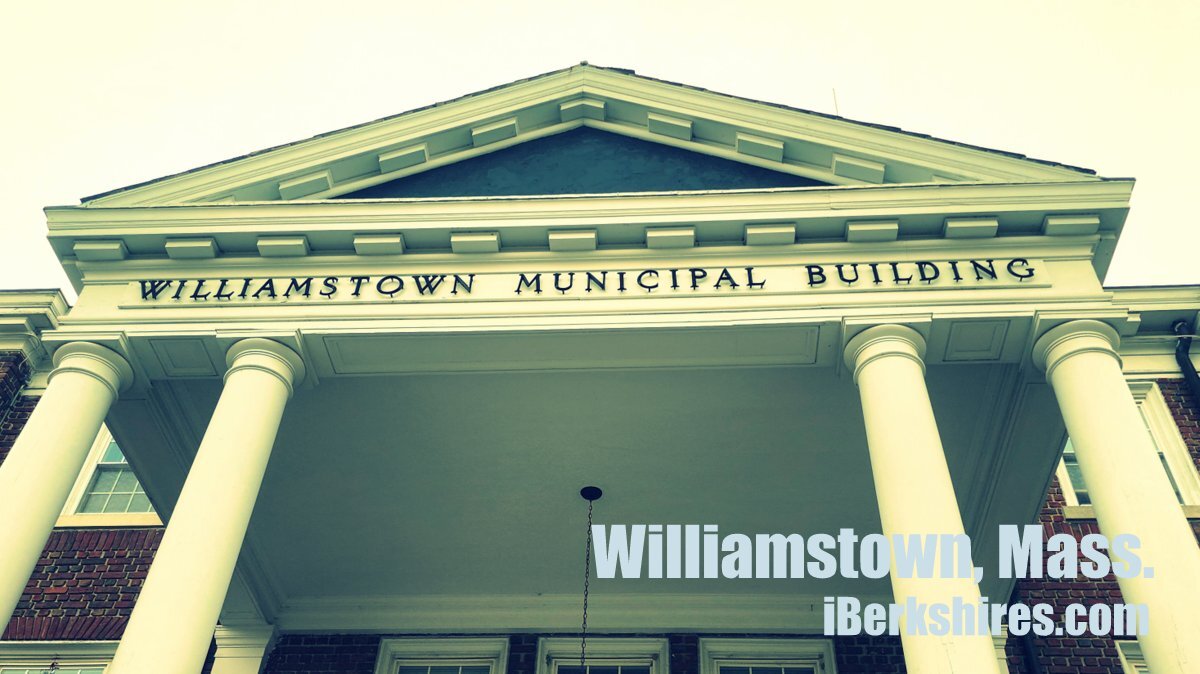
WILLIAMSTOWN, Mass. — The newly renamed READI Committee last week began discussing whether it should continue to operate as an advisory committee to the Select Board.
In July, the Select Board looked at the diversity panel's recommendation for an updated charge for the body, which is going into its sixth year of operation.
Among the recommendations the elected body accepted was a new name for the advisory committee, which, going forward, will be known as the Race, Equity, Accessibility, Diversity and Inclusion Committee.
The Select Board at its July 28 meeting stopped short of adopting the full updated charge pitched by the members of READI. Select Board members raised questions about at least one of READI's proposed areas of focus in a conversation that led to the suggestion it might make sense for READI to operate independent of the Select Board — either inside town government or outside, like the grassroots COOL (Carbon Dioxide Lowering) Committee.
Throughout its existence, the committee formerly known as DIRE (Diversity, Inclusion, Race and Equity) was technically the DIRE Advisory Committee. And the full name its members pitched to the Select Board this summer is the READI Advisory Committee.
But, over the years, members of DIRE and, now, READI have expressed frustration that its advice has not always been heeded.
Current READI Chair Noah Smalls again did so on Monday evening.
"For me, having been present for a lot of this, all of this really got confused when the Select Board started to comment and critique on the things we felt were priorities for us to focus on and pushing back against that," Smalls said. "That is where this whole conversation about the need for a 'charge' and not understanding what we're doing came from.
"Because they're not receiving our perspective as the expert perspective they've positioned us to have. Instead, they're questioning if they know better than what the expert perspective is and positioning themselves as the expert consultant to lead what our dialogues will be. And that's backwards. It's taking the instrument you put in place and turning it upside down. … It's going to be frustrating."
All other town committees are either required or recognized in Massachusetts General Law and most, if not all, have specific duties recognized in state law. The READI Committee stands alone as the sole creation of the town's Select Board.
When it was conceived in 2020, the committee's mission was intentionally open-ended, and committee members were encouraged to decide for themselves what subjects they wanted to pursue. Two years later, the Select Board specified a charge outlining how it wanted the advisory committee to operate; the current READI members drafted a revised charge for the Select Board's approval.
Shana Dixon, a member of both the Select Board and READI Committee, reported that Select Board members wanted to know the reason why the proposed revision deletes a big chunk of the 2022 charge document that outlines the procedure READI should follow.
Andrew Art, the only original member of the READI Committee still with the group, explained.
"We follow Robert's Rules of Order," Art said. "That spells out the process by which we have debate on the record. We follow the Open Meeting Law. And we produce recommendations that are written for the Select Board, following that process. In my view, all of the lengthy parts of the charge that spell out how DIRE is supposed to do recommendations to the Select Board are simply redundant of what's in the procedural rules we follow. They were eliminated to simply streamline the charge, which is a very wordy document. It's redundant in places.
"The general attempt is to streamline the document. That said, it's the Select Board's document, and they can decide to keep what they want."
Another issue was the READI Committee's recommendation that the revised charge include "Inclusion and belonging in schools" as an area for the group's focus. It was noted at the Select Board meeting that since the board has no authority over the Mount Greylock Regional School District, it has no authority to seek advice on how to manage the public schools.
READI Committee members Smalls and Ursula Bare both said it "does not make sense" to have a town committee focused on issues of race and equity disengaged from the schools.
Smalls spoke at length about how important it is that the town have a committee looking at issues of race and inclusion.
"This is a huge blind spot for our town," he said. "It is a huge blind spot where equity goes when you're in a less than diverse community. And that's OK. But it needs to be acknowledged. If you say, 'I don't think anything's going on. I didn't hear anything' or 'That isn't relative to my experience,' then you're pushing down the people who are not from the dominant culture without necessarily realizing it.
"We're asking — we're demanding — the space for the weakest of us, for the smallest of us. Our town is only as great as we're caring for the smallest citizen.
"If we're saying, 'I just don't think that's important,' and we're sitting in the dominant culture, we're stomping out people who are our neighbors and our friends and Williamstonian family who might desperately need our help in a dire way. This is why the DIRE Committee was formed, in a very dire moment, when, in spite of a national narrative, the town was not really fully able to absorb the internal changes it needed at the systemic level."
One question on the table Monday: Should that space be an advisory committee to the Select Board or something else?
Smalls asked the group what the difference would be if READI operated like the COOL Committee, a 24-year-old "citizen-led climate action committee" that frequently partners with town officials on initiatives like the net-zero action plan called for by town meeting in June 2021.
"If you're an official committee, you're directly in town government," Dixon said. "[If READI moved outside town government], we wouldn't have a relationship with them, like the Finance Committee does. Because we're under the Select Board at the moment, anything we do has to fall under their rules and regulations of what their expectations and objectives are.
"The COOL Committee is almost like an off-grid committee."
Smalls indicated that even though the relationship between DIRE/READI and the Select Board has not always been perfect, there are advantages to being an official town body.
"I think the advantage of having the Select Board's approval is that you can go to the Select Board when you have an initiative that you want to see go forward — to hold people accountable and push things forward," he said. "That hasn't been my experience on the DIRE Committee about initiatives that go forward to the Select Board. But I wonder if that was the kind of intent, that if there was a recommendation from a committee, the Select Board can put that into action. Would we lose that kind of ability?"
Art said he would prefer to see READI continue as a town committee appointed either by the Select Board or the town manager.
"I think it's helpful to have the involvement of the town in the receiving of the advice we're trying to provide and that direction from the Select Board, I think, has been helpful," Art said. "They have welcomed the advice from the committee. We were created by them at a time when the role was beyond the scope of the Select Board to perform. And I think, in some ways, things have changed. But the need for a committee to address the issues and the scope of our charge is still there, in my view."
Smalls disagreed with part of Art's statement but agreed that the READI Committee should stay a town committee.
"I think it would serve us to get out of the purview of the Select Board," Smalls said. "I'm open to discussing what it means to be more directly attached to the town manager. I, in my experience here over two years now, have not seen this kind of welcoming of recommendations coming from our committee.
"I think a lot of times, and I think the public's perception of our committee is we work really hard in dialogue and direct collaboration with the public and with public institutions to make recommendations for the Select Board, but those recommendations are often not supported or just kind of ignored."
Dixon said she would look into the next steps for transitioning the READI Committee to status as a town committee not directly answerable to the Select Board.
Tags: diversity committee,