image description
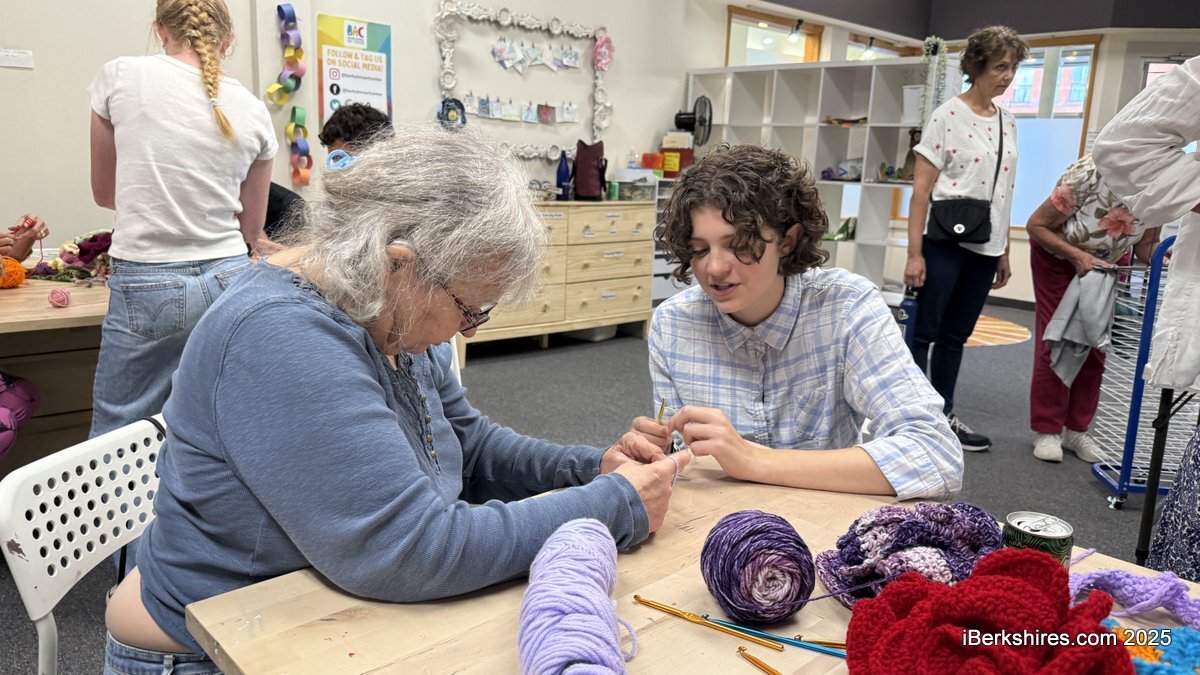
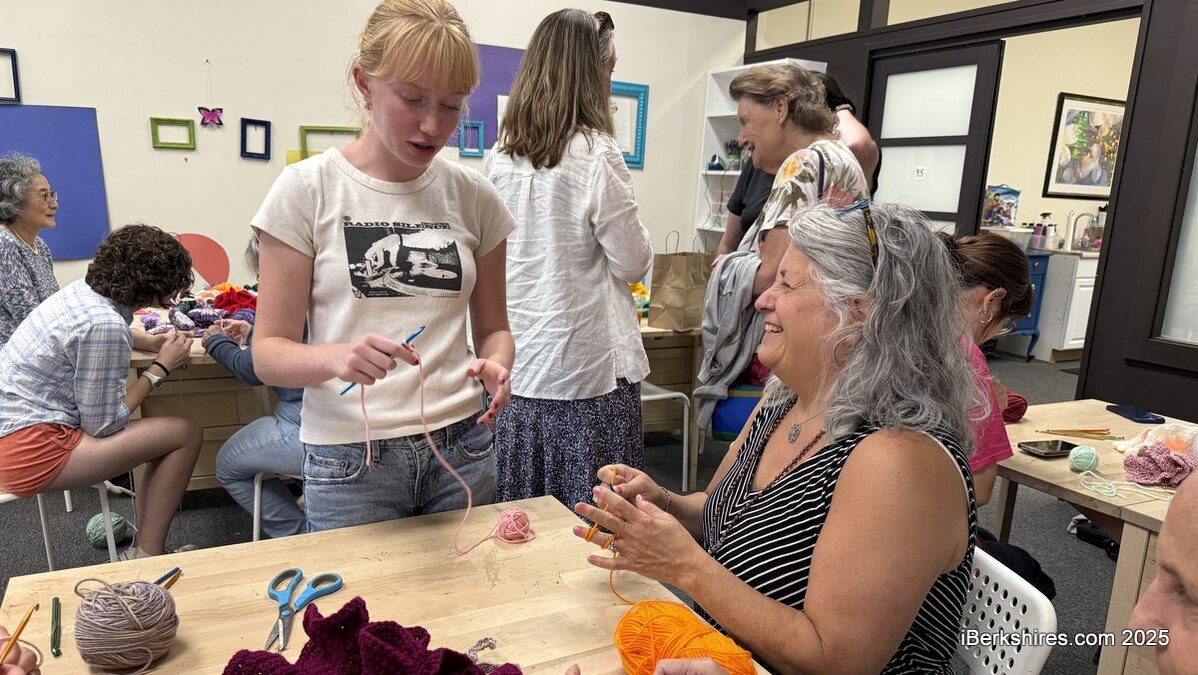
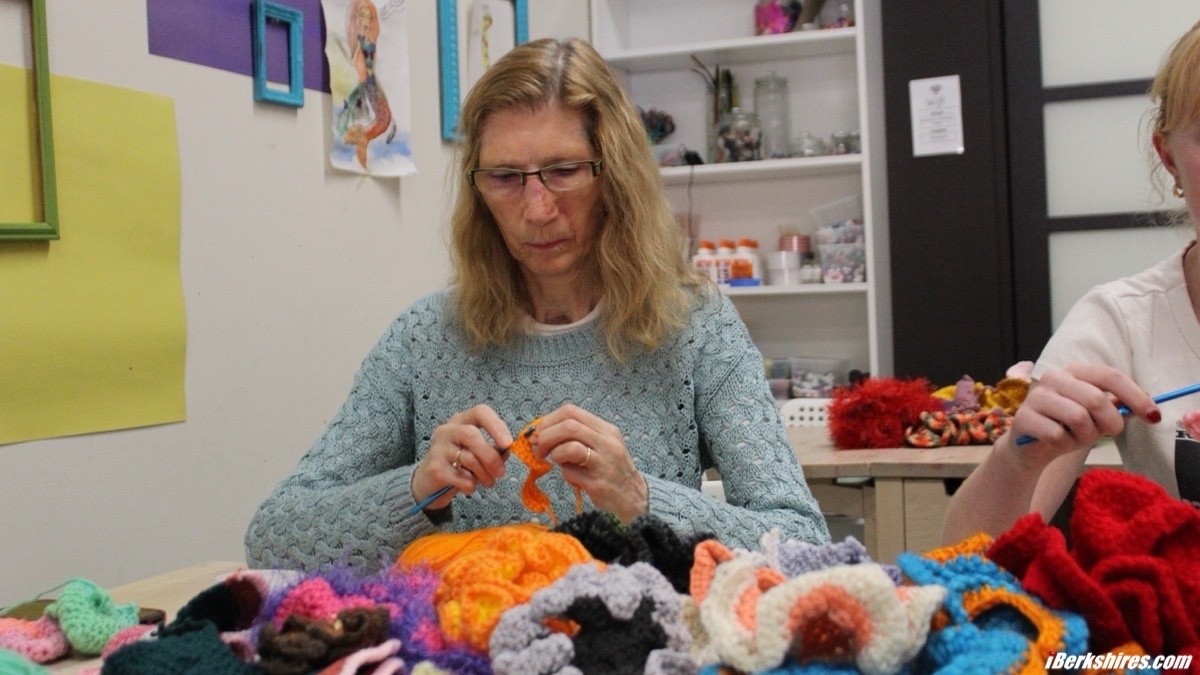
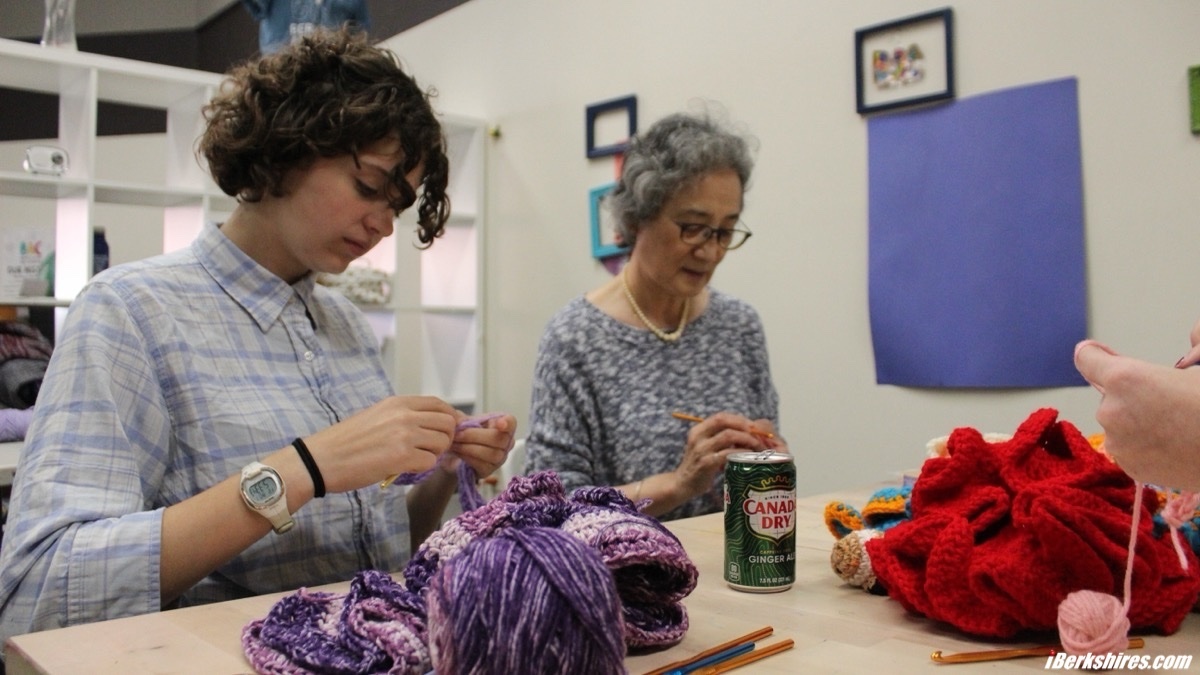
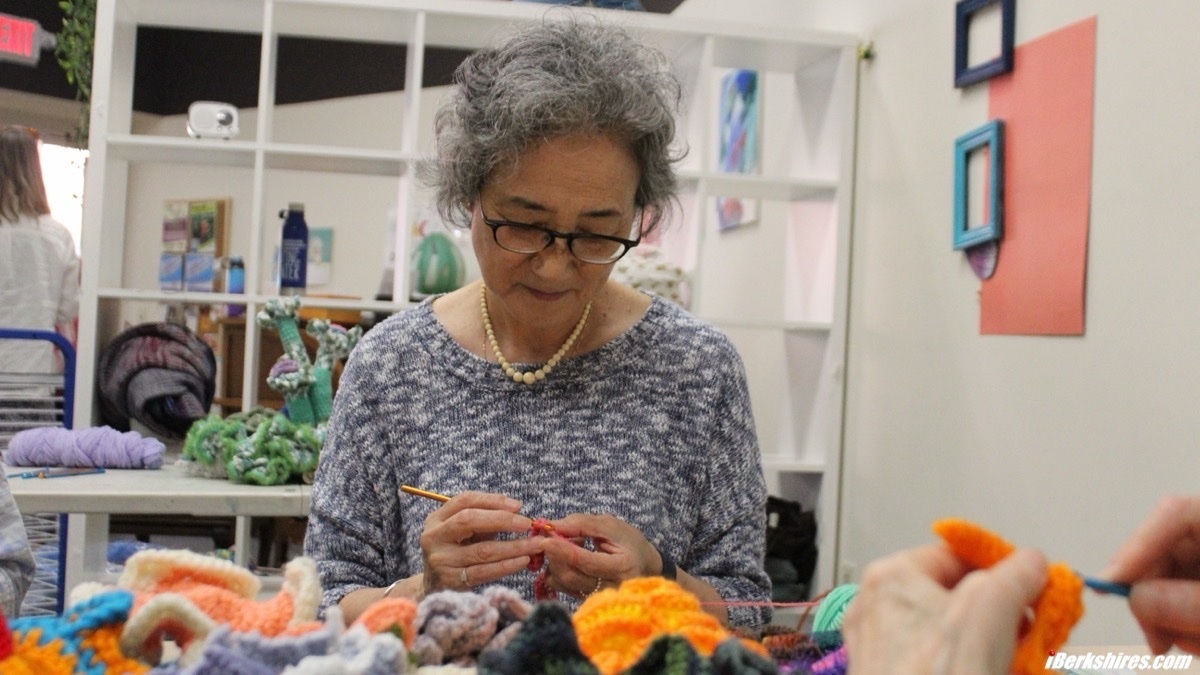
The Berkshire Art Center's North Street location offered a drop-in crochet circle for people to add to the countywide Berkshire Satellite Reef project.
image description
image description
image description
image description
image description

Berkshires Creating with Crochet Coral Reef Project
By Sabrina DammsiBerkshires Staff
Print Story | Email Story

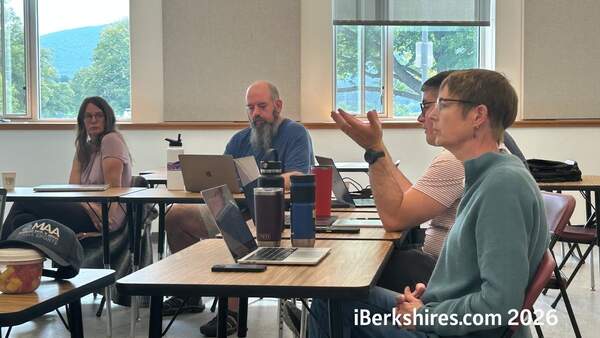
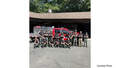
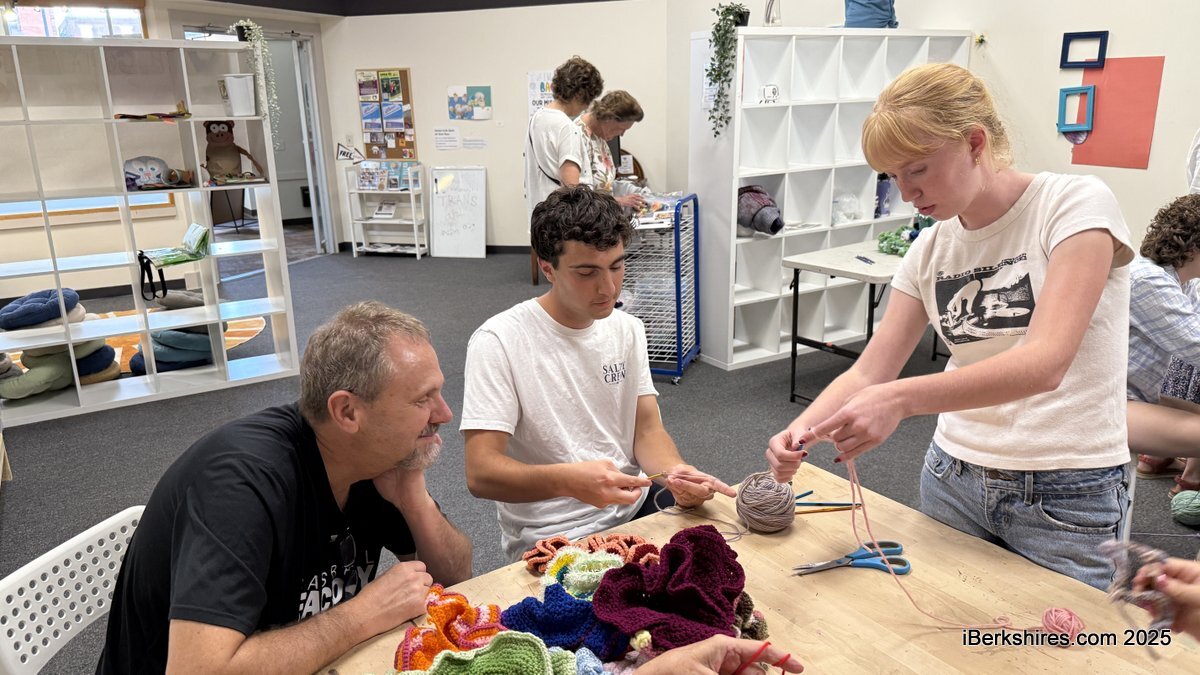
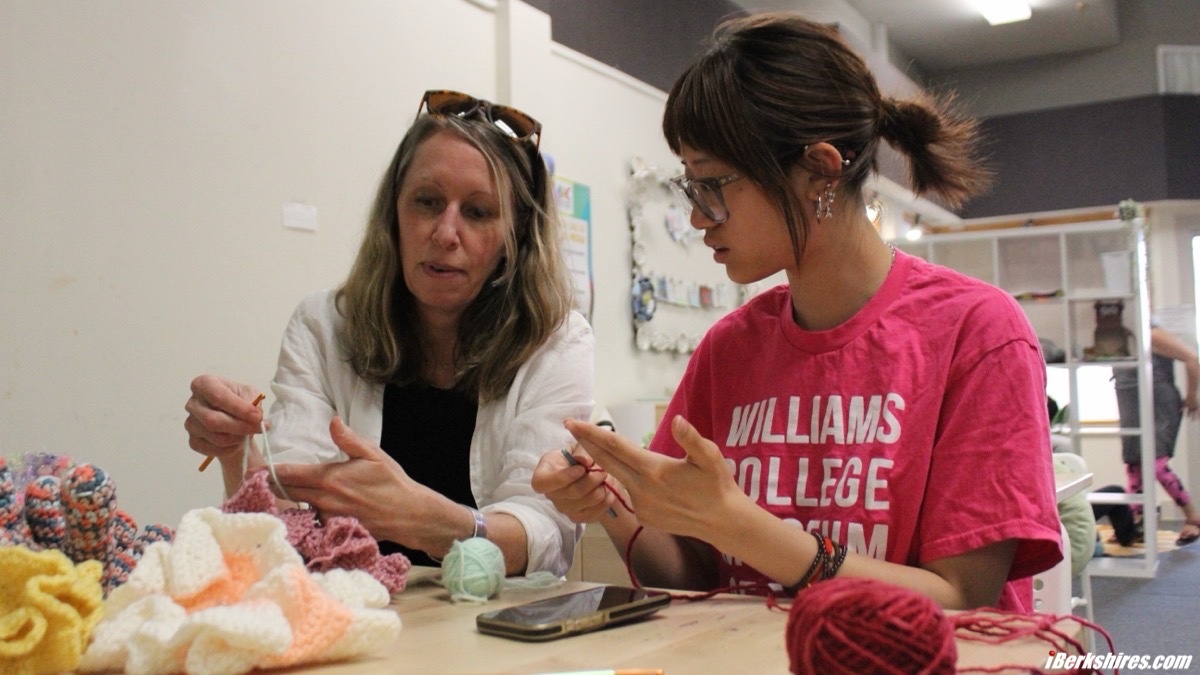
Williams College professor Amy Holzapfel shows a student at the event how to crochet. 

PITTSFIELD, Mass. — More than a dozen people of all ages were crocheting colorful versions of coral out of yarn on Friday at the Berkshire Art Center's Gallery Shop on North Street. 

Their creations will become part of the worldwide Crochet Coral Reef Project, which has attracted thousands of participants from around the world. 

Williams College in Williamstown has been collaborating with community members and local organizations on artists Christine and Margaret Wertheims' international project that will become part of a life-size installation.

"What we're going to be doing is working with the campus and the community together to create a living and breathing reef that will be exhibited in the '62 Center for Theatre and Dance during Earth Week of April 2026," said Amy Holzapfel, Williams College Frederick Latimer Wells professor of theatre and chair at a Friday workshop in Pittsfield. 

"It's going to be an immersive installation with sound and lights and people. Everyone who is an artist in the project, which means anyone who makes a coral or participates in some way, will be seeing their work exhibited as part of this beautiful exhibition." 

In preparation for the exhibit, the college has been holding workshops on the first of every month at select locations, during which participants are given instructions and kits to create the Berkshires Satellite Reef.

Holzapfel and Art Center Executive Director Laura Dickstein Thompson have been friends for "forever," so when Holzapfel presented the opportunity to host crochet workshops, she jumped at the chance because it highlights the center's dedication to community and connecting through various artistic expressions.

The Stockbridge art school hopes to expand by offering exhibitions and artist residencies, and by bringing in an artist to re-envision the Pittsfield space, located at in the Brothership Building. 

"For me, it is a way during our downtown celebration, First Friday, that we can bring in people into this space and to see what it's about. And you can see that they're all working together to make these little sculptural components through crochet that's going to be added to a larger project making a coral reef," said Thompson.

"Creativity is an innate language that we all hold, and it can restore faith in your own ability to express yourself and being your authentic self and sharing who you are and connecting with each other in a language, in a vocabulary, using your technology, if you will, that is about forging relationships in positive way."

No experience in crochet is necessary to participate in the workshops and there are a weekly crochet circles on Friday afternoons at the Milne Public Library in Williamstown and Friday evenings at the Berkshire Art Center in Stockbridge. Participants can also crochet at home by following the provided written or video instructions here.

Although beginners are welcome at the circles, formal instruction and materials are not guaranteed. 

The materials used for the project have been upcycled or made of recyclable material, including plastic yarn, Holzapfel said. Learn how to donate yarn for the project here

"It's not even so much about the product as about the active participation of anyone who wants to learn to crochet and participate. So, however many corals we make is beautiful," Holzapfel said. 

"It's about bringing people together in a time when there's very few opportunities for community. For communities to come together and make and be part of something larger than themselves. It's giving people the chance to sit down with others, be in community learning a skill that hopefully they'll have for the rest of their lives." 

The next workshop takes place on Monday, Sept. 1, from 3 to 4:30 p.m. at the '62 Center. More information here.

People are hungry for finding ways to share art, coming together, and spreading awareness about things that they care about, such as climate justice, Holzapfel said. 

"It's about bringing attention to climate change, but it's also about gathering the public together to participate in a larger effort," she said. 

The exhibit, Berkshire Satellite Reef, is one of many community art projects that has come out of the Crochet Coral Reef Project. 

The Wertheims' Institute for Figuring develops physical activities to present abstract concepts in art forms, such plastics and the environment and trade relations.

The coral reef project intersects mathematics, handicraft, and environmentalism and aims to raise awareness about the decline of coral reefs because of global warming and ocean acidification, Margaret Wertheim told the Marianna Kistler Beach Museum of Art in 2013. 

"It's a lovely project because it emerges from my sister Christine's realization that if you deviated from the pure, mathematically perfect hyperbolic structure, which is what [Cornell professor Daina Taimina] had worked out how to do … and start making the code a bit wonky, they immediately look more natural," she said. 

Nature isn’t mathematically perfect, Wertheim said. 

"There's lots of things in nature that are spherical like but there's no such thing as a pure sphere in nature… and so, there's no such thing as perfect hyperbolic structure in nature. Nature loves deviation, mutation," she said. 

"Materials have qualities that introduce their own kinds of aberrancies into the mathematical ideal. So, once we started playing around with deviating the code, we began to have these things that really began to look like real coral structures." 

Margaret and Christine, twins, started the project in 2005 because it was becoming evident to scientists that the "devastation of coral reefs" was happening globally due to global warming and rising sea temperatures, Margaret told the Ontario Science Centre in 2021. 

When the project started it was "inconceivable" that we would live in a world without coral reefs. 

"It was inconceivable that we could face a future without reefs, 16 years later, scientists are now warning that if we don't change our practices and see temperatures keep rising, coral reefs could be gone by the middle of this century, like in the next 20 or 30 years," she said. 

During the Ontario presentation, Margaret explained how two-thirds of the Great Barrier Reef had been devastated.

"The Great Barrier Reef … is the largest living organism on planet Earth. It's the first living thing as you approach Earth from outer space…is the first living thing you can see. It's bigger than the Amazon rainforest, and yet, two thirds of it has been devastated," she said.

In 2024, the Great Barrier Reef Marine Park Authority concluded that "the overall outlook for the Great Barrier Reef remains one of future deterioration due largely to climate change … despite some habitats and species improving over the past five years thanks to windows of low disturbance and decades of protection and management." 


Tags: knit,crochet,   Williams College,   

If you would like to contribute information on this article, contact us at info@iberkshires.com.

Puppets Teach Resilience at Lanesborough Elementary School

By Breanna SteeleiBerkshires Staff

The kids learned from puppets Ollie and a hermit crab.

LANESBOROUGH, Mass. — Vermont Family Network's Puppets in Education visited the elementary school recently to teach kids about being resilient.

Puppets in Education has been engaging with young students with interactive puppets for 45 years.  

The group partnered again with Bedard Brothers Chevrolet, which sponsored the visit. 

Classes filtered through the music class Thursday to learn about how to be resilient and kind, deal with change and anxiety, and more.

"This program is this beautiful blending of other programs we have, which is our anxiety program, our bullying prevention and friendship program, but is teaching children the power of yet and how to be able to feel empowered and strong when times are challenging and tough," said program manager Sarah Vogelsang-Card.

The kids got to engage with a "bounce back" song, move around, and listen to a hermit crab deal with the change of needing a new shell.

"A crab that is too small or too big for its shell, so trying to problem solve, having a plan A, B and C, because it's a really tough time," Vogelsang-Card said. "It's like moving, it's like divorce of parents, it's changing schools. It's things that children would be going through, even on a day to day basis, that are just things they need to be resilient, that they feel strong and they feel empowered to be able to make these choices for themselves."

The resiliency program is new and formatted little differently to each of the age groups.

"For the older kids. We age it up a bit, so we talk about harassment and bullying and even setting the scene with the beach is a little bit different kind of language, something that they feel like they can buy into," she said. "For the younger kids, it's a little bit more playful, and we don't touch about harassment. We just talk about making friends and being kind. So that's where we're learning as we're growing this program, is to find the different kinds of messaging that's appropriate for each development level."

This programming affirms themes that are already being discussed in the elementary school, said school psychologist Christy Viall. She thinks this is a fun way for the children to continue learning. 

"We have programs here at the school called community building, and that's really good. So they go through all of these strategies already," she said. "But having that repetition is really important, and finding it in a different way, like the puppets coming in and sharing it with them is a fun way that they can really connect to, I think, and it might, get in a little more deeply for them.

Vogelsang-Card said its another space for them to be safe and discuss what's going on in their life. Some children are afraid because maybe their parents are getting divorced, or they're being bullied, but with the puppets, they might open up and disclose what's bothering them because they feel safe, even in a larger crowd. 

"When we do sexual abuse awareness that program alone, over five years, we had 87 disclosures of abuse that were followed up and reported," she said. "And children feel safe with the puppets. It makes them feel valued, heard, and we hope that in our short time that we're together, that they at least leave knowing that they're not alone."

Bedard Brothers also gave the school five new puppets to use. Viall said the puppets are a great help for the students in her classroom, especially in the younger grades. 

"Every year, I've been giving the puppets to the students. And I also have a few of the puppets in my classroom, and the students use them in small groups to practice out the strategies with each other, which is really helpful," she said. "Sometimes the older students, like sixth graders, will put on a puppet show. They'll come up with a whole theme and a whole little situation, and they'll act it out with the strategies for the younger students. It's really cute, they've done it with kindergarteners, and the kids really like it."

Vogelsang-Card said there are 130 schools in Vermont that are on the waiting list for them to come in. Lanesborough Elementary has been the only Massachusetts school they have visited, thanks to Bedard Brothers. 

"These programs are so critical and life-changing for children in such a short amount of time, and we are the only program in the United States that does what we do, which is create this content in this enjoyable, fun, engaging way with oftentimes difficult subjects," she said. "Vermont is our home base, but we would love to be able to bring this to more schools, and we can't do this without the support of community, business funders or donors, and it really makes a difference for children."

The fourth-grade students were the first class to engage with the puppets and a lot of them really connected with the show.

"I learned to never give-up and if you have to move houses, be nervous, but it still helps," said William Larios.

"I learned to always add the word 'yet' at the end," said Sierra Kellogg, because even if she can't do something now, she will be able to at some point.

Samuel Casucci was struck by what one of the puppets talked about. "He said some people make fun of him if he dresses different, come from different place, brings home lunch, it doesn't matter," Samuel continued. "We're all kind of the same. We're all kind of different, like we have different hairstyles, different clothes. We're all the same because we're all human."

"I learned how to be more positive about myself and like, say, I can't do this yet, it's positive and helpful," said Liam Flaherty.

The students got to take home stickers at the end of the day with contact information of the organization.

View Full Story

More Williamstown Stories