WCMA Berkshires Satellite Reef Project

Print Story | Email Story

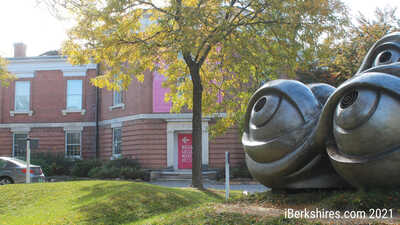
WILLIAMSTOWN, Mass. — The Williams College Museum of Art (WCMA) and Williams College Gaudino Fund invite the community to take part in the Berkshires Satellite Reef Project.


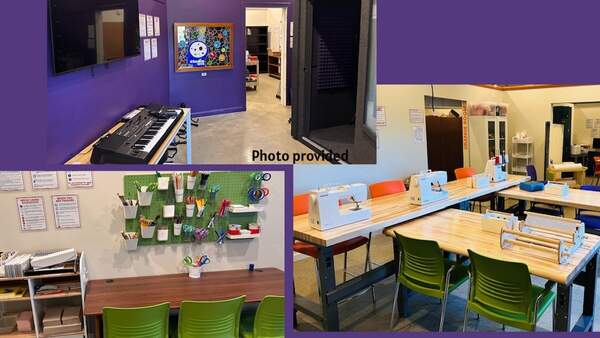
The next public Coral Crochet workshop will be held on Friday, Aug. 1, from 5 to 7 p.m. at the Berkshire Art Center at the Brothership Building at 141 North St. in Pittsfield.

The Berkshires Satellite Reef, a Gaudino Creative Residencies initiative, is part of the worldwide Crochet Coral Reef, a participatory art project that responds to climate change through the creation of crocheted coral reef sculptures. Conceived by artists Christine and Margaret Wertheim in collaboration with the Institute for Figuring, the project invites individuals of all ages and skill levels to contribute to a community-sourced coral reef installation. The completed reef will be presented at Williams College in the ’62 Center for Theatre & Dance as an immersive exhibition in the spring of 2026. 

The Berkshires Satellite Reef will be hosting monthly workshops throughout the year at the Williams College campus and in locations throughout Berkshire County. No experience is necessary; crochet kits and instructions will be provided, and instructors will be on hand for small-group guidance.

Additionally, weekly drop-in Coral Crochet Circles will be held at Williams College and in partner locations throughout the Berkshires. Summer Crochet Circles are currently scheduled for Fridays from 2 to 4 p.m. at the Milne Public Library. 

Community members are invited to contribute crocheted coral reef pieces by dropping them off at one of several locations in Williamstown: the Milne Public Library, WCMA, or the ’62 Center for Theatre & Dance, Department of Theatre. Coral pieces may also be mailed to Amy Holzapfel, Professor of Theatre, Williams College, 1000 Main Street, Williamstown, MA 01267.

The Berkshires Satellite Reef project also encourages participation through donation of crochet hooks, yarn, or yarn remnants. Drop-off bins will be located at several sites on the Williams College campus, including the ’62 Center for Theatre & Dance (in Centerstage Lobby), WCMA (Lobby), and the Class of 1966 Environmental Center (Entryway). Additional drop-off sites include the Milne Public Library and the Berkshire Art Center’s brothership building in Pittsfield. 


For more information on the Berkshires Satellite Reef, contact Amy Holazapfel at ash2@williams.edu or visit https://gaudino.williams.edu/berkshires-satellite-reef/.

If you would like to contribute information on this article, contact us at info@iberkshires.com.

Letter: Incomplete Picture from Greylock School Committee

Letter to the Editor

To the Editor:

At the October Mount Greylock School Committee meeting, there was much celebration over the student growth percentiles (SGP) from last year's MCAS test data (Spring 2026). Growth is worth celebrating. But I worry the meeting, and the coverage of it, left families and our community with an incomplete picture of how our students are doing in math.

"Growth" sounds like it means scores went up, but that isn’t quite what SGP measures. SGP compares each student to students in the state who scored about the same the year before, then ranks how they did this year against that group. If a whole group of similar students decreases, the student who decreases the least can still earn a high growth percentile. A strong SGP tells us our students did better than their peers who scored similarly the year before. It doesn't tell us whether they are at grade level.

For example, the current 6th grade class at Williamstown Elementary School (WES) has decreased in their grade-level math proficiency every year since their 3rd grade MCAS. In 2024, 64 percent of the class was meeting expectations; in 2025 48 percent were at grade level, and in 2026 only 33 percent of their class met grade-level expectations. Our current WES 5th grade class follows a similar trend, with 48 percent meeting grade-level math expectations last year vs 56 percent meeting expectations in 2025 when they were in 3rd grade.

Not every class follows this pattern; our current 7th graders gained to 62 percent last year. But seeing entire classes decrease is something that deserves our attention.

Growth comparisons across the state provide useful information, but they do not tell the complete story. We also need to look at where our students are in terms of grade-level proficiency and how those numbers are changing from year to year within the Mt. Greylock school district. This will be our first year with the math interventionist role filled at WES and our second year with the new i-Ready curriculum.

As we watch whether these changes are working, I hope the School Committee will discuss proficiency alongside growth in its public meetings, so our community can see the full picture. Growth matters, but it isn’t enough if fewer of our kids are reaching grade level each year.

Sincerely,

Jenna Hasenkampf
Williamstown, Mass.

Hasenkampf is a parent of WES students in Grades 2 and 4.


View Full Story

More Williamstown Stories