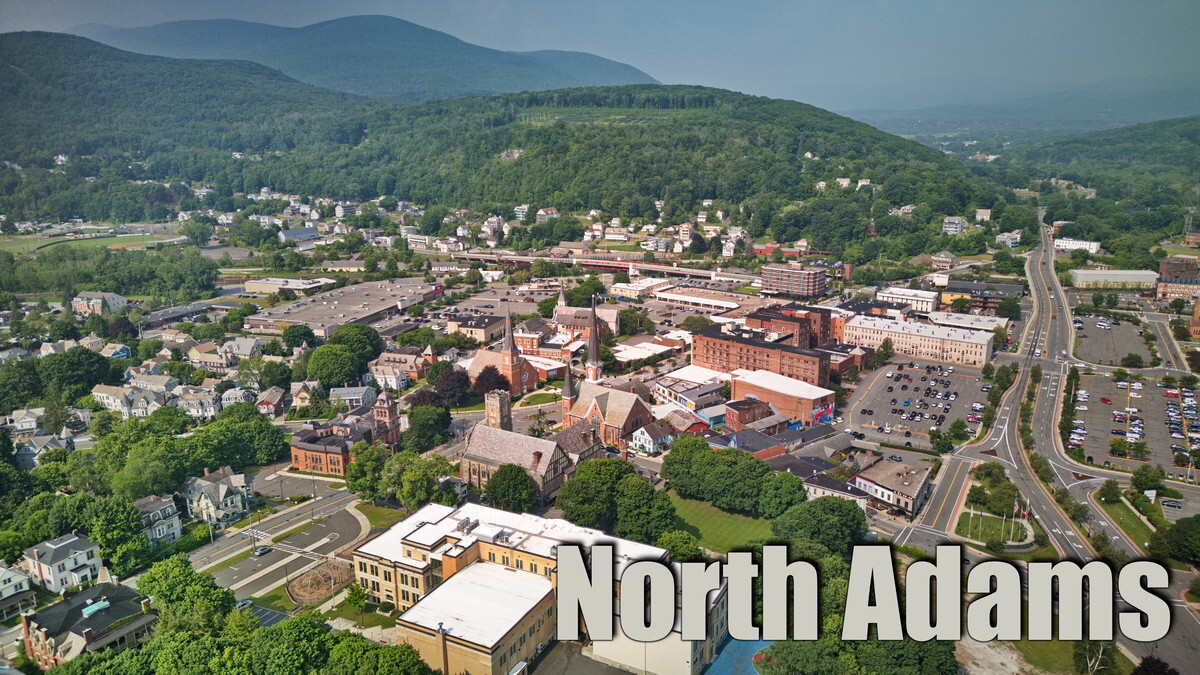
Community Development Increase a Focus in North Adams Budget Vote
NORTH ADAMS, Mass. – The City Council Tuesday passed a $52.3 million spending plan for fiscal year 2026 that represents a 7 percent increase from the city budget for the year that ends on June 30.
On a series of unanimous votes, the council OK'd an FY26 budget that both accounts for a spike in the city's health insurance costs and adds capacity to City Hall to address community needs, Mayor Jennifer Macksey said during a public hearing that preceded the council's vote.
By percentage, one of the larger increases in the budget was in the "general government" line item, which is up by nearly 20 percent to just more than $2.5 million for the coming fiscal year.
"The increase is primarily attributed to several strategic investments, including a 3 percent salary adjustment for all non-bargaining units, expanded funding to fully support our administrator officer roles and enhanced staffing in the Community Development office, including the addition of a community planner," Macksey said in her budget presentation.
Macksey got some pushback in the hearing from a resident who said the budget does not go far enough to address either the city's housing shortage or its need for economic development.
"Is there any money earmarked in the budget for helping with our housing crisis?" Bryan Josephs asked from the floor of the hearing.
After hearing that there were no specific earmarks in that area, Josephs continued.
"It seems many things in the budget have gone up, but our tourism budget, if anything, has gone down," he said. "I'm curious why we're not prioritizing that. These are two areas where I see the opportunity for economic growth and, hopefully, will pay for themselves in coming years. We're increasing a lot of things [in the budget], like IT, that I don't really see how they're driving growth in revenue or the tax base."
Macksey said that a new position in the city's Community Development office will help address the issues Josephs is raising. And she noted the city has applied for a grant to help study how city owned properties, like Windsor Mill, could be used for housing.
And, she said, the city is actively looking at reviewing its ordinances to make sure there are no impediments to development – code review that is supported by the FY26 budget.
"We're not going to build a housing development, but we're certainly going to support all those efforts for a housing development," Macksey said. "We're going to support all those efforts to promote businesses throughout our city.
"I think what you're going to see is our investment in community development for the next year is going to launch different initiatives than what you've seen in the past."
Josephs appeared unconvinced, saying that, if he was on the City Council, he would not vote for the budget as presented.
A couple of councilors, on the other hand, defended the spending plan.
"One thing I want to point out, specifically, is the addition of the city planner," Ashley Shade said during the council meeting that followed the public hearing. "That is very important for the Community Development office. It's the reason I voted against the budget last year and it's why I'm supporting it this year.
"We're finally making an investment in that, and I think that's the catalyst to see more economic development in our budget and in our community. It's going to start by building that office back up, and it's just a slow process."
Keith Bona agreed, calling the addition to the Community Development office "forward thinking."
"I think our budget is and always has been more necessity than sexy," Bona said. "We're always putting things in these budgets that we have to do. We have to have clear water. We have to make the roads drivable.
"Tourism is something we'd like to do more with, but it's not a necessity. Unfortunately, that's why it's a smaller budget item."
Andrew Fitch thanked Macksey for prioritizing community development, a department he has sought to expand since he was elected to the council.
"I feel very hopeful for the future of our city," Fitch said. "I think so much can spread from that office. I have great faith in its new leadership. I have great faith in the fact that its old leadership is also staying on to assist.
"I have great faith in the expansion of that office, and I believe that will impact our housing stock in our city, development for projects that we have, development for underutilized properties that we have, offloading other buildings we have for greater use."
A more contentious aspect in the spending plan was the way in which Macksey plans to pay for it.
Tuesday's votes only covered the expense side of the city's ledger. But the budget was presented with what Macksey characterized as a "road map" of how it would be funded – through property taxes, state aid, fees and, in the case of the FY26 plan, a $2 million transfer from the city's stabilization fund.
That caught the eye of a couple of members of the council.
Lisa Hall Blackmer called the proposed use of stabilization "very, very concerning."
"We really shouldn't be spending stabilization to fund the budget unless there are some outstanding circumstances," Blackmer said. "The mayor has said it's the health insurance premiums.
"My concern is I don't think those 15 to 20 percent increases are going to slow down, at least in my conversations with several different health insurance providers. Current budget should be funded by current revenues. I'm concerned about where that leaves us with $1.2, $1.3 million in stabilization when that's done."
Fitch and Shade agreed, the latter arguing that the city should not use more than half of its "rainy day" fund in a given year unless there is an emergency.
Macksey told the councilors she also was "not comfortable" with a $2 million transfer from stabilization but the administration is working to reduce the need for reserves in funding the FY26 budget.
"We are focusing right now on our local receipts," Macksey said. "We haven't had a water increase since 2017. We are looking at sewer rates, transfer station charges, etc. But the reality is our community as a whole is struggling right now. So we're sensitive to all that.
"We have the reserves, we have the ability to use it, and that is how we used it in our road map today. When we come to set the tax rate and we have a better understanding of where our values are, that might be a different discussion. But that is our road map for funding this budget as of right now."
And Macksey defended the city's management of stabilization, noting that as recently as 2015, North Adams had $141,000 in that account.
"When I took office in 2022, we had $816,000," she said. "As we stand here today, we've grown it – the team and all of you, through strategic decisions – to $3.2 million."
Tags: budget, city council,