Hoosac Water Quality District to Keep Producing Compost for Now
WILLIAMSTOWN, Mass. — The Hoosac Water Quality District will continue its decades-long practice of composting biosolid waste and offering it for sale as fertilizer.
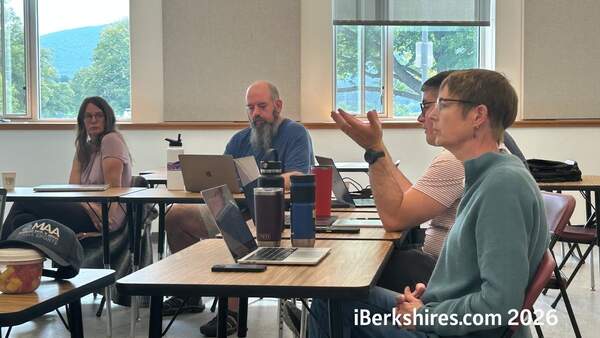
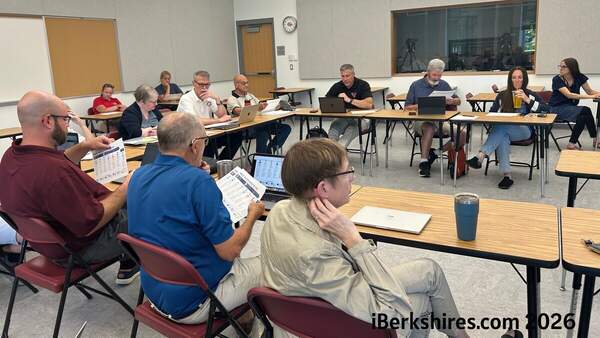
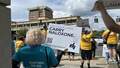
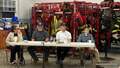
The district's Board of Commissioners made that decision in a meeting on Wednesday at the Williamstown Municipal Building after a half dozen North County residents raised concerns about the dangers of recycling feces contaminated with polyfluoroalkyl substances or PFAS, which have been linked to cancer.
Earlier this spring, the four-member commission learned that a deal that would have imported biosolids, or sludge, from other municipalities to be composted at the district's Williamstown facility no longer was on the table.
That deal gained public attention in the winter when it was discussed in relation to the district's fiscal year 2026 spending plan. Had an agreement been reached with waste hauler Casella, the HWQD stood to generate some revenue by composting waste from outside the district in a facility that has excess capacity.
The budget finalized by the commissioners on Wednesday includes no such plan for "importing" waste, but it does maintain the status quo, allowing finished "in-house" compost to potentially be sold instead paying to have it removed.
The budget approved on Wednesday apportions just a little more than $1.9 million of the district's operating and capital costs to North Adams and about $982,000 of those costs to Williamstown. North Adams' share also includes money it collects from Clarksburg, a non-voting member of the regional wastewater district.
During the hour long meeting, District Manager Brad Furlon Wednesday said that the cost of paying to have all biosolids removed — either for incineration or use in landfills — would be anywhere from $500,000 to $750,000.
A half million increase would represent about a 17 percent hike in the district's operating and capital budget for FY26 — increased costs that would be passed along to all users of municipal sewer services in the three communities of the district.
One resident at Wednesday's meeting argued that there are hidden costs in continuing to allow compost contaminated with PFAS to go out the door.
"You're talking about the taxpayers, and that you need to consider, 'This is going to be on the backs of the taxpayers,' " Deborah Schneer of North Adams said. "I want to point out what was raised at the last meeting in North Adams: These PFAS contain known carcinogens. And we're going to be paying for that one way or the other — whether upfront, now, or down the line when everybody gets sick and has to go through chemotherapy or whatever and has their insurance rates raised.
"One way or the other, we're going to be paying for it. Would you rather pay for it now or pay for it later when you're sick, or the people you know and love are sick."
Several states already have laws on the books preventing the use of compost from treatment plants in agricultural land applications.
Massachusetts has similar legislation on the table in Boston, and HWQD have acknowledged that it is possible the commonwealth will remove composting as an option altogether. Though, Furlon said, any change to the law likely would have an effective date that would give plants like his time to adjust to the new reality.
And at least one member of the commission suggested that a ban on compost is not inevitable in Massachusetts.
"It may very well turn out that there are permissible levels [of PFAS] in compost or sludge. The state of Michigan has that in place right now," said Russell Howard, one of two Williamstown representatives on the four-person commission (Clarksburg does not have a voting member). "California encourages the land application of sludge at this point. In fact, they have a regulation that says no local jurisdiction can put in a restriction on the land application of compost or sludge. That's California, the leading edge of the environmental movement.
"It's premature to automatically assume what regulation will end up in place on this topic."
A couple of residents addressed the board from the floor of the meeting to suggest that the district should get ahead of state regulations rather than wait to see if those safeguards materialize.
"Everyone in this room knows this is a problem," Susan Abrams said. "We all know something is going to happen to address this problem. … We can be 100 percent sure that there is going to be action required on this.
"We can choose to be ahead of the game and do the right thing, do what's safe for our community, our citizens and the world. Or we can choose to say, 'The government says we don't have to do this, so we're not going to do it.' "
Though the immediate question — finalizing a budget for the fiscal year that begins on July 1 — was settled on Wednesday evening, Furlon and the commissioners agreed the topic of what to do with compost will be alive for months to come in North Berkshire and beyond.
"Sludge disposal in the Northeast is a very grave danger area," Furlon said. "One resident asked about incineration. There's no room for incineration.
"Any sludge in the Northeast – additional sludge or even treatment plants operating today – is going to be moved out of the Northeast, whether it be to Western New York, Pennsylvania, Ohio, Kentucky. The trucking costs, that's where all the cost will be. It has to be moved out of the Northeast because there's no capacity in the Northeast. And when I say 'no,' I mean no, absolutely none. It's wastewater treatment plants across the state that are having this problem."
Tags: composting, HWQD,