Williamstown Tree Warden: National Grid Removal Plan Promotes Public Safety
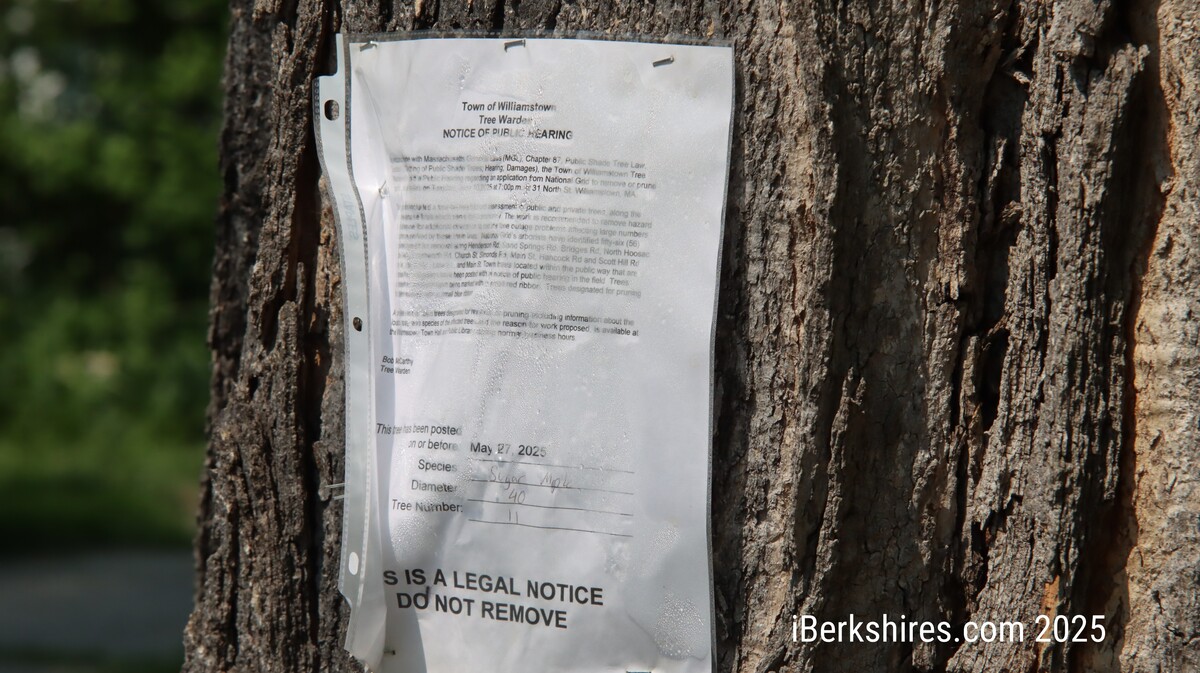
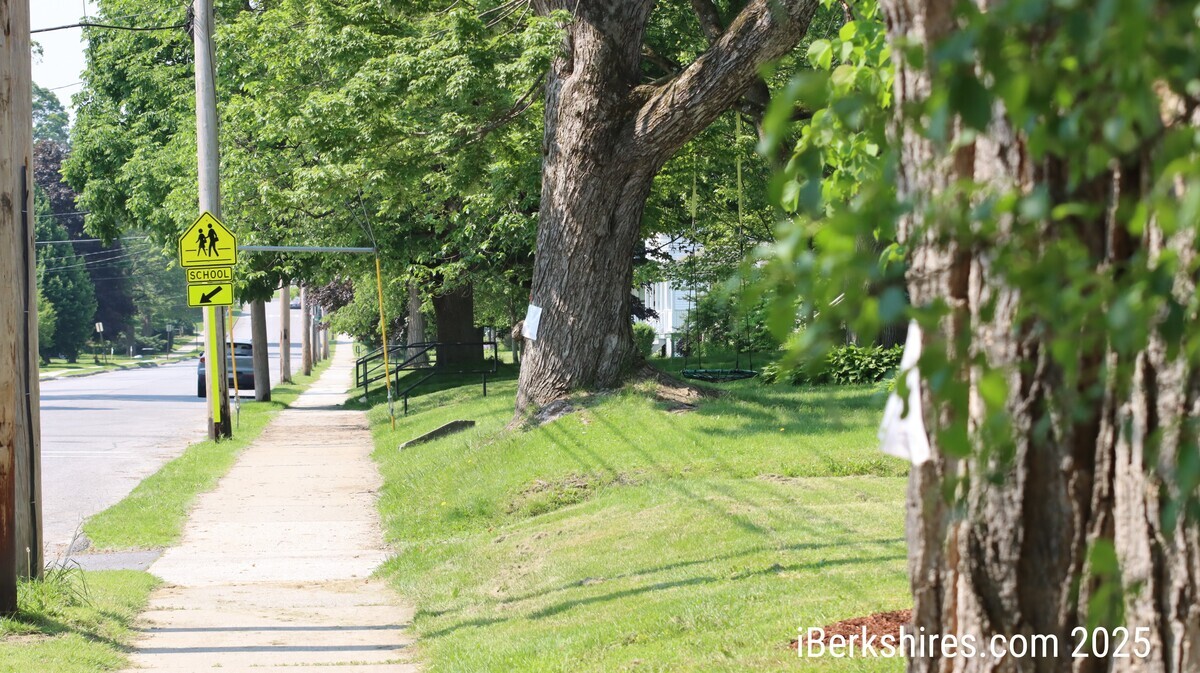
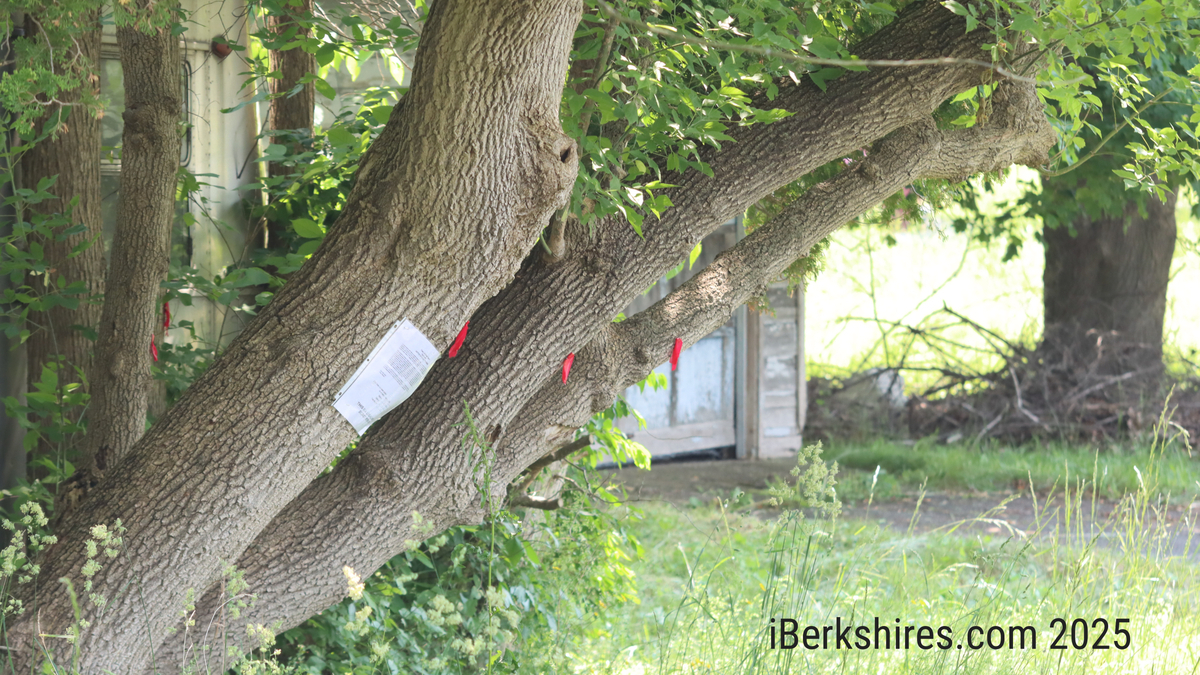
A sign on a tree gives information about the public hearing on the tree removals this coming Tuesday at Town Hall.
Robert McCarthy said Thursday that he has been receiving calls from residents concerned about the planned cuttings and he is aware of the discussion generated on social media about the proposal from National Grid.
McCarthy said he understands why the plan has raised eyebrows. It is the biggest such initiative he can recall in more than 30 years in the town post.
And, in his opinion, it is a positive for town residents.
"This whole thing comes from a division of National Grid which they call hazard tree mitigation," McCarthy said. "They go tree by tree, walk the areas and identify trees … they feel should be removed. If we had a major storm, these would be the first ones on their wires."
And the wires in question are three-phase main electrical wires that serve hundreds, if not thousands of residents, McCarthy explained.
Likewise, the trees are in town rights of way on main roads, like North Hoosac, Cole Avenue, Bridges Road, Simonds Road and North Street.
Experts from National Grid, trained arborists like McCarthy himself, have examined the trees in question to assess their health and potential to come down on power lines, causing widespread outages in the event of a storm.
Of the 41 trees at issue, 16 are being addressed because of proximity to power lines alone, and three of those 16 are set to be trimmed, not cut down. The remaining 25 have health issues ranging from "greater than 25 percent decline" to "mostly dead." Seven of the trees are ash with evidence of the invasive emerald ash borer, a pest that has decimated the species throughout the region.
McCarthy, 85, who has been a certified arborist since his 20s, likened the borer to Dutch elm disease, which swept through the nation in the 20th century.
But there are problems beyond disease or bugs that are particularly relevant to neighborhood trees in the public right of way. Sidewalks, underground utilities (gas and sewer, for example) and road cuts all impact a tree's root systems, McCarthy explained.
"When we look at a tree, we look at the species of tree No. 1," he said. "We know which trees have shallow root systems. We know if those trees have a severe lean toward the wires. Those trees will come down first in a storm.
"A lot of people look at trees and see green leaves, and that's good enough for them. But, so to speak, they can't see the trees for the forests. They don't have the expertise we have as arborists."
He said recently the owner of a home on Route 43 found a tree marked on their property for removal and called him to ask about it.
"She said, the tree looks green, and I don't see a problem with it," McCarthy said. "And when I went down there and pulled into the driveway, I thought, 'Maybe they could do some pruning [instead].'
"But when I walked around it, on the backside of the tree, it had a huge split. I said, 'This is going to be a problem not only for the three-phase line. If it goes, it's going to take part of your house."
He said, hypothetically, some trees slated for removal could be addressed through pruning. But that would be a stopgap measure that could add a couple of years to the tree's life. Then, when it ultimately comes down, it would be the town's or homeowner's responsibility.
McCarthy notes that extended power losses can be a public safety issue (home respirators, refrigeration for medication) and points to events as momentous as the Great Barrington tornado of 1995 and as recent as last summer's thunderstorm in North County that knocked out power and caused extensive tree damage in Williamstown.
"What [National Grid is] trying to do is be proactive rather than reactive," McCarthy said. "So when they get a major storm, a lot of these trees that would have been a major problem won't be a problem.
"I understand people's feelings [about trees]. I've seen people who don't want to cut one single limb. But, under the law, [National Grid] has a right to prune within so many feet of high tension lines. They have to protect the utility in ice storms and things like that."
One solution that has been suggested by a Facebook user would be to bury transmission lines. In 2023, electrical provider Eversource told a Boston TV station the company estimates it would cost between $2 million and $6 million per mile to convert overhead lines to underground. Back in 2011, then-Gov. Deval Patrick suggested statewide conversion to underground transmission lines would cost $1 trillion (more than $1.4 trillion in today's dollars).
State law requires that tree removal from town-owned land be discussed in a public hearing. McCarthy said usually at such hearings, he is like the "Maytag repair man," sitting in the meeting room at Town Hall for an hour waiting to see if anyone will come. But, given the scope of this proposal, he said he will not be surprised if there is more interest for the Tuesday, 7 p.m. hearing.
He said that at the hearing, he will listen to residents' concerns and explain the reasoning behind specific trees' inclusion on the removal list. And he said he would be happy, after the hearing, to arrange a time to visit the tree with a resident who continues to have objections to see if they can't come to an agreement.
Ultimately, anyone who still objects can make their case in writing to the Select Board, which would hold its own public hearing and have the final say, under state law.
"I've never had it happen that the [Select Board] goes against my recommendation," MCarthy said. "They're not tree experts. They're everyday people who run for public office."
In his ideal world, the town would have capacity to address problem trees on its own, but it costs between $3,000 and $4,000 to remove a tree, and with a budget of $50,000 per year, there is only so much the tree department can do.
"We don't have the money to do what we'd like to do, but we're doing our damndest to ensure public safety and preserve the natural beauty of the town," McCarthy said.
Tags: National Grid, trees,