Smoking Ban, Airbnb Limits Put to Williamstown Town Meeting Members
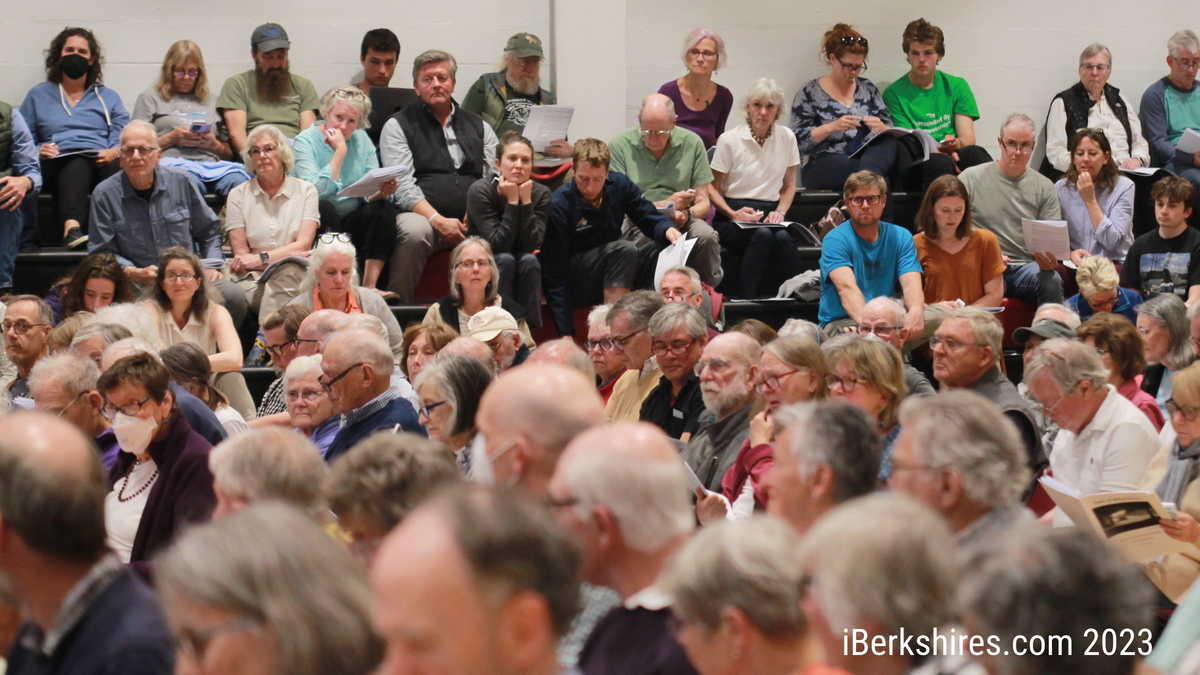
WILLIAMSTOWN, Mass. — The age-old tension between individual liberties and the common good will be in play when residents convene for the annual town meeting on Thursday evening at Mount Greylock Regional School.
Two articles on the 32-item meeting warrant seek to clarify that balance in one way or another.
One, a proposal generated by the town's Planning Board, would set a limit on the number of days a residence can be utilized as a short-term rental, commonly referred to by the trade name Airbnb.
Another, on the warrant via citizens petition, would prohibit smoking tobacco products in multifamily dwelling units (apartments) with more than four units per structure.
Those are two of the articles that have generated significant discussion at the board and committee level in the months leading up to the annual meeting, where all the town's registered voters have the right to vote up and down on everything from the town budget to whether geothermal wells that use "chemical heat transfer fluids" should be heavily regulated in the town's Water Resource Districts.
One fiscal item that tends not to get a lot of attention in most years has been the focus of strong protest in the last few weeks leading to the warrant's publication.
Article 6, a seemingly routine measure that would authorize the budget for solid waste disposal at the Hoosac Water Quality District, appears on the warrant with a 2-3 vote by the Select Board against adoption.
That 2-3 vote was taken when the district was proposing its budget based on a plan to generate income by accepting treated waste from other municipalities to use excess capacity in the HWQD's composting operation. Environmental activists raised alarms about the potential for the local treatment plant to start producing additional compost with perfluoroalkyl and polyfluoroalkyl substances (PFAS), so-called "forever chemicals" linked to cancer.
Subsequent to the Select Board's recommendation, the town's Finance Committee — which initially endorsed the HWQD budget as presented — decided on May 1 to propose an amendment on the floor of Thursday's meeting that would authorize about a 20 percent increase in the town's assessment from the district (a shared enterprise of Clarksburg, North Adams and Williamstown).
The Fin Comm's proposal that town meeting OK up to $200,000 in additional payment to the district is contingent on the HWQD opting to abandon the "imported" sludge plan. On May 14, the HWQD's board of commissioners did just that.
Although costs to end users (everyone on town sewer service) will rise without taking in and selling additional compost, Hugh Daley, one of two Williamstown representatives on the HWQD board, told iBerkshires.com on May 15 that the appropriation on the warrant plus the planned amendment from the Fin Comm "most likely" will cover the town's share of the district's fiscal year 2026 operating expenses without the need for a special town meeting mid-year.
Some other appropriations on the town meeting warrant have gotten pushback from both the Fin Comm and the Select Board.
For decades, the town has funded projects through Community Preservation Act funds. The CPA is funded by a 2 percent surcharge on property tax bills (with $100,000 of a property's valuation exempted). Local revenue from the surcharge, adopted locally in 2002, is partially matched by the commonwealth as part of a statewide program to promote community housing, open space and recreation and historic preservation.
Generally, the CPA articles on the warrant, which are vetted, advanced and recommended by the town's Community Preservation Committee, are overwhelmingly approved by town meeting with one exception, a 201-207 vote at the 2003 meeting.
This year, the Fin Comm and two members of the Select Board voted against town meeting approval of three of the seven CPA articles on the warrant. In March, some Finance Committee members argued that the CPC needed to reform its process for reviewing applications for CPA funds before the town authorizes more grants. The CPC, after completing its work for the FY26 funding cycle, did generate a new application and review process to employ next January for FY27.
It is the Fin Comm's job to review and propose to town meeting spending plans for town revenue – principally property taxes. The CPA fund is completely separate from the municipal budget, and the only two bodies with authority over CPA allocations are the CPC and town meeting.
Some fiscal articles the annual town meeting will not see on Thursday night pertain to local non-profits that have traditionally received allocations of town funds in separate votes by the meeting. Those past allocations have been made from the town's Unreserved Fund Balance, or "free cash," the residue of higher-than-anticipated revenue and lower-than-anticipated expenses in any given year.
Town Manager Robert Menicocci decided this year to move those allocations "on budget," meaning they will be funded by tax revenue in the year they are awarded. That decision coincided with a marked increase in the number of non-profits seeking town funds. The Fin Comm decided in March to approve a town budget that only allocates taxpayer money to agencies that routinely have been supported by town meeting in the past: the Williamstown Youth Center, Williamstown Chamber of Commerce and Williamstown Community Preschool.
After the final "money" article, Article 25, the meeting will move on to some items that could generate debate on the floor on Thursday, starting with Article 26, the Short-Term Rental Bylaw crafted by the Planning Board.
The planners spent years talking about this issue and believe they have struck the right balance between individual liberty and the public good. The bylaw would apply to town's residential districts and would limit the use of a dwelling as an Airbnb to 90 cumulative days in a calendar year. There are exceptions built in for individual bedrooms rented as short-term rentals, accessory dwelling units where the homeowner lives in the principal dwelling unit and principal dwelling units where the owner lives in an ADU.
In other words, if the owner lives on the property while part of it is rented as an Airbnb, they can use part of the property as a short-term rental as much as they like.
The Planning Board believes the bylaw they're proposing accomplishes two public goods: It prevents homes from being turned into de facto full-time motel units in the middle of a residential neighborhood and it stops outside investors from buying up the town's housing stock for use as Airbnbs and, thus, locking out potential full-time residents, as has happened in resort towns in eastern Massachusetts.
At the same time, the planners believe, allowing up to 90 days for a dwelling to be used as an Airbnb both allows homeowners to generate income from their home and provides additional beds that the local tourism industry needs to survive peak periods like Williams College's homecoming or the Solid Sound Festival at the Massachusetts Museum of Contemporary Art.
Generally, the proposal has not sparked a lot of opposition.
One exception comes in the form of an anonymous email to the Planning Board by a group claiming to be "Williamstown Short-Term Rental Owners."
The two-page unsigned letter reads, in part, "[P]roperty owners should have the right to decide how they use their homes. Investing in property is a major investment, and homeowners should be able to make responsible choices that allow them to sustain and improve their investments. … Arbitrary restrictions infringe on these rights and unfairly penalize those who have worked hard to make Williamstown a welcoming place."
Some have expressed fear that passing a different measure, Article 30 on the warrant, will make Williamstown less welcoming to one group: smokers.
The citizens petition warrant article seeks to make the town's market rate apartments and condominiums like its publicly-financed housing by prohibiting "smoking or vaping of tobacco of any form … within 25 feet of the building." Owner-occupied multifamily structures of four or fewer units would be exempted.
The article's author has presented to the town's Board of Health and Select Board — and cited in the article's preamble — documentation of the health risk posed by second hand smoke and argues that non-smokers living in an apartment or condo, like himself, have a right to breathe smoke free air.
According to the advocacy group American Nonsmokers' Rights Foundation, as of April 1, 101 municipalities — all in California — have enacted similar laws to what William Raymond has proposed for Williamstown.
Both the Board of Health, on a unanimous vote, and Select Board, on a 4-1 vote, have recommended that town meeting adopt the anti-smoking ordinance.
But even members of those bodies have acknowledged the idea is far from a slam dunk.
Select Board member Jane Patton, who said the proposed ordinance might be government overreach, was the lone vote against recommending its passage. BOH member James Parkinson at a March meeting said, "If, in Williamstown, all housing is smoke free, where are people who smoke going to live?" I throw that out because it's the gist of the whole issue. I don't have an answer to that."
The proposed smoking bylaw is one of three articles on the warrant by way of citizens petition.
Article 29 is a non-binding resolution that would affirm Williamstown's support for the rights of transgender and gender-diverse people. Article 31 gives the meeting a chance to reaffirm a 2017 town meeting resolution emphasizing that "Federal immigration detainer requests and administrative warrants are not binding on Town officials."
The annual town meeting is scheduled for Thursday, May 22, at 7 p.m. in the gymnasium of Mount Greylock Regional School at 1781 Cold Spring Road. All registered voters in town are eligible to participate. Rides are available through the Council on Aging; call 413-884-3193 by noon on Thursday to sign up.
Tags: annual town meeting, town meeting 2025, williamstown_budget,