New Williamstown Elementary School Principal Named
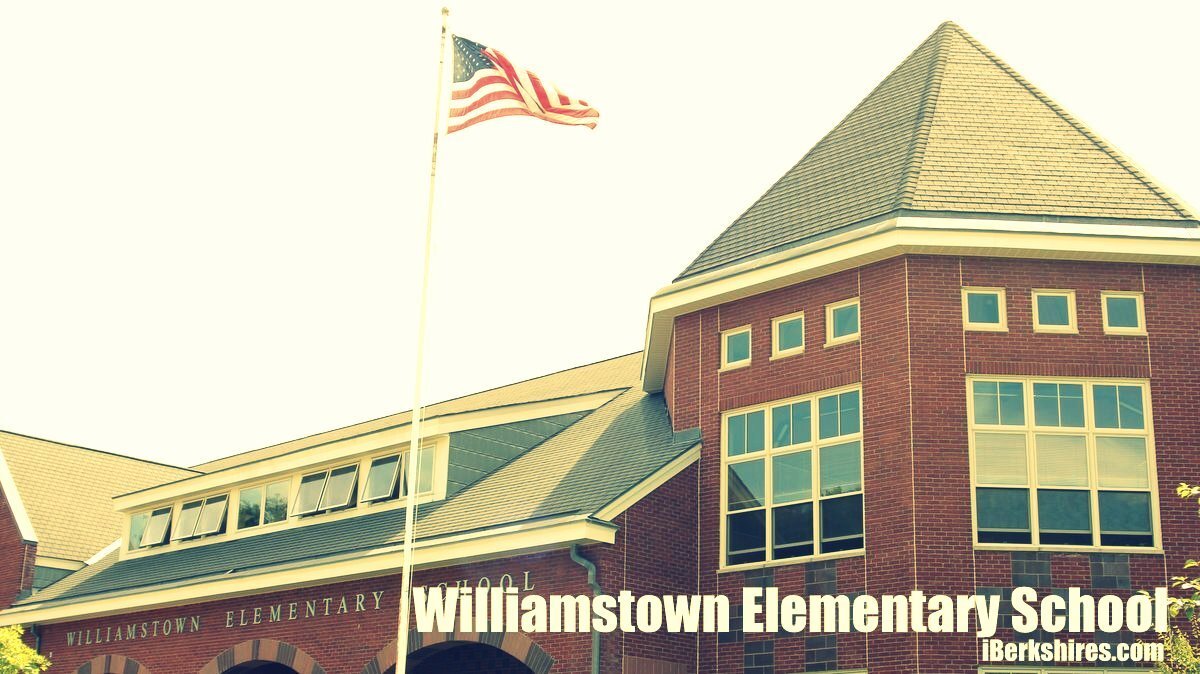
WILLIAMSTOWN, Mass. — The deputy director of academics of a Holyoke charter school will be the new principal of Williamstown Elementary School starting on July 1.
Interim Superintendent Joseph Bergeron made the announcement during Thursday's School Committee meeting, saying that he had just finished sharing the news via email with the school's families.
"Benjamin Torres will be joining us from Holyoke Community Charter School, where he has spent the last 14 years as a school leader and, before that, as a teacher," Bergeron said. "He is a truly amazing individual from an amazing pool of candidates.
"The committee we brought together spanning staff, families and administrators — we had tough work to do. Really joyous, tough work because of the types of people, the different experiences, the depth, breadth, all of it. It was a really exciting process."
Torres graduated from the University of Puerto Rico at Arecibo and started at the Holyoke school as a computer science teacher, gradually taking on administrative roles, according to his LinkedIn profile.
Bergeron said the district is working to find opportunities for Torres to meet members of the school community before he officially starts in the new post.
The interim superintendent also took the opportunity to thank the interim administrative team helming the school through the 2024-25 academic year.
"I couldn't end this item without huge thanks to Griffin Labbance and Jen Downey, who, in their interim roles this year have carried torches in ways that have been selfless, that have demonstrated growth both individually and for the school," Bergeron said. "Thankfully, Griffin is returning to his assistant principal role after this school year. Jen is returning to a teaching role."
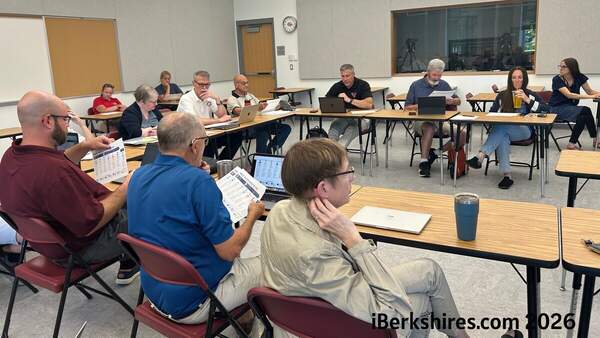
The committee covered a wide range of topics at its May meeting, getting an update on the district's improvement plan, hearing about changes to the district's special education program, discussing school lunches and weighing the pros and cons of a resolution that would call on legislators in Boston to rein in spending.
Bergeron had progress to report on the improvement plan in general and, in particular, on the district's effort to improve its incident response procedure in consultation with consultant The Equity Imperative out of Chicago.
One priority of the three-year improvement plan the committee approved in January 2024 was working to address chronic absenteeism, defined by the commonwealth as missing 10 percent of school days, or 18 out of 180, in an academic year.
Bergeron said that the districtwide number of 15 percent of students chronically absent in 2023-24 is coming down, and he expects it to come in at less than 10 percent when the books are closed on the current year.
At Lanesborough Elementary, Principal Nolan Pratt was able to report some encouraging numbers during his update to the committee.
"As of last Friday, we had 500 fewer daily abscenses than the previous year at the same time," Pratt said. "We've been working hard to make sure our students feel welcome. And, with that, it's paying off. I can't be more proud of the work and of our students and our families for prioritizing education and getting the kids to school."
Bergeron also said the administration continues to work on improving communication and finding better ways to utilize Panorama, a survey tool to assess student well-being and school culture.
And local committee working with The Equity Imperative, funded by American Rescue Plan Act funds from the town of Williamstown, is on track to roll out new policies and procedures for bias-based incidents in time for a launch this fall, Bergeron said.
"There's been progress, a lot of it internal, and by the fall we should have a really well-structured, well-explained, very actionable mode of operating when things do go wrong within the realm of incident response," he said.
Special Education Director Noelle Sullivan told the committee that the district recently received a passing grade from an annual state review of its program. And the department is preparing to launch improvements in line with an overall district goal to promote literacy in Mount Greylock's student population.
"We have 10 special educators signed up to complete the Orton-Gillingham training," Sullivan said. "It's a two-year program. There is 100 hours of classroom time and a heavy practicum. But when they complete that, they will be associate level-trained
"Orton Gillingham teachers. Orton-Gilligham is a structured, multi-sensory approach to literacy. It's very well researched. It's really top-notch reading instruction for our students. We're really excited to have our special education teachers working alongside our reading specialists and have everyone bombarding those kiddos with really high quality teaching."
Sullivan also talked about how the district plans to utilize a full-time reading specialist in the middle-high school that was included in the fiscal year 2025-26 budget that will be up for approval at town meetings in Lanesborough and Williamstown this spring.
The new specialist will provide one-on-one and small group instruction as well as "pushing in" to general education English classes to provide support, Sullivan said.
The School Committee on Thursday discussed updated policies on school nutrition that are needed to reflect the current reality of universal free lunch and the plan to offer universal free breakfast starting next year.
Committee member Carolyn Greene asked Bergeron whether the commonwealth had committed to funding the availability of both meals to students.
"The commitments are only as strong as the annual budgeting process at the state level," Bergeron said. "For the coming year … we don't have a full budget yet. At every step [on Beacon Hill] breakfast and lunch have been included as fully funded.
"That said, if the [federal] USDA funding was to disappear, that's another critical area for us to separate from the state funding that could put us in a bind. We're closely monitoring state and federal funding to make sure that it all lines up so we can have a school nutrition program that is able to operate in a way, financially, that ideally covers its cost through those two sources of funding."
Bergeron said that while lunch may be available to all the district's students free of charge, the district still encourages families to fill out the "free and reduced lunch" form as it is a gateway to other types of financial support for families with economic need. Greene asked Bergeron to look into finding another name for the paperwork to avoid any misunderstanding among families that the form itself is unnecessary.
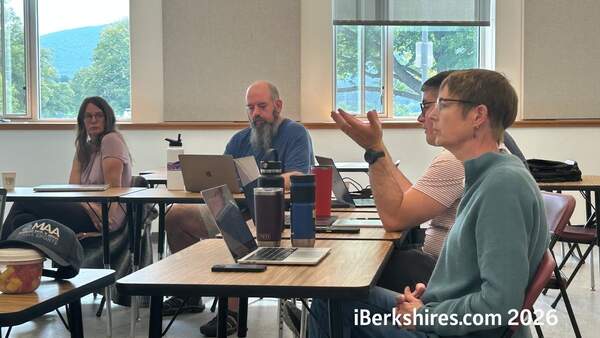
Toward the end of the two-hour meeting, Steven Miller and Curtis Elfenbein presented a resolution they drafted and asked their colleagues to submit for consideration for adoption by the Massachusetts Association of School Committees at its fall conference.
If passed by the association, the resolution would press legislators to "immediately move to sustainable budgets over the next three years" to address what the resolution terms "exponentially increasing debt and deficits" at the state level.
Miller has previously warned the committee about ballooning debt and its potential impact on the commonwealth's ability to fund public education.
"Right now, I believe the state debt is on the order of our revenue for a given year," Miller said. "We're spending money on interest payments. This is not sustainable. In terms of an exact definition [of sustainable budgets], I would probably say, don't spend more than you have.
"Right now, we have to make painful decisions. If we don't make them, other people are going to. This can't continue. So rather than having other people make the decisions, I'd rather have us make the decisions and really look at what we're spending money on and determine what needs to be prioritized."
Greene said she understood and did not completely disagree with Miller's argument but pointed out a potential shortfall in the resolution.
"It seems to me that what we want to lobby for is more funds for education," Greene said. "That would be more relevant to school committees."
She argued that, in its current form, the resolution was unlikely to get past the MASC's resolution committee, let alone pass the full body.
Miller said he would be happy to add language to the resolution emphasizing that education is an essential service that is suffering because of the growing state debt to clarify the resolution's intent, but Chair Julia Bowen suggested that it might not be the best use of the committee's time to wordsmith that amendment during Thursday's meeting.
After the resolution in its current form failed on a vote of 2-4-1 (Miller and Elfenbein voting yay and Jose Constantine abstaining), Bowen offered Miller and Elfenbein a chance to redo the resolution and bring it back to the committee in time to meet the June 2 deadline for submission to the MASC for its 2025 annual meeting.
With the next regular Mount Greylock School Committee meeting scheduled for June 12, the panel agreed to hold a special single-item meeting on Thursday, May 22 at 4:45 to consider an updated resolution.
Tags: principal, school improvement, WES,