image description

Obama Foundation Head to Speak at Williams Commencement
Print Story | Email Story

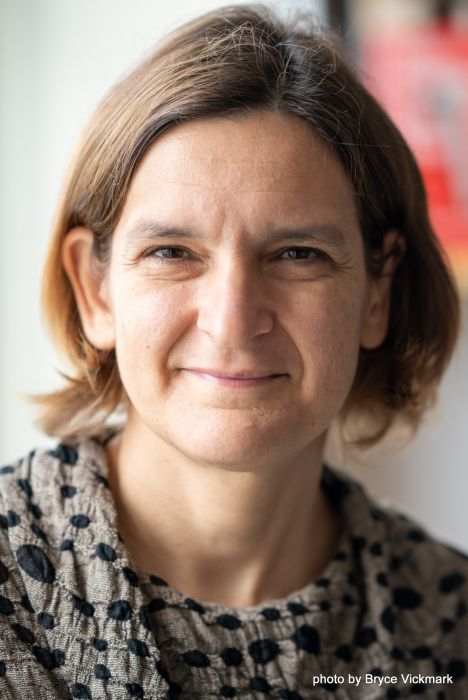
Nobel Laureate Esther Duflo of MIT will give the baccalaureate address on Saturday, June 7.
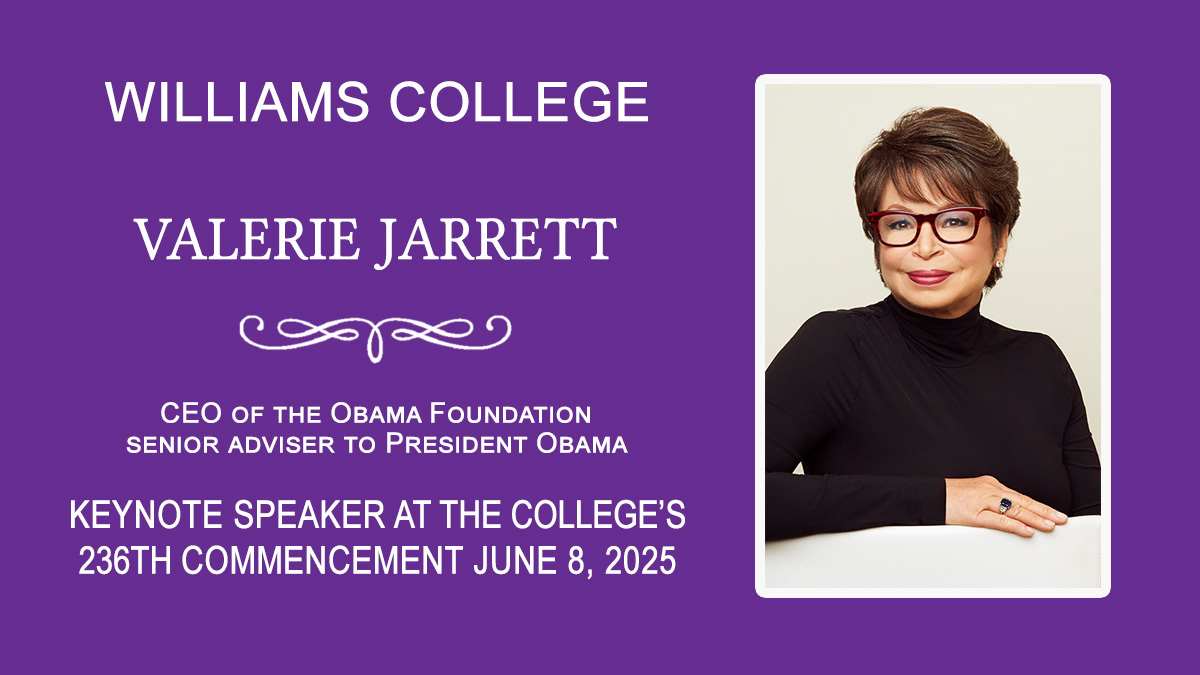
WILLIAMSTOWN, Mass. — Valerie Jarrett, CEO and a member of the board of directors of The Obama Foundation, will be the principal speaker at Williams College's 236th commencement exercise on Sunday, June 8.
 
The day before, Esther Duflo, the Abdul Latif Jameel Professor of Poverty Alleviation and Development Economics at Massachusetts Institute of Technology and a Nobel laureate, will deliver the college's baccalaureate lecture. 
 
Commencement weekend begins Saturday with the annual Ivy Exercises at 1:10 in the Quad ('62 Center in case of rain); the baccalaureate service is a ticketed event in Chapin Hall at 5 p.m. 
 
On Sunday, a Mass will be held at Thompson Memorial Chapel at 7:30 a.m. and the Quad will open for visitors at 8 a.m. with the procession at 9:30. Commencement starts at 10 and will also be livestreamed here. The President's Reception follows on the Chapin Hall Lawn. 
 
Should the exercises be forced indoors, tickets will be required to enter Lansing Chapman Ice Rink. 
 
In her role at the Obama Foundation, Jarrett is overseeing the creation of a new world-class cultural and civic institution on Chicago's south side, and programs that rare designed to inspire, empower and connect people to change their world. 
 
She is also a senior distinguished fellow at the University of Chicago Law School, and the author of The New York Times bestselling book "Finding My Voice: My Journey to the West Wing and the Path Forward," published in April 2019. 
 
Jarrett is board chair of Civic Nation and serves on the boards of Walgreens Boot Alliance Inc., Ralph Lauren Corp., Sweetgreen Inc., Ariel Investments, the University of Chicago, and the Sesame Street Workshop. She also serves on the Goldman Sachs One Million Black Women Advisory Board, the Bank of America Enterprise Executive Development Council, and the Microsoft Advisory Council. 
 
As the senior adviser to President Barack Obama from 2009 to 2017, she became the longest-serving senior adviser to a president in history. She oversaw the Offices of Public Engagement and Intergovernmental Affairs and chaired the White House Council on Women and Girls. 
 
Jarrett's background is in both the public and private sectors. She was CEO of the Habitat Co., the largest multifamily housing developer and manager in Chicago during her tenure. Prior to joining Habitat, Jarrett was the commissioner of planning and development for the city of Chicago, and deputy chief of staff for Chicago Mayor Richard M. Daley. She practiced law for 10 years in the private and public sector. 
 
She also has served as the director of numerous corporate and not-for-profit boards, including leadership roles as chairman of the board of the Chicago Stock Exchange, chairman of the University of Chicago Medical Center Board of Trustees, vice chairman of the University of Chicago Board of Trustees, chair of Chicago Transit Board, and director of the Federal Reserve Bank of Chicago. 
 
Jarrett has received numerous awards and honorary degrees, including TIME's 100 Most Influential People Award and Forbes 50 Over 50. 
 
She received her bachelor's degree from Stanford University in 1978 and her juris doctorate from the University of Michigan Law School in 1981.
 
Duflo is co-founder and co-director of the Abdul Latif Jameel Poverty Action Lab (J-PAL) and chaire of pauvreté et politiques publiques at the Collège de France. In her research, she seeks to understand the economic lives of people living in poverty, with the aim to help design and evaluate social policies. She has worked on health, education, financial inclusion, environment and governance.
 
Her first degrees were in history and economics from Ecole Normale Superieure in Paris. She subsequently received a doctorate in economics from MIT in 1999.
 
Duflo has received numerous academic honors and prizes including the 2019 Sveriges Riksbank Prize in Economic Sciences in Memory of Alfred Nobel (with co-Laureates Abhijit Banerjee and Michael Kremer), the Princess of Asturias Award for Social Sciences (2015), the A.SK Social Science Award (2015), Infosys Prize (2014), the David N. Kershaw Award (2011), a John Bates Clark Medal (2010), and a MacArthur "Genius Grant" Fellowship (2009).  
 
With Banerjee, she wrote "Poor Economics: A Radical Rethinking of the Way to Fight Global Poverty," which won the Financial Times and Goldman Sachs Business Book of the Year Award in 2011 and has been translated into more than 17 languages, and Good Economics for Hard Times.
 
Duflo is a member of the National Academy of Sciences and a corresponding fellow of the British Academy.
 
In 2010, she was awarded the John Bates Clark Medal, and in 2019, the Sveriges Riksbank Prize in Economics in memory of Alfred Nobel.

Tags: graduation 2025,   keynote,   Williams College,   
If you would like to contribute information on this article, contact us at info@iberkshires.com.

Puppets Teach Resilience at Lanesborough Elementary School

By Breanna SteeleiBerkshires Staff

The kids learned from puppets Ollie and a hermit crab.

LANESBOROUGH, Mass. — Vermont Family Network's Puppets in Education visited the elementary school recently to teach kids about being resilient.

Puppets in Education has been engaging with young students with interactive puppets for 45 years.  

The group partnered again with Bedard Brothers Chevrolet, which sponsored the visit. 

Classes filtered through the music class Thursday to learn about how to be resilient and kind, deal with change and anxiety, and more.

"This program is this beautiful blending of other programs we have, which is our anxiety program, our bullying prevention and friendship program, but is teaching children the power of yet and how to be able to feel empowered and strong when times are challenging and tough," said program manager Sarah Vogelsang-Card.

The kids got to engage with a "bounce back" song, move around, and listen to a hermit crab deal with the change of needing a new shell.

"A crab that is too small or too big for its shell, so trying to problem solve, having a plan A, B and C, because it's a really tough time," Vogelsang-Card said. "It's like moving, it's like divorce of parents, it's changing schools. It's things that children would be going through, even on a day to day basis, that are just things they need to be resilient, that they feel strong and they feel empowered to be able to make these choices for themselves."

The resiliency program is new and formatted little differently to each of the age groups.

"For the older kids. We age it up a bit, so we talk about harassment and bullying and even setting the scene with the beach is a little bit different kind of language, something that they feel like they can buy into," she said. "For the younger kids, it's a little bit more playful, and we don't touch about harassment. We just talk about making friends and being kind. So that's where we're learning as we're growing this program, is to find the different kinds of messaging that's appropriate for each development level."

This programming affirms themes that are already being discussed in the elementary school, said school psychologist Christy Viall. She thinks this is a fun way for the children to continue learning. 

"We have programs here at the school called community building, and that's really good. So they go through all of these strategies already," she said. "But having that repetition is really important, and finding it in a different way, like the puppets coming in and sharing it with them is a fun way that they can really connect to, I think, and it might, get in a little more deeply for them.

Vogelsang-Card said its another space for them to be safe and discuss what's going on in their life. Some children are afraid because maybe their parents are getting divorced, or they're being bullied, but with the puppets, they might open up and disclose what's bothering them because they feel safe, even in a larger crowd. 

"When we do sexual abuse awareness that program alone, over five years, we had 87 disclosures of abuse that were followed up and reported," she said. "And children feel safe with the puppets. It makes them feel valued, heard, and we hope that in our short time that we're together, that they at least leave knowing that they're not alone."

Bedard Brothers also gave the school five new puppets to use. Viall said the puppets are a great help for the students in her classroom, especially in the younger grades. 

"Every year, I've been giving the puppets to the students. And I also have a few of the puppets in my classroom, and the students use them in small groups to practice out the strategies with each other, which is really helpful," she said. "Sometimes the older students, like sixth graders, will put on a puppet show. They'll come up with a whole theme and a whole little situation, and they'll act it out with the strategies for the younger students. It's really cute, they've done it with kindergarteners, and the kids really like it."

Vogelsang-Card said there are 130 schools in Vermont that are on the waiting list for them to come in. Lanesborough Elementary has been the only Massachusetts school they have visited, thanks to Bedard Brothers. 

"These programs are so critical and life-changing for children in such a short amount of time, and we are the only program in the United States that does what we do, which is create this content in this enjoyable, fun, engaging way with oftentimes difficult subjects," she said. "Vermont is our home base, but we would love to be able to bring this to more schools, and we can't do this without the support of community, business funders or donors, and it really makes a difference for children."

The fourth-grade students were the first class to engage with the puppets and a lot of them really connected with the show.

"I learned to never give-up and if you have to move houses, be nervous, but it still helps," said William Larios.

"I learned to always add the word 'yet' at the end," said Sierra Kellogg, because even if she can't do something now, she will be able to at some point.

Samuel Casucci was struck by what one of the puppets talked about. "He said some people make fun of him if he dresses different, come from different place, brings home lunch, it doesn't matter," Samuel continued. "We're all kind of the same. We're all kind of different, like we have different hairstyles, different clothes. We're all the same because we're all human."

"I learned how to be more positive about myself and like, say, I can't do this yet, it's positive and helpful," said Liam Flaherty.

The students got to take home stickers at the end of the day with contact information of the organization.

View Full Story

More Williamstown Stories