Williamstown Prudential Committee Interviews Fire Chief Candidates
WILLIAMSTOWN, Mass. — The Prudential Committee on Wednesday interviewed three finalists to replace retiring Fire Chief Craig Pedercini.
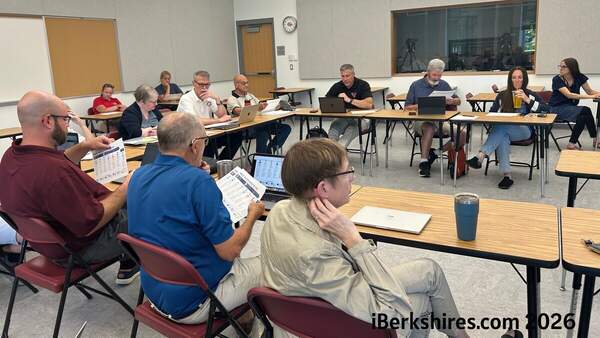
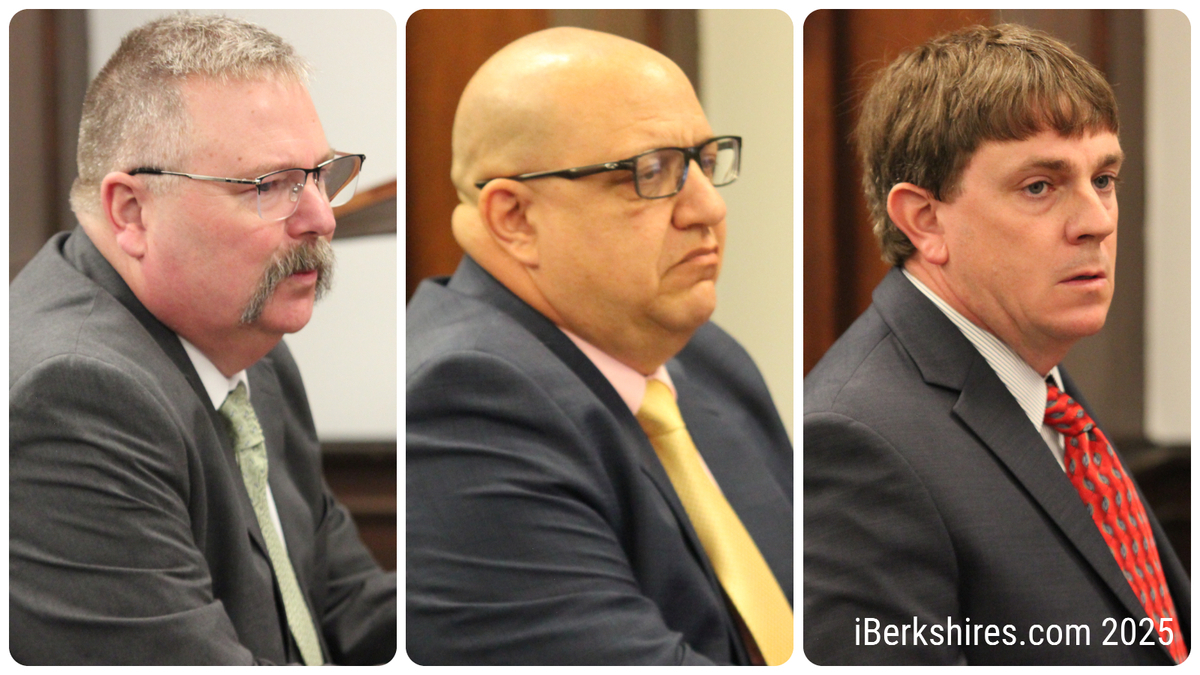
In a series of back-to-back sessions at Town Hall, the panel questioned Spencer Chief Robert Parsons, Onset Deputy Chief Jeffrey Dias and Williamstown Lt. Ryan Housman, who were chosen from 24 applicants by a Personnel Committee established by the elected Prudential Committee members.
Each candidate was asked a series of questions by all five committee members in interviews that lasted from 45 minutes to an hour apiece.
The three finalists talked about, among other things, their dedication to the fire service, the challenges of maintaining a call-volunteer department, coordinating mutual aid with neighboring communities, mentoring young firefighters to take leadership roles and how they would handle issues the Williamstown Fire District faces with its apparatus as it prepares to occupy a new station on Main Street at the end of this year.
Prudential Committee Chair David Moresi posed a question that has been on the mind of district officials for years, asking each candidate his thoughts on how the town might transition from its current staffing model to one where it uses a mix of full-time career firefighters and volunteers who are compensated on an hourly basis only for time spent on calls.
Currently, the fire chief post is the only full-time paid position in Williamstown.
Parsons said he has gone through the process twice in Central Massachusetts communities, first as the chief in East Brookfield, which added full-timers in 1999 and now in Spencer, where he has served as chief since 2002.
"When I came to Spencer, we had 55 on-call firefighters," Parsons said. "We had people in town working in the day, and it was no problem. But as the years progressed, the people working in town retired or no longer were working in town. It got to the point where I was the only one responding to calls in the daytime. I did a kitchen fire with myself and two police officers.
"I went into the town administrator's office and said I'm done."
Today, Spencer has nine career firefighters and a force of 26 call-volunteers, Parsons said.
He said the town helped pay for the full-time staff with a series of Staffing for Adequate Fire and Emergency Response (SAFER) Grants from the Federal Emergency Management Agency.
Dias said the department in Onset, near the Bourne Bridge to Cape Cod on the mainland side, has gone through a similar evolution to its current staffing of 10 full-timers and 45 volunteers.
"At some point, and nobody knows when that time is, everybody is going to end up hiring some sort of career staff," Dias said. "But there are a lot of things you can do to bolster your call department to delay that and ease into that transition.
"One thing you have to focus on is making sure the call firefighters understand how valuable they are and that they're not being replaced by staff. They're being supplemented by staff."
Housman said he has talked to other fire departments about how they manage the work load with full-timers but he hopes that Williamstown can stay with current call-volunteer model as long as possible.
"My hope is the new station will attract additional volunteers," Housman said. "I want to see us use all form of media, social media and the local news to promote the department more than we're doing.
"If we do go full time, we should investigate the possibility of having an ambulance in the station."
On a related note about force multiplying, the candidates were asked how they would handle mutual aid with other local fire departments and specifically how they would coordinate use of firefighters from different towns on the scene of a fire.
"I would say as long as everyone is trained on the [incident command system], they should all understand the system that's in place so it doesn't become a free for all," Housman said. "Everyone has a place, everyone has someone to report to, and the incident commander is in charge.
"At the fire [on Bulkley Street] a couple of weeks ago, I made sure they were directed to the chief, and he was in charge of them. He needed to know what they were doing. We can strengthen our training with other departments and go over stuff like that — what are our expectations, what are their expectations of us."
Parsons said Spencer uses mutual aid every day.
"We meet as a district once a month, we become friends, we know our peers," he said. "If they come to us or we go to them [on a call], we work together seamlessly, hand in hand. We work very well together. We know everybody very well."
Dias also talked about forming personal connections with other fire chiefs and mentioned that a strong county chiefs association is a must so "people are familiar with each other and understand each other's challenges and needs."
"I've also seen where mutual aid gets abused a little bit," Dias said. "People get called in to avoid paying overtime to [the receiving department's] paid staff. It has to be closely monitored. And, with good partnerships with your mutual aid partners, that can be avoided."
All three also emphasized personal relationships in response to another question from the committee: how they would handle coordination with other first responders.
"I think that if you came to my community and talked to the police department, they would tell you what a good steward of cooperation and collaboration I have been," said Onset's Dias. "I'm a huge proponent of public safety, a huge proponent of support. The EMS in my community is a third municipal service. We have a very good relationship with them. Some of my closest friends are police officers in my community.
Parsons said he grew up with the current police chief in Spencer and the police station, fire station and ambulance station are physical neighbors of one another, fostering interaction among the members.
"The Police Department is using our training room right now," Parsons said. "That's part of that relationship. We have room? Absolutely you can use it.
"I've seen police departments [in other towns] write parking tickets to their fire departments. We don't have that in Spencer. We have a very good relationship with our police department."
Housman said he admires the work the Williamstown Police Department has done to modernize itself and the Fire Department can follow suit.
"Communication is key there between the departments," Housman said. "Talk about things and talk about what went right what didn't ... that's how you strengthen relationships is talk to people, make sure they understand what your expectations are, what you're thinking about but also understand their expectations.
"The police chief and I have talked about different calls that could have gone better and how we can help each other."
Police Chief Michael Ziemba participated in the work of the fire district's Personnel Committee to screen the applicants and attended Wednesday's interviews at Town Hall.
The three finalists come from three different regions of the commonwealth: the South Shore, Central Mass and the Northern Berkshires. And they had three different responses when asked why now is a good time to seek a new position.
"The biggest concern I have in Spencer right now is they're looking at a $2.6 million override just to maintain what they have, level services," Parsons said. "It's not going to be pretty in Spencer, and I've been through two of these [budget cycles] where they closed the library, closed parks and rec. I foresee this happening again in the town where we're going to go back to that.
"We're going to lose career firefighters when the [SAFER] grant runs out. That's my biggest reason for leaving. If this [job] doesn't come to fruition, I'm going to to live through that. I don't want to."
Dias said to become a chief, the goal of leading a department, he has to look outside of Onset.
"My chief is actually younger than me, and the assistant chief, who, in the succession plan, should take his place, is six years younger than me," Dias said. "If I want to lead an organization, I have to fly out of the nest.
"It's exciting. It's nerve-wracking, but I'm looking forward to the challenge. I love the people of the community, but I have to leave."
Housman, whose day job is as a project manager at Pittsfield's J.H. Maxymillian, said he is looking for a change of pace.
"It's just an opportunity that I honestly never thought about a bunch of years ago, and it came up," said Housman, who started as a firefighter in Williamstown in 2005. "It's not vastly different from my current job as a project manager at a smaller company. I feel like I can slide into this position."
Prudential Committee Vice Chair Lindsay Neathawk asked Housman what he would do if another finalist is selected.
"I will support him 100 percent," Housman said. "I care about this department. I've been here almost 20 years. All the ideas I presented to the Personnel Committee, I'll give them to the new chief. I want this department to succeed.
"Obviously, I do want the job, but I want the department to succeed. That's more important. Part of the reason I applied is that I think I can help the department succeed."
The full interviews are available on the town's community access television station, WilliNet, its website, willinet.org and its app for users of digital televisions.
Moresi said previously that he hopes residents can see the candidates for themselves and provide feedback to the Prudential Committee before it makes a final decision.
The panel has set a meeting for Wednesday, March 12, at 4 p.m. to make that decision.
Tags: candidate interviews, fire chief,