North Adams Schools Eye Level Service Budget But Wary of Federal Cuts
NORTH ADAMS, Mass. — With federal and state funding sources uncertain, school officials are taking a cautious approach to next year's budget.
The Finance and Facilities Committee was presented Monday with a draft spending plan for fiscal 2026 that's projected to rise 3.36 percent over this year.
Some $940,000 in school choice funds will be used to offset increases; two grant-funded positions will be eliminated and several retirements will be factored in as well.
"Apparently $15 billion of the state budget is funded through federal funds," said Superintendent Barbara Malkas. "Until we know what is actually happening, it's very hard to plan."
Malkas told the committee that that morning the Berkshire Superintendents Roundtable had met with the Berkshire delegation, who were being cautious about what could happen.
School districts are planning as if things are status quo based on the governor's budget but with the knowledge matters may be in flux as state and federal leaders move through the budget process.
"Our state aid and other educational supports through the state are just not keeping up with the rate of inflation and they haven't been for awhile," Malkas said. "Most districts, to have a level service budget, we're looking at anywhere from 6 [percent] to 8 1/2 percent increase ... that is significantly high for most communities."
North Adams, right now, is looking at a fiscal 2026 budget of $21,636,000, up $703,887 over this year. Of that, about $17 million will be in Chapter 70 state education aid and $4 million in local funding, up $150,000 over this year.
This comes after closing Greylock School, reconfiguring grades and preparing for the end of the federal Elementary and Secondary School Emergency Relief funds. Some 30 positions were reduced during the consolidation.
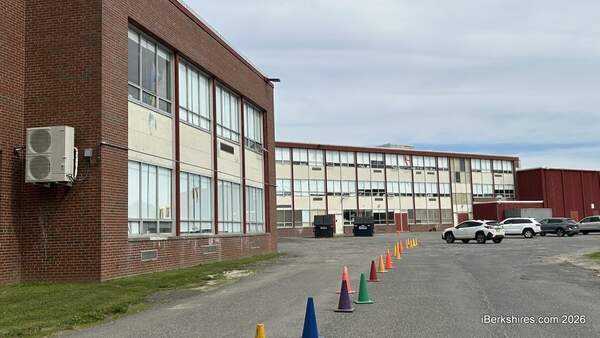
Malkas noted keeping Greylock open this school year would have been costly, as the hot water boiler broke down in July and it would have been "extremely challenging" to keep the failing heating system running this frigid winter.
For next year, two of the three curriculum coordinator posts will be eliminated because the grant funding will run out. The third will be absorbed into the local budget. The coordinators will have bumping rights for teaching positions.
A number of factors are pushing costs up, including contractural obligations. The district has worked "through negotiations to keep ourselves competitive regionally," said the superintendent, and to keep teachers from being poached by higher-paying districts.
Special education costs are outpacing reimbursements and state aid. Administrators spent some time informing the committee of the rising numbers of students requiring extra help.
"We're always higher than the state average, it remained pretty consistent," said the superintendent. "What we're seeing is this growing trend, and the state average is around 20 percent we're bumping up now above 30 percent and our Chapter 70 formula is built on the assumption that your students identified as special ed is 14 percent of your population."
North Adams' combination of higher percentages of low income and special education means it is rated as a "high needs" community.
More children are being identified with needs that may include more intensive therapy or medical needs. Out-of-district tuition can run from $40,000 to $400,000 depending on placement and the district is responsible up to the student's 22nd birthday.
The cost was $3.1 million in 2024 and is projected to be the same next year. The state's circuit breaker reimbursement kicks in once the cost exceeds four times the foundation amount per student. Even then, it's a max of 75 percent of the overage.
Director of School Finance and Operations Nancy Rauscher calculated that the $3 million in costs results in about $1 million circuit breaker, depending how much the state allocates.
Malkas noted a bill has been filed to examine the assumptions behind the current Chapter 70 formula and to rethink the 50/50 split on the so-called Fair Share monies between infrastructure and education.
Other factors touched on were the potential losses if federal grants disappear, including nearly 28 positions, the free lunch and breakfast program and 21st Century after-school programs.
The district received $3.77 million in grant funding so far this year, the bulk of which were federal and state funding.
Competitive grants may be lost but entitlement grants are secured by the Elementary and Secondary Education Act of 1965, however there is potential for their amounts to be reduced.
The committee will do a more detailed review of the budget at its next meeting.
"It doesn't need to sound doom and gloom," said Mayor Jennifer Macksey. "I'm trying to be positive. We've got a lot of great things going within the walls of our schools, we just have to figure out a way to make it all work financially, and that's going to be the job of this community as we move forward."
Tags: fiscal 2026, NAPS_budget, school budget,