Clark Art Lecture on Aby Warburg's Mnemosyne
Print Story | Email Story
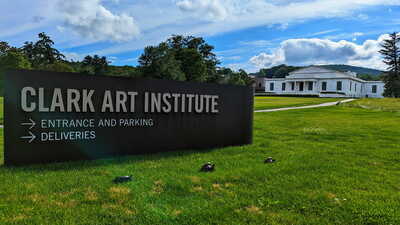
WILLIAMSTOWN, Mass. — On Tuesday, March 18, the Clark Art Institute's Research and Academic Program presents a talk by Annie Bourneuf (School of the Art Institute of Chicago / Clark Professor 2024–25).
 
She investigates one of the most enigmatic passages in the German-Jewish art historian Aby Warburg's picture-atlas Mnemosyne, his attempted summation in arrays of images of his work on the afterlife of antiquity, centered on Renaissance Europe and nearing completion when he died in 1929, stated a press release. 
 
This free event takes place at 5:30 pm in the Manton Research Center auditorium.
 
According to a press release:
 
Mnemosyne ends with two panels revolving around the Lateran Accords of that year, which established a new relationship of reciprocal support between the Catholic Church and Mussolini's Fascist regime. Warburg himself stayed out late to witness the massive celebrations of the agreement, which he described as "the re-paganization of Rome," and later combined press photographs of this and related events with reproductions of paintings by Botticelli and Raphael on the theme of the Eucharist, defamatory woodcuts depicting Jews desecrating the Host, a staged photograph of seppuku, and newspaper photographs of athletes, among other items, to make the two last panels. How might Warburg have understood the accords? What do these combinations of images do? More broadly, how can we understand the possibilities and perils of this foundational art historian's attempt to bring his scholarly work to bear on the images and gestures formed by and in part forming the mass politics of his present?
 
Free. Accessible seats available; for information, call 413 458 0524. A 5 pm reception in the Manton Research Center reading room precedes the event. 

Tags: Clark Art,   
If you would like to contribute information on this article, contact us at info@iberkshires.com.

Discrimination Against Muslim Americans Persists 25 Years After 9/11

By Stephen DravisiBerkshires Staff
WILLIAMSTOWN, Mass. — Dozens of Muslim Americans were among people killed in the Sept. 11 terrorist attacks.
 
Untold numbers of Muslim Americans have suffered countless acts of discrimination in their aftermath.
 
"Of course, you'll find several accounts of Muslims from all over the U.S. describing how they went from the unknown kids in the school to being stereotyped or ridiculed for their Muslim names," Sidra Mahmood recalled recently. "However, many Americans forget that the victims of 9/11 were also Muslim Americans.
 
"I can't forget the time when a classmate broke down in sobs when 9/11 came up in our classroom at the Islamic seminary I went to in Texas, because her father's best friend who was like an uncle to her, died on 9/11."
 
Today, Mahmood is a chaplain at Williams College. In 2001, she was growing up in Karachi, Pakistan, when terrorists forced two passenger jets into the Twin Towers in lower Manhattan and another plane into the Pentagon outside Washington, D.C. A third plane, which terrorists hoped to crash into a D.C. landmark, was brought down in western Pennsylvania after passengers and crew fought back against the hijackers.
 
The attacks, which ultimately claimed 2,976 lives, horrified people around the world, including in Mahmood's native land.
 
"I remember being aghast like anyone who witnessed the fall of the Twin Towers in real time," she said. "However, even as a child, fear gripped me about the possibility of war, especially once we learned that Afghanistan, right adjacent to Pakistan, would be attacked by the U.S. My mother had told me about the 1971 war between India and Pakistan when she remembered hiding in the dark after bomb sirens would go off in Punjab after intentional blackouts.
 
View Full Story

More Williamstown Stories