Clark Art Announces New Series of Installations
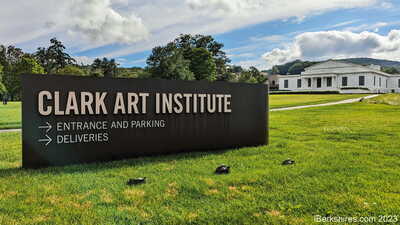 |
WILLIAMSTOWN, Mass. — The Clark Art Institute presents a new series of year-round public installations, Paginations, featuring works drawn from the Clark library's extensive holdings and curated by members of the library staff.
The installations are featured in a newly designed space located in the Manton Research Center's reading room, just outside the entrance to the Clark's library and are on view for free during all visiting hours.
The inaugural display in the program, A–Z: Alphabetic Highlights from the Library's Special Collections, opens Jan. 21. The first installation in this new program celebrates the building blocks of type and text, the letters of the alphabet, and showcases examples from 1488–2024 in which the letters themselves take center stage.
"While people automatically think of our permanent collection and our special exhibitions when they consider what you can see on a visit to the Clark, our library is a true treasure trove of remarkable visual images and exceptional artistic achievements that deserves greater recognition," said Olivier Meslay, Hardymon Director of the Clark. "With the launch of our new library installations we hope to open the doors on a collection that is every bit as vast and varied as our art collection as a means of inspiring our visitors to explore the library and all that it offers."
According to a press release:
A to Z: Alphabetic Highlights from the Library's Special Collections focuses on the long history of alphabet books.
"Long before printing presses shared texts with the masses, artists and artisans celebrated the beauty of the characters in the alphabet as they documented the world around them," says Andrea Puccio, director of the Clark's library. "This rich tradition has continued over the centuries, ranging from extraordinary hand-illustrated manuscripts to the simple primers that have taught generations of children the alphabetic characters that are the foundation of their language. In this installation, we are thrilled to take a journey that literally explores the symbols that form our languages and the ways in which illustrators, typographers, and writers have presented them."
Adding an artistic focus on letters or alphabets to literary works has a long history. Medieval monks celebrated letters as they painstakingly copied texts by hand. Creativity flourished around the first letter in each chapter, with the initial letter drawn larger, more ornate, and sometimes more colorfully than those that follow. The tradition of glorified initials continued as book creation evolved from script to the printed page in the fifteenth century and beyond.
Alphabet books with eye-catching images help readers associate a letter with a familiar word, an educational tool used for centuries. Over time, artists have elevated the familiar format creating alphabetic works of art. The audience for these volumes has likewise expanded from children learning to read to art-appreciating adults.
Not all books featuring letters are designed to be artistic or inspire literacy, yet they are often beautiful in themselves. These utilitarian books often provide samples of lettering that can be used on signs, in advertising, or for handicrafts. Books of ownership or makers' marks likewise illustrate monograms or other letter-based symbols. This installation offers visitors an opportunity to explore a glorious selection of alphabets in a wide variety of formats and presentations.
Tags: Clark Art,