December is the Start of Bird Feeding Season
MONTPELIER, Mass. — According to Vermont Fish and Wildlife, December is the Start of bird feeding season.
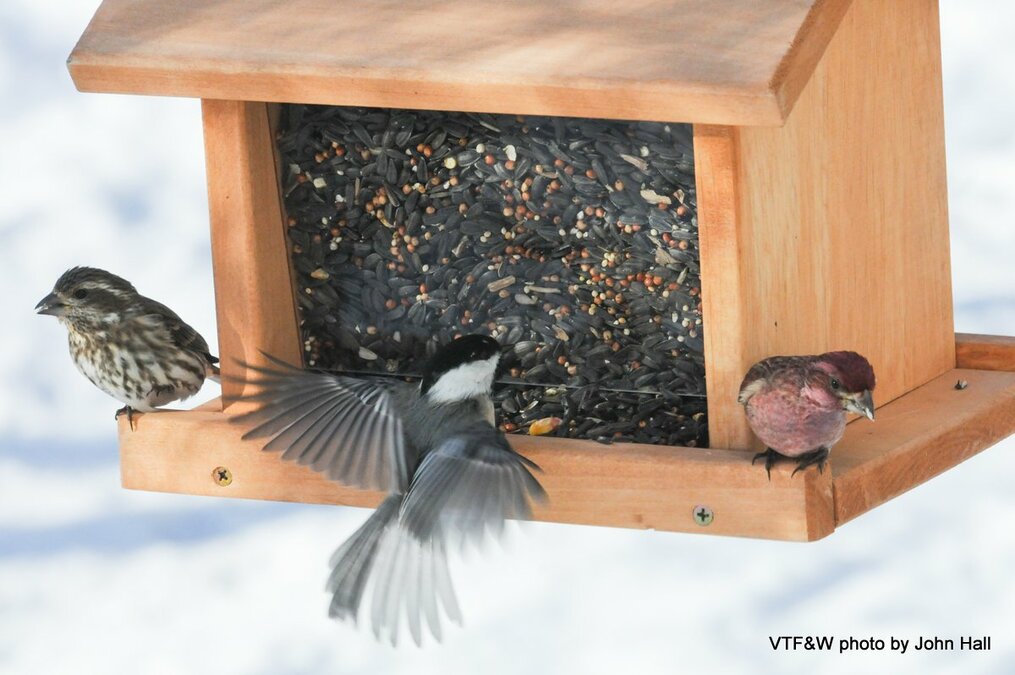
"Winter bird feeding is a great way to observe and learn about our year-round bird residents such as black capped chickadees, nuthatches and blue jays. It's also a great time to learn about winter visitors such as evening and pine grosbeaks." said Jillian Kilborn, Vermont Fish and Wildlife's bird project leader.
Here are some basic bird feeding tips from Vermont Fish and Wildlife:
- Make your own feeding mixture to maximize the number of species visiting your yard. Black oil sunflower seed is a favorite of many birds, but when mixed with "thistle" (or "nyjer") or cracked corn you will be sure to attract a wide variety of species. Don't forget the suet to attract woodpeckers and even chickadees.
- Mix up the type of feeders you use. Hopper feeders are great for large birds such as blue jays, while tube feeders are best for smaller birds. Elevated tray feeders will attract birds that usually feed on the ground including juncos and larger bodied winter visitors such as evening grosbeaks.
- Place your feeders near natural habitat, or even add a habitat for birds to hide. A Christmas tree is a great addition to a snowbank next to your feeder to provide quick cover.
- Keep your feeders clean. Only put out enough food for a day, and wash feeders every couple of weeks in a 10 percent bleach solution and let dry to prevent the spread of bacteria and disease.
If you decide to feed birds, remember:
- Feeding can expose birds to hazards they might otherwise avoid. The risks of predation are higher close to people, especially from domestic cats -- the leading cause of bird deaths in North America. Keep cats inside and take feeders down if predators become frequent visitors. Also, we recommend placing feeders within three feet of windows to minimize high speed window strikes.
- Don't feed birds when bears are active. Most bears are in dens from Dec. 1 to April 1, but some will delay hibernation or re-emerge to feed during periods of warmer weather. Remove bird feeders immediately if you see signs of bears or know a bear is active in your community. Bears that learn to associate food with a house will continue to return, potentially leading to property damage and dangerous encounters with people. Further, it is illegal to feed bears in Vermont.
- Once you've started feeding the birds, keep your feeders stocked. Although wild birds are not entirely dependent on bird feeders, they can become accustomed to this easy food source. If you wish to stop feeding during winter months, gradually taper off the amount of food you provide rather than stopping abruptly, giving the birds a chance to find other food sources. This is especially important when food is scarce in late winter or during periods of extreme weather. Immediately remove feeders if there are reports of HPAI (Avian Influenza) or even a bacterial infection outbreak. Concentrating birds at a feeder only contributes to the spread of diseases. If you find a dead bird visit the Avian Influenza Wildlife Health Bulletin on the Vermont Fish and Wildlife website for more information on when to report, and what to do.
- Finally, report your observations. While watching your bird feeders, you can participate in one or more bird monitoring projects by looking up the Audubon Christmas Bird Count, the Great Backyard Bird Count and Project Feeder Watch and eBird -- all collect important information for understanding bird populations.
As winter sets in, find a comfortable spot inside where you can watch the birds visiting your feeders. Figure out what birds they are, observe how they interact with each other, and see what they prefer to eat. It's a perfect way to get to know the birds around you better.
Tags: birds, wildlife,