Williamstown Con Comm Approves Hopkins Bridge Replacement
The new bridge structure will be wide enough for a trail maintenance machine.
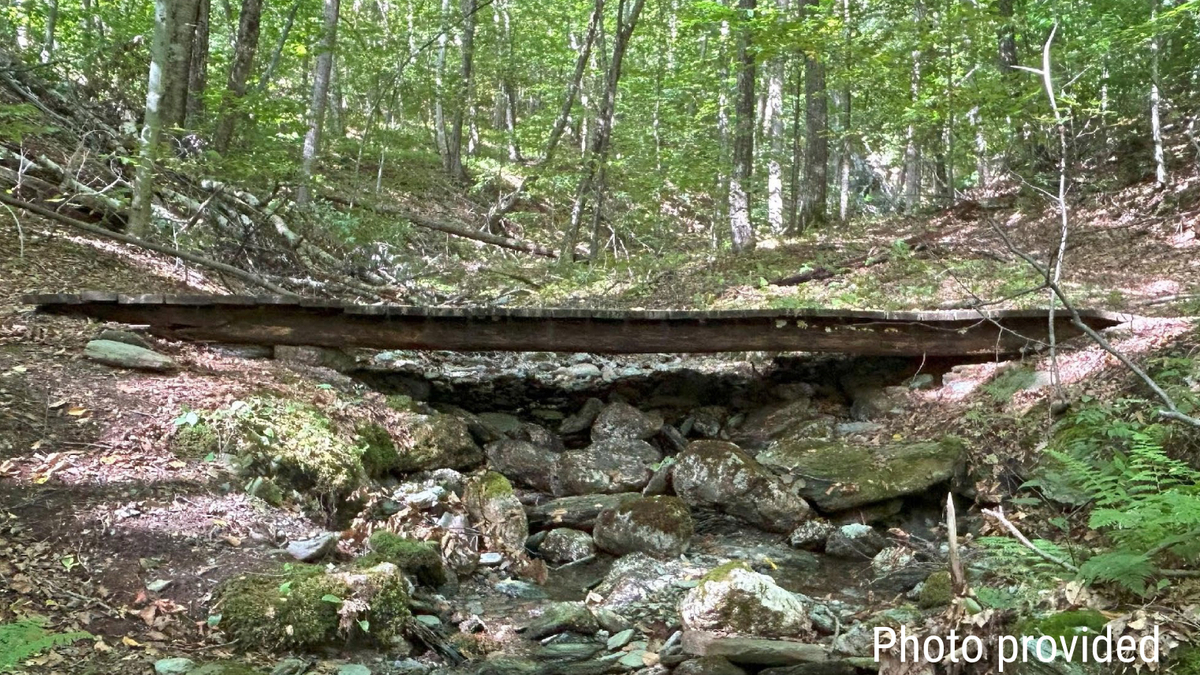
Hopkins Forest Manager Elise Leduc-Fleming was in front of the Conservation Commission seeking an order of conditions to replace the bridge at the top of the nature area's upper loop trail, near the trailhead for the Birch Brook Trail.
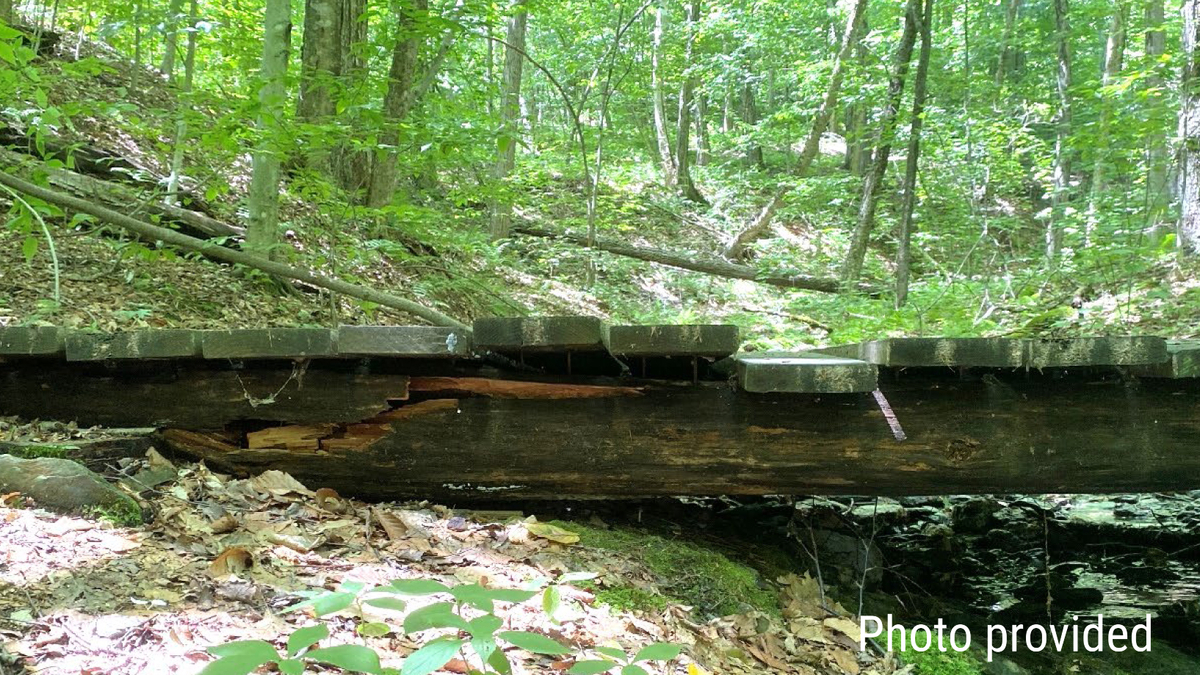
"One of the three stringers [on the existing bridge] is cracked and broken," Leduc-Fleming said, referring to the beams that support the bridge under the walking surface. "When I arrived for my position in July, that's how I found the bridge. As a safety measure, we've used a bottle jack to get it back where it was, and I slid a rock underneath it. So it appears to be sound from the top. But it's not.
"And every portion of the existing bridge is rotting to the point where all the wood is soft. It's only a matter of time before more of it breaks."
The foot bridge carries walkers over the north branch of Birch Brook. It is 18 feet long and wide enough (8 feet) to also accommodate a Gator utility vehicle that the forest staff uses for trail maintenance.
"I'm proposing two structural changes," Leduc-Fleming said. "One is the stringers that support the bridge across the stream were native cut trees from right there, essentially, that were lowered into place. That means they were untreated. And they rotted fast.
"I did actually source locust [wood] that has been milled just on two sides. It's still not treated, but I think the locust wood will last a lot longer in this environment."
The forest manager also said she is working to find a more durable sill on which to rest the bridge.
Her preference is to find stone sills, but she said may have to resort to pressure-treated wood, like what was used originally.
"Wood on ground is something I'm trying to avoid, just because I'm hoping to extend the lifespan of this next version of the bridge we put in so I'm not back here in five or 10 years asking to do the same thing again," Leduc-Fleming said.
She told the Con Comm that the new locust beams already were on site as she made her presentation to the commission at its Nov. 14 meeting because the project is on a tight timeline.
"I have a small window before Thanksgiving to get this done, so I made a leap there," she said. "Thanksgiving happens, we close the forest for two weeks for hunting season. Then I lose all my students and winter happens.
"I don't want to leave the bridge in the state that it's in until next spring, so I'm really hoping we can pull this off the next couple of weeks."
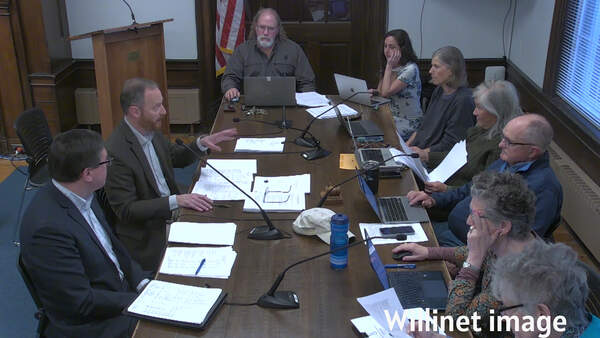
The commissioners, after receiving assurances that the work would not impact the water resource area, granted a negative determination of applicability under the Wetlands Protection Act, allowing the college to proceed with the replacement without a full engineering study.
While Leduc-Fleming hopes the new bridge in Hopkins Forest will last for years to come, the Con Comm also had a temporary bridge on its docket last Thursday.
The owner of a residence at 214 Bressett Road in South Williamstown needs to replace a septic tank. But accessing the tank requires crossing a brook on the property.
Dante Cellana of A1 Septic and Sewer of North Adams, representing the homeowner, presented the request to the commission.
"We're looking to gain access across the brook by building a temporary bridge elevated out of the stream," Cellana said. "We'd have to really cross a a few times to get the tank across and get minimal materials for the base of a tank in there. And we'd just remove the temporary bridge over the stream."
Cellana said he planned to use 5-foot-by-20-foot crane mats to span the brook.
"If extra support is needed, we'd put a block in the center [of the bridge]," he said. "But we could try it and see how the bridge supports go. If it doesn't look like it would hold it, we could put blocks in the river if needed."
Town Conservation Agent Andrew Groff told the commissioners that he would be able to monitor the project when the bridge is laid to ensure that none of the work impacts the brook.
In other business, Select Board member Stephanie Boyd presented the commissioners with a proposed policy on evaluating Chapter 61 land decisions that the board is considering.
She explained that the proposed policy would add to the process already laid out in Massachusetts General Law when municipalities are faced with decisions on whether to exercise a right of first refusal to purchase land if and when it comes out of the Chapter 61 program.
Chapter 61 is a program that allows owners of undeveloped land to realize a tax saving in exchange for keeping the land open. An owner can convert the land back to unprotected status only after the municipality has an opportunity to purchase it or assign the purchase rights to a qualified land trust — as was done recently with a parcel on Oblong Road.
Currently, the law requires notification of the Planning Board and Con Comm, in addition to the Planning Board, when such a process begins But the law does not necessarily give other town bodies the right to weigh in before the Select Board makes the final decision.
"We're suggesting that the Agricultural Commission, the Historical Commission and probably the Affordable Housing Trust also be notified," Boyd said. "We're suggesting the Select Board should ask for input from all those committees, and those committees can choose to give input or not as they see fit. Thirdly, the Select Board [under state law] only needs to hold a public hearing if they're going to purchase the property. We're suggesting there should be a public hearing to determine what to do with the right of first refusal."
Essentially, the Select Board is proposing to codify the process that the elected officials pieced together when faced with a decision on the Oblong Road lot.
"This is an opportunity to come up with some procedures without having to face a time clock or something," Con Comm member Lauren Stevens said. "I think that's admirable. I also think the idea of creating procedures that will seem fair and thorough, as I do think these are, is excellent. This is a great way to go."
The commissioners did not take a formal vote to recommend the proposed policy, but Chair Philip McKnight told Boyd she could report back to the Select Board that the Con Comm generally agreed with the draft on the table.
Tags: bridge, conservation commission, forestland,