Williams College Looking to Fill Commercial Space on Spring Street
The pharmacy opened by Berkshire Health Systems four years ago is closing because of 'low utilization.' Another college-owned property, the former Purple Dragon, will undergo a facelift to make the space more attractive to potential tenants.
And another soon-to-be-vacant Spring Street storefront is ideally suited to host something similar to the drug store that is pulling out, the school's associate provost said.
Earlier this fall, two businesses located across the street from one another in the town's main commercial district announced their closure in rapid succession.
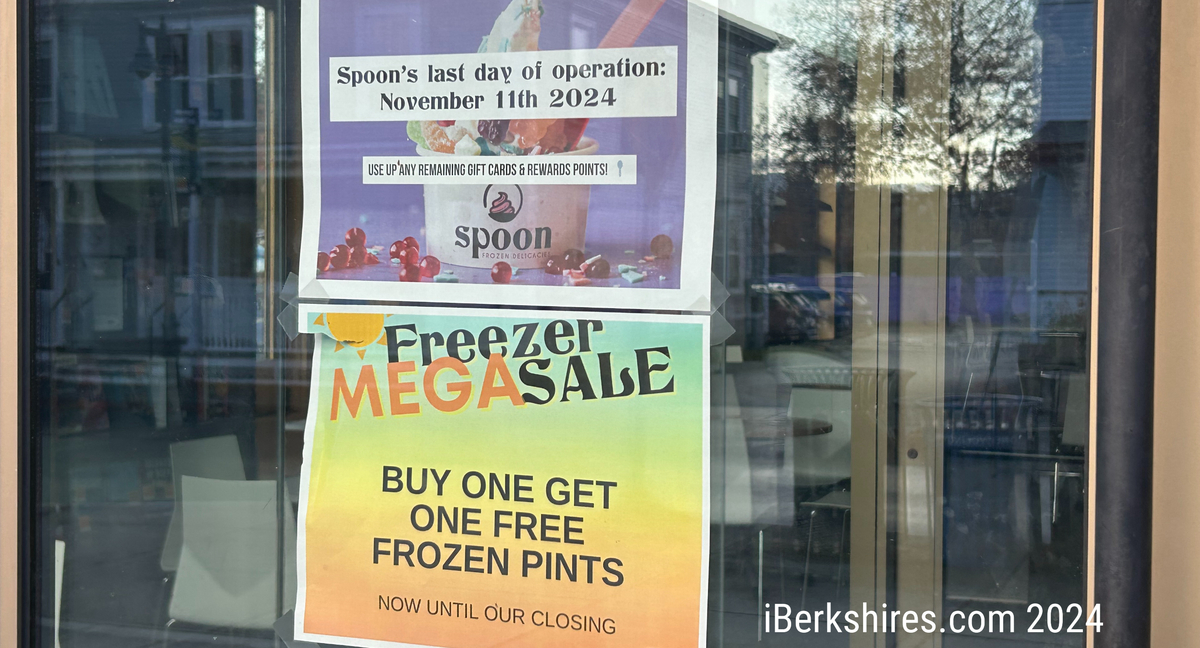
Spoon, a popular froyo shop on the first floor of the college's bookstore, plans to cease operations on Nov. 11. The Williamstown Apothecary will close on Nov. 14.
Both businesses operate in space rented from the college, which has extensive commercial holdings on Spring Street, which runs through the middle of campus.
Spoon owner David Little told The Record, the college's student newspaper, that he was giving up the business he ran since 2020 in order to spend more time with his loved ones.
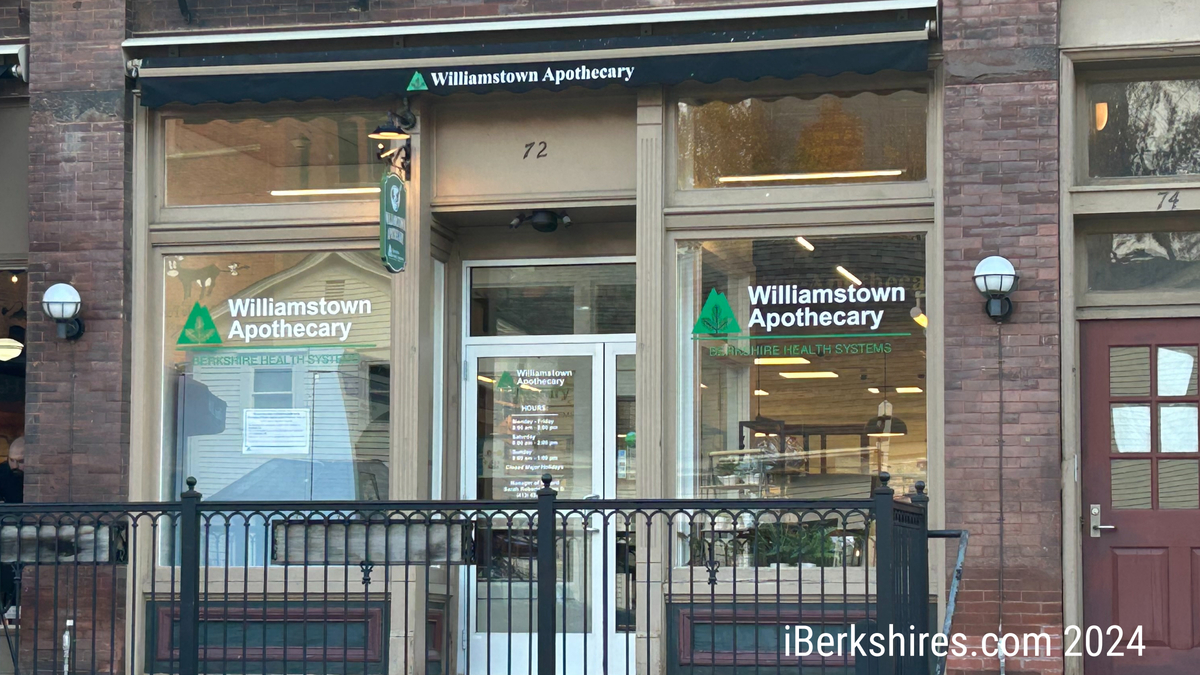
Berkshire Health Systems, which opened a pharmacy in the heart of downtown and campus in August 2020 during the COVID-19 pandemic, announced earlier this month that, "low utilization and pharmaceutical reimbursement rates" drove its decision to cease operations at 72 Spring St.
Williams' Chris Winters said the college is actively trying to fill the holes left by the coincidental closures.
"Spoon, obviously, is a key component of the first floor of the bookstore experience," he said. "It's important to put a new entrepreneur in that space to maintain the vibrancy of that store and that corner of Spring Street.
"At this time, we're considering what will go in there. Obviously, it's set up as a food service location. That's likely what will go in there. The question is who and what."
Winters said a couple of entrepreneurs have approached the college about the location. One consideration is what sort of eatery is compatible with the building's main purpose as a college bookstore.
He agreed that frozen yogurt might not be the first thing that comes to mind, but the marriage made sense.
"It's not the normal association, but when I say compatible, I mean it doesn't conflict," Winters said. "It is not an operation that has negative externalities. It's not loud, it's not smelly, it does not spill into the space where the bookstore operates."
Although Spoon was set up to also operate outside of the book store's hours of operation, the college saw them as complementary businesses.
"It's even better when they operated together," Winters said. "The students would study there and hang out in the eating area. It would attract people to hang out in the bookstore, hang out [at Spoon], read a book, have a beverage or food, whatever is being served there."
Winters said the terms of Little's lease did not require a long notice period, and the school found out about the coming closure about the time it was made public.
He said it will take some time to find the right replacement and for an entrepreneur to put together a business plan. But he does not anticipate the space being vacant for long.
"For sure," Winters said when asked if he expected the space to be filled by summer 2025. We're highly motivated to put in something exciting and of use to the community.
"I would hope [by the spring] even if it's a pop-up opportunity to give another entrepreneur time to get their business plan together."
As for the Williamstown Apothecary space, Winters said he thinks "everyone's first choice" is that another pharmacy goes into the storefront.
"It is well equipped for a pharmacy," he said. "The security, the counter, the back office. It is turn-key pharmacy.
"I think it would be a win-win for everyone if there was a pharmacy operator that would like to operate on Spring Street in an already outfitted pharmacy. Lacking that, it would be set up for retail, and it's a nice retail location for an entrepreneur."
Winters declined to say if the college already is having conversations with prospective tenants for the apothecary space.
Meanwhile, another currently vacant commercial property on Spring Street is getting a facelift.
"The former Purple Dragon Games location is being renovated," Winters said. "We're taking the opportunity, as it's empty, to do substantial renovations. We're bringing back the tin ceiling, the 1950s/40s-era tin ceiling.
"We're removed a lot of the clutter. We will be adding accessible bathrooms. It will be ready for a new century. The building hasn't been touched since, probably, the 1980s."
Winters said there is not yet a tenant lined up for the spot where Purple Dragon closed last year.
"We're fixing it up so it will be ready for anything," he said.
Tags: business closing, spring street, Williams College,