Hoosac Valley Program Has Students Inventing Animal Prosthetics
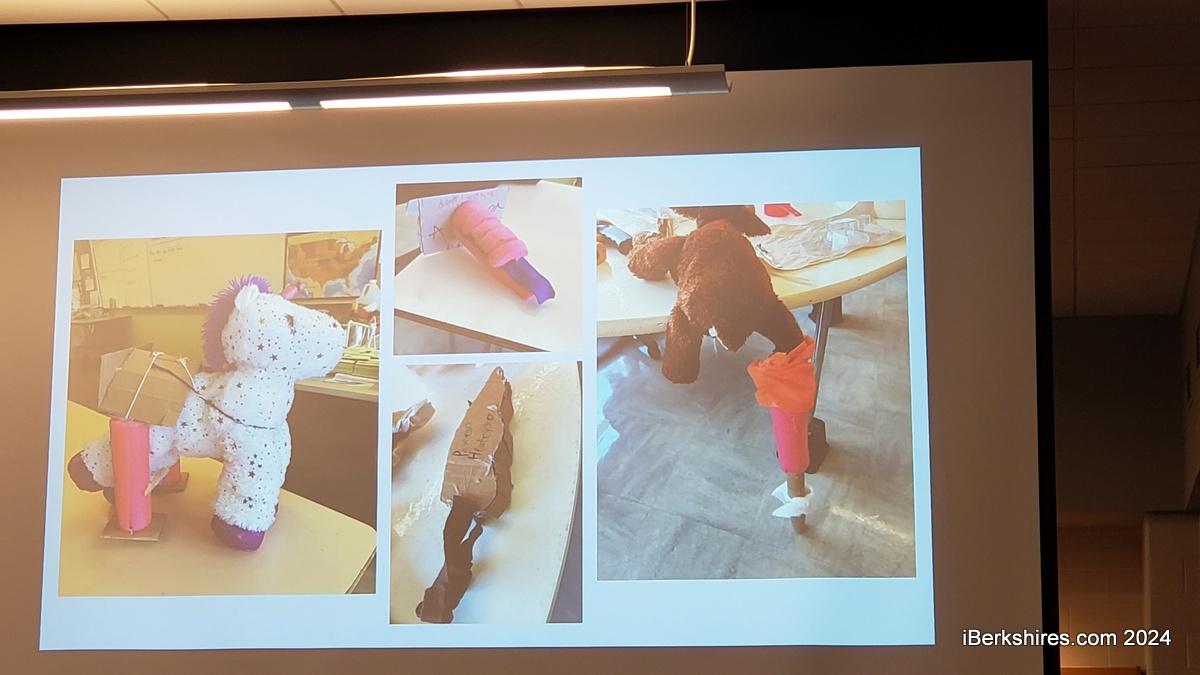
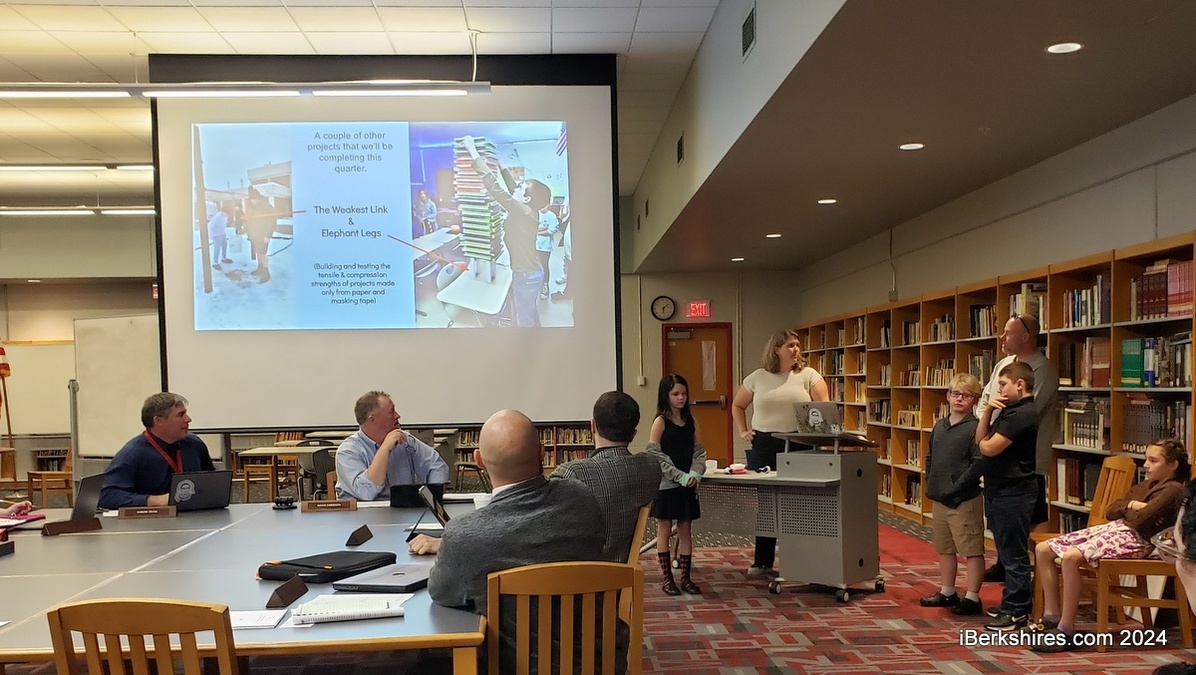
Images of prosthetics designed by other students in the class.
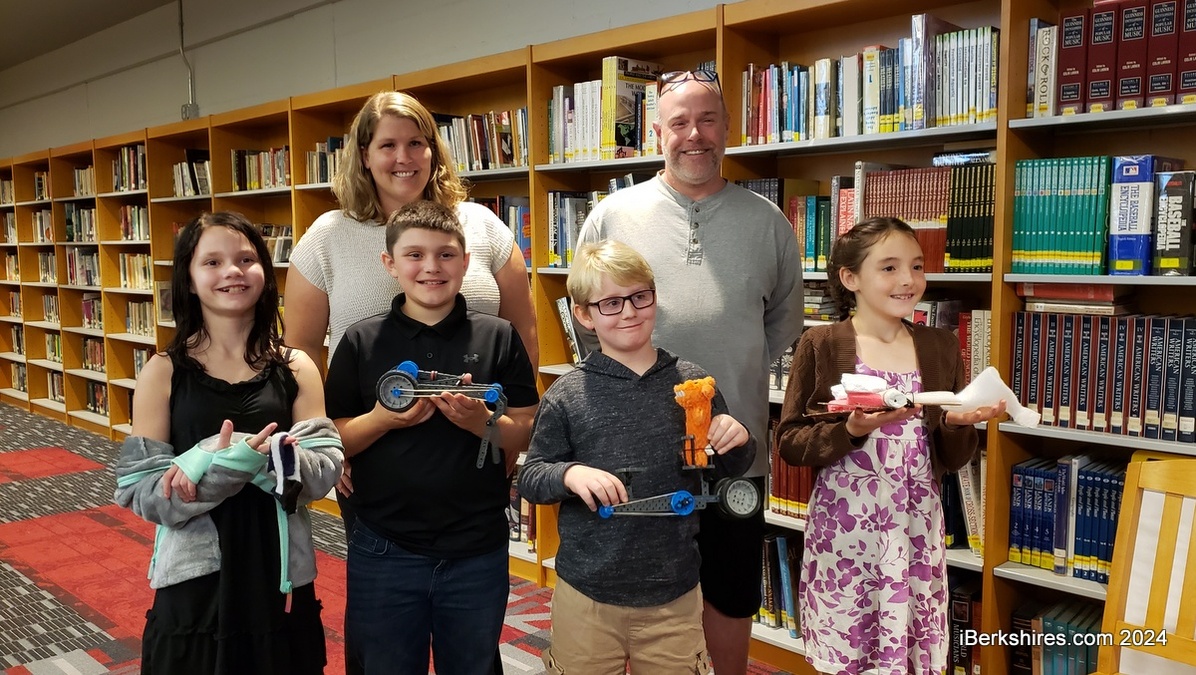
The children responded with some innovative prosthetics for winged, flippered and four-legged patients, some of which were presented to the School Committee on Monday.
Gregory built a prosthetic back leg for a dog, Aleigha flippers for a dolphin, Colton a scooter for a teacup Chihuahua and Casssandra a wing for a robin.
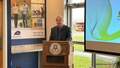
The "Spotlight on Applied Learning" presentation is the brainchild of Kristen Palatt, director of curriculum, instruction and professional development, to demonstrate student work.
"One of the things that I committed to doing at the start of the school year was taking the learning that's happening in our schools and showing you what it is here during School Committee," she said.
For this meeting, she'd been inspired after being invited by Scott Krzanik, a Project Lead the Way teacher, to visit his classroom.
"I was blown away by both their presentation and the iteration, persistence and creative problem solving that they demonstrated in developing these prototypes," Palatt said.
Krzanik said the instruction unit was organized around a veterinary hospital story and the children were tasked with selecting a disabled animal, coming up with a prosthetic design, and then building it out of supplied materials.
The unit included learning about how and why the animals are structured and how they function in the world.
"Now their ideas can't always match their design. And that is what we're looking for, is if you can design something, and as you start to build, you might change that design," he said. "And so some of these designs are very different, or some of these projects are very different from their original design, which is what we're looking for them to do."
The four presenters were selected because of specific innovations and the thought they had put into their creations made out of foam, wheels, fabric and more.
Gregory's dog prosthetic, for example, had a safety latch that would pop the leg off if it got stuck. He showed how the leg could be folded up and put in a backpack or suitcase.
"It was the only prosthetic that that took into consideration like a problem that could happen to an animal in real life, such as getting the back wheels stuck, and he had a plan for that, which was super cool," said Palatt.
Aleigha's flippers had floats and stretch, taking into consideration two purposes, said Palatt, "both the fact that it needed its flippers to move, but also it needed protection from predators, which was one of the only projects that took into consideration."
Colton's scooter for the little dog was complex in that it took into account mobility and stabilizing the dog's deformed front legs. And Cassandra's wing was very lightweight, went around the bird's "shoulder," and was completely handsewn.
"He didn't think basic — just stabilize the missing limbs or the part of the dog's body that doesn't move or doesn't work," said Palatt of Colton's prosthetic. "He made a complex machine that actually works. That would probably take a little training, but could serve a really important purpose."
Cassandra had never sewn before, said Krzanik. "She asked for a needle and thread, and I went, OK."
Palatt said these were just four from a classroom of amazing projects that "required students to think beyond just the classroom walls, to address a real-world problem and ... make positive contributions to society, which is super cool.
"These students should be really proud of not only the work that they produce, but getting up here in front of School Committee and presenting is not easy, and you all did a really well."
Students in Grades 4 to 7 can participate in two Project Lead the Way units each year.
"What we made a conscious effort to do this year is align the Project Lead the Way courses with our Pathways at the high school, the newest one, Mr. K was trained in this summer, was green architecture, which connects
to our to our environmental curriculum," Palatt said.
Krzanik said he's worked in laboratories and engineering and that PLTW has good introductory activities.
"I take them a step further so that I can kind of move to real world things like science practices," he said, adding he introduces contests because those engage the students. "The kids go bananas, and so they get really into it."
In one case it was building pillars out of paper and tape and seeing how much they could carry before collapsing. In another, they're working with water purification but the school doesn't have the equipment to show the clarity of the water.
When asked what he would need, Krzanik said a turbidimeter, but really a laboratory, a suggestion echoed by another teacher.
"I appreciate my daughter being able to do this stuff, and my son and everything, like I said, it wasn't available to us, and I wish it was," said one parent.
Palatt said the School Committee has committed to funding PLTW and the district also has partnerships and grant funding.
"It's just a matter of getting the federal funding to the state to get our innovations funding," she said.
Parents in the audience asked how they could help, and suggested fund raising to support the projects.
School Committee member Michael Henault said they also needed to show up at budget time.
"We fight tooth and nail for every dollar ... we wholeheartedly support Project Lead the Way from one class to expanding it," he said. "And what it really takes is people showing up and supporting our budget when at the towns, and we don't get a lot of families that come out typically, and if you were there, thank you very much. But ... we typically don't have a lot of support."
Tags: HVRSD,