Williamstown Select Board Talks Policy on Plowing Private Ways
WILLIAMSTOWN, Mass. — The Select Board last week discussed a policy to guide decisions on whether to accept private ways for snow plowing by town personnel.
Actually, the town has an existing policy, and the Department of Public Works currently plows 10 private roads under that policy, which was enacted by the board in late 1980s.
"The document could be out there somewhere, but we can't find it," DPW Director Craig Clough told the board. "We found reference to it in the minutes [of meetings] and stuff like that, but there is no definitive, 'Here's your guideline.'
"It was time to create it."
The topic came to the fore in light of a request from the residents of the Sweet Farm Road subdivision off Henderson Road that the town accept their street as a public way.
That question, which the residents had hoped to bring to last May's annual town meeting, was put off until the May 2025 meeting at the earliest. In the meantime, the town discussed with the residents the possibility of the town assuming "winter maintenance" duties only until the full acceptance question is settled.
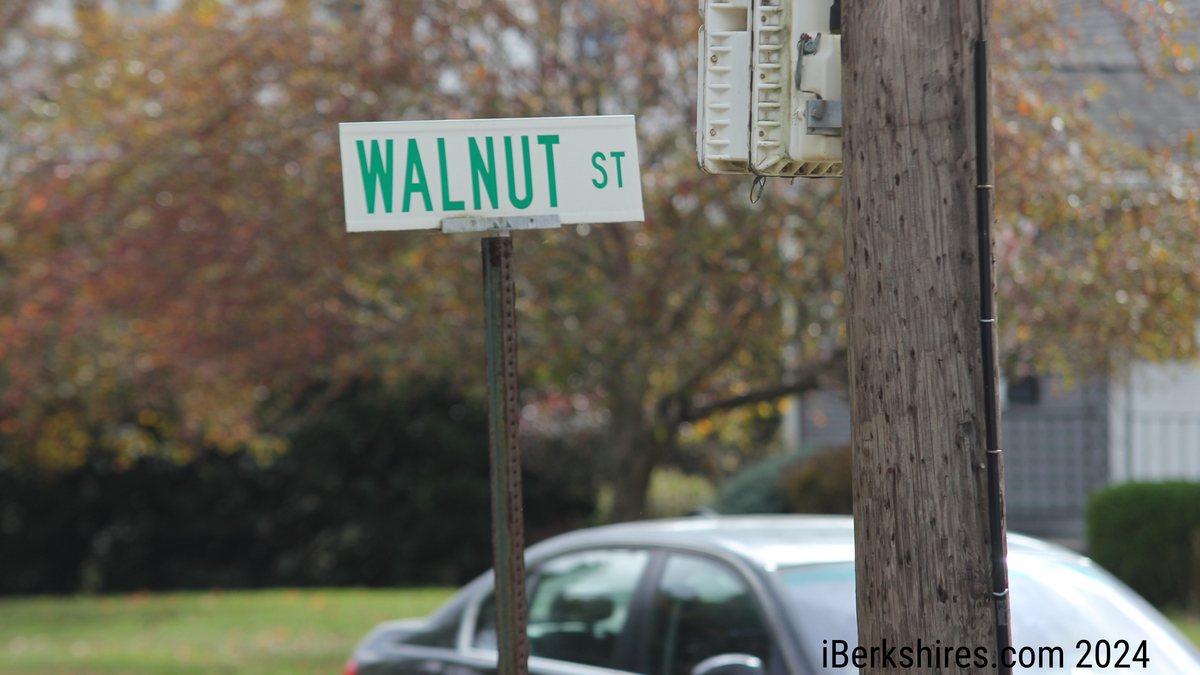
Among the private roads the town currently plows each winter are Danforth, Bryant and Porter Streets off Belden Street on the east side of town, Bingham Street off Main Street and Walnut Street off North Hoosac Road, to name a few.
In all, the town has 17 private roads, according to a memo Clough gave the board.
Not all of those roads may want to avail themselves of the town's services.
"Even our smaller trucks, fully loaded, are weighing 20,000 pounds, basically," Clough said. "A little one ton, with that plow and a fully loaded sander is weighing three times more than what your average car weighs, or SUV. There's a chance we're going to destroy your driveway or road that might not be up to our standards. If it's not shored up properly, we're just going to break the asphalt right apart.
"So some places may want to think twice about us plowing their road — or requesting it. Because we might do more damage than good. They'd be better off to have that contractor, a local pickup truck that might weigh 7,000 pounds compared to our 20,000. And they may not want salt on their road. Salt deteriorates asphalt over time."
The policy Clough drafted along with Community Development Director Andrew Groff draws from existing policies in other municipalities. It includes elements like limiting town plowing to roads that are open to the public — in other words, leaving out roads marked "No Trespassing" or "Residents Only." And it limits public plowing to roads with a minimum width (12 feet), minimum vertical clearance (14 feet) and room for emergency vehicles to turn around if the road is a dead end.
"We put our trucks on these roads, and they have to be certain widths, certain clearances and stuff like that to make sure we can provide the service safely to everybody and to our equipment and our employees," Clough said.
In addition to the plowing services, Clough indicated the DPW has historically filled potholes on private ways, and, at one point, he said some residents may be "shocked" to find out that their road is not a town road.
He said that while the policy on the table addressed winter maintenance only, other maintenance activities on private ways are a conversation for another day.
"I would love to pull the Band-Aid off and tell all these private ways, 'Listen, we're never going to fill a pothole on your road again,' " Clough said. "I think we have to get to a certain point where that line is going to have to be drawn because, over the years, we've always just done it."
And that costs taxpayers money for work on what is, essentially, private property.
Sweet Farm Road resident Gerard Smith, who attended last Monday's meeting, told the board that it costs, on average, $5,000 per year to plow the road, but that cost obviously varies greatly due to weather and the price of fuel. Currently, the cost is borne by residents in the 15 occupied building lots (three more homes are either under construction or planned).
"Like Craig [Clough] said, he's not going to add a whole new crew member to do one street, but in the aggregate … if this is accepted, this adds to our mileage calculations and into our budget and, ultimately, the tax rate," Town Manager Robert Menicocci told the board. "That cost will be spread across the whole town. Good for [Sweet Brook Farm residents], but everyone else will pick up a few cents on their taxes."
That said, in answer to a question from Select Board member Randal Fippinger, Clough confirmed that the intent of the policy is not to take away plowing services from any roads the town already has agreed to maintain in the winter.
"This isn't going to affect anyone we're already plowing," Clough said.
As for the new request, Chair Jane Patton recommended that the board take no action on the Sweet Farm Road request for winter maintenance until it approves the "updated" policy. Stephanie Boyd had some questions on the language of the policy as drafted, and Clough encouraged her to discuss her ideas before the next Select Board meeting.
Smith, the Sweet Farm Road resident, said the homeowners association would be back before the board later this fall with a request to have the road acceptance question placed on the warrant for May's town meeting. He said he was OK not having any action on the plowing request on Monday but indicated time is of the essence.
"We're satisfied with you guys making a decision at a later date, but, like time tonight is short, snow will also come," Smith said.
In other business on Monday, the Select Board:
• Appointed Polly MacPherson to fill a vacant seat on the Community Preservation Committee and Gerrit Blauvelt to serve on the Cultural Council.
• Decided that Patton will fill the Select Board's seat on the board of the Affordable Housing Trust, a vacancy created by the recent departure of Andrew Hogeland from the board, and welcomed Hogeland's replacement, Matthew Neely, to the Select Board.
• And finalized a project begun by Hogeland by signing off on a new policy for accepting memorial donations like trees or benches on town land. The vote was 4-1 after Boyd expressed concern about language added by the Conservation Commission, which was consulted by the board given the among of town-owned acreage under the commission's care and custody.
After Con Comm Chair Philip McKnight, who attended Monday's meeting, told the board that he would not recommend the commission support the policy without the additional language, the rest of the Select Board agreed that it was better to have one clear policy that covered all public land and which was supported by both public bodies with jurisdiction over that land.
Tags: plowing, private road,