State Air Quality Expert Offers Recommendations for Brayton School
NORTH ADAMS, Mass. — A state air quality director says Brayton Elementary School was a victim of an underreported "natural disaster" that hit the state in late summer.
"We were drowned with a lot of hot, moist air, and that, in and of itself, perfect painting," said Michael Feeney, director of the state Department of Public Health's Indoor Air Quality Program at Massachusetts Department of Public Health. "It's where the water is, it's where mold is going to grow. So then it becomes an issue as to where, what gets wet."
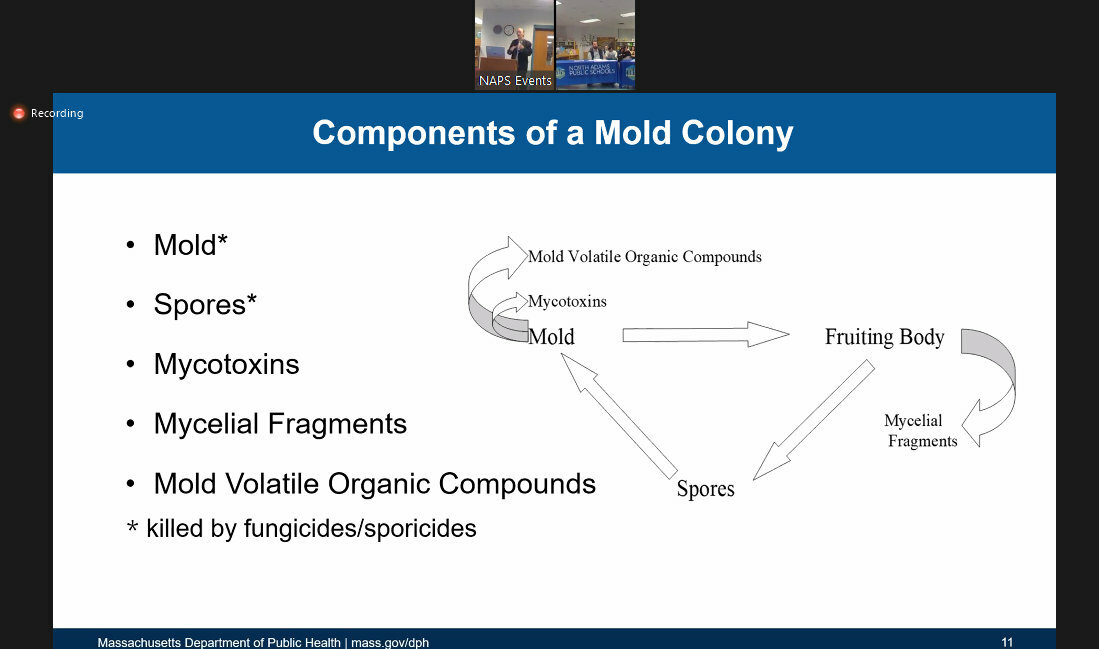
He told the School Committee at its meeting last week that mold needs at above 45 degrees temperature and moisture to grow. The high humidity that rolled through the state from about late August into September created the perfect conditions.
The school had several instances of mold and mildew discovered during opening preparations for the new school year. These issues had been in the lower floor level that is below grade in a classroom and in the music room area. Carpets were ripped up, items cleaned or tossed, and dehumidifiers brought in.
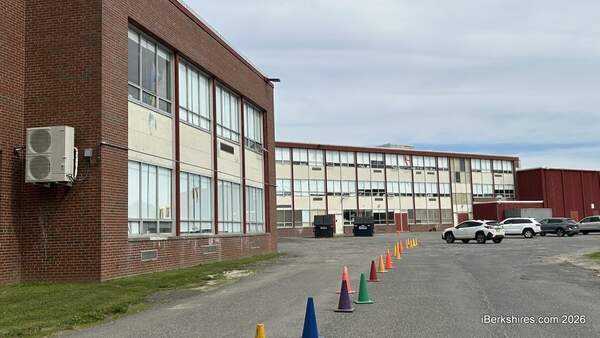
School officials have blamed the condition of the 30-year-old school, pointing to the lack of fresh air, natural light and an outdated heating and ventilation system.
Feeney reviewed the school and the actions taken by facilities to remediate the mold. Previously, GEM Environmental had tested the air quality after the remediation efforts and found mold spore counts below the outside ambient air. CTC Engineering had also done work to improve the air exchange rate.
"If you have mold in a building, you can have people who have compromised respiratory tissue that can exacerbate the symptoms of mold. Basically, it's all confined to above, basically the neck from above, because the spores are too small to get into the lower region of the nose," he said. "So you'll have things such as runny nose. You'll have any potentially eye irritation, nose irritation, and such, so very much like, despite having the flu without the fever."
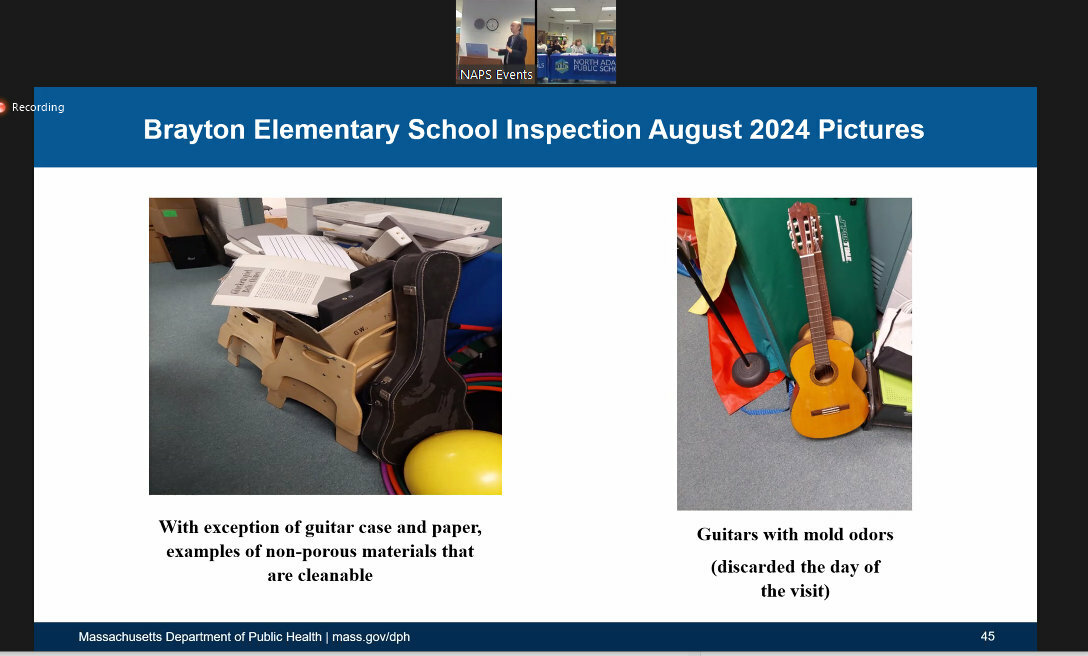
Mold likes to grow on carbon-based materials like plasterboard, paper, carpets that remain wet and warm, such as the conditions in late summer. Feeney offered some slides of other schools and how mold and mildew had found the right channels to invade from the outside such as leaky windows and roofs, faulty plumbing connections and condensation.
One of the schools used as an example was Clarksburg, where water hitting a windowsill was seeping down inside the foundation crawlspace had to be remediated and repaired 20 years ago.
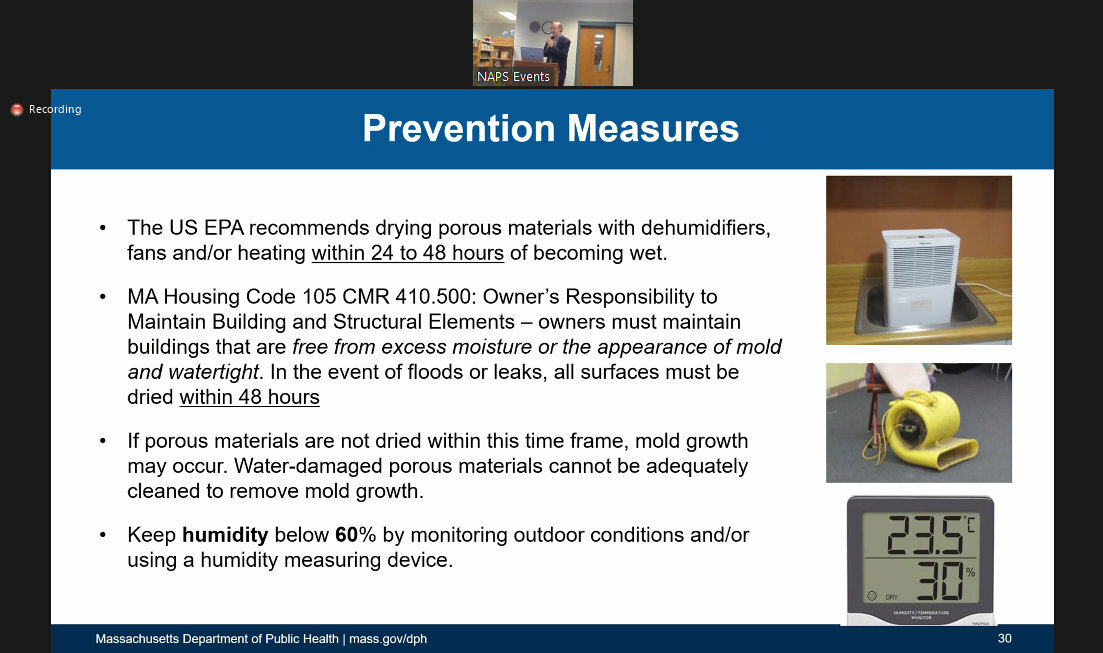
The solution is prevention by ensuring there are no leaks, there's proper air ventilation and wet areas can dry. He pointed to the brown mottling on ceiling tiles as oxidizing from moisture but not growing mold because they dry out.
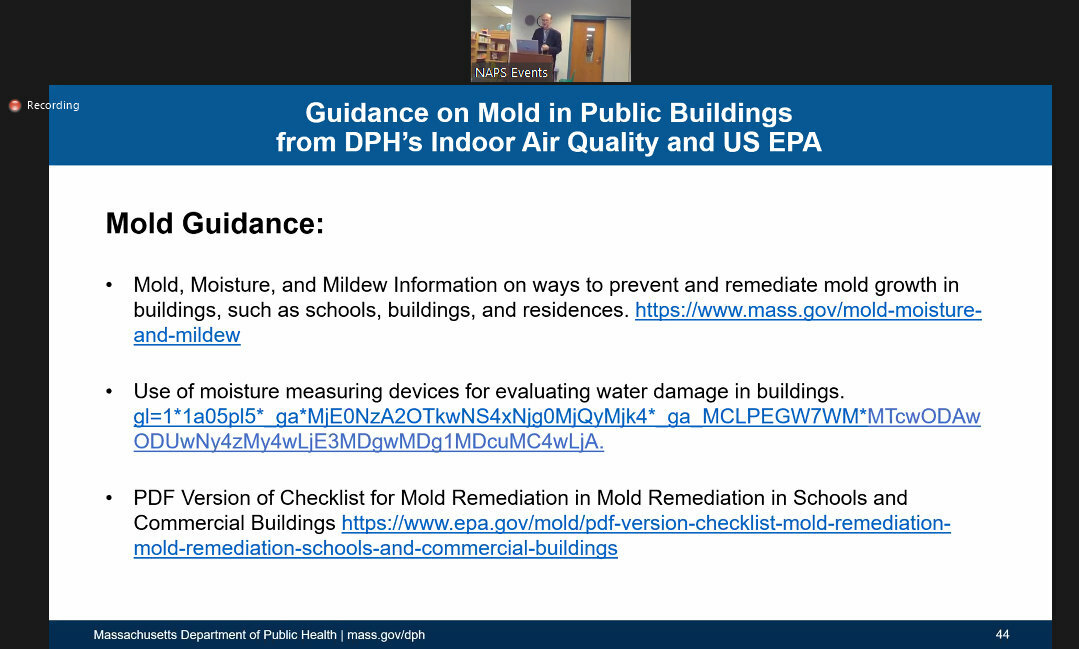
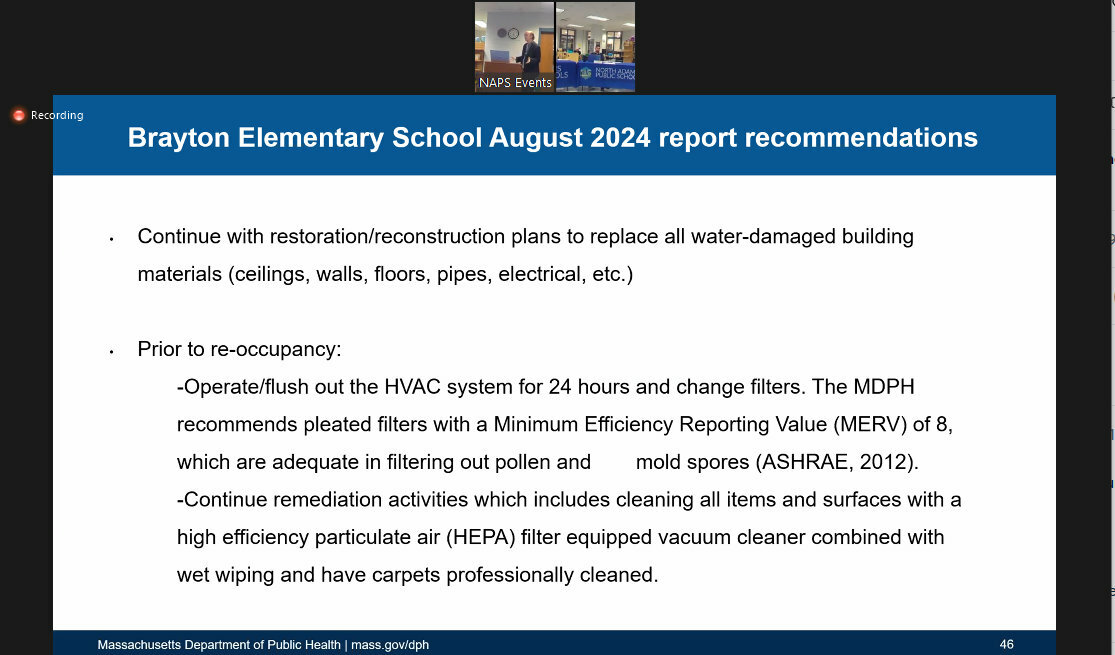
"We try to ... minimize the amount of humidity in the building. And when we find mold, what we do is we recommend to remediate it so clean affected areas, hire a professional," Feeney said. "I know that you brought in perhaps both to do the mold remediation. ...
"I did a walk through the first floor and the second floor today to just make sure nothing looked problematic and I did not see a thing. There was one area that had water damage -- ceiling tiles on the upper floor ... that's not mold. ... I went through the basement, did not see any mold as well, so that was adequately remediated."
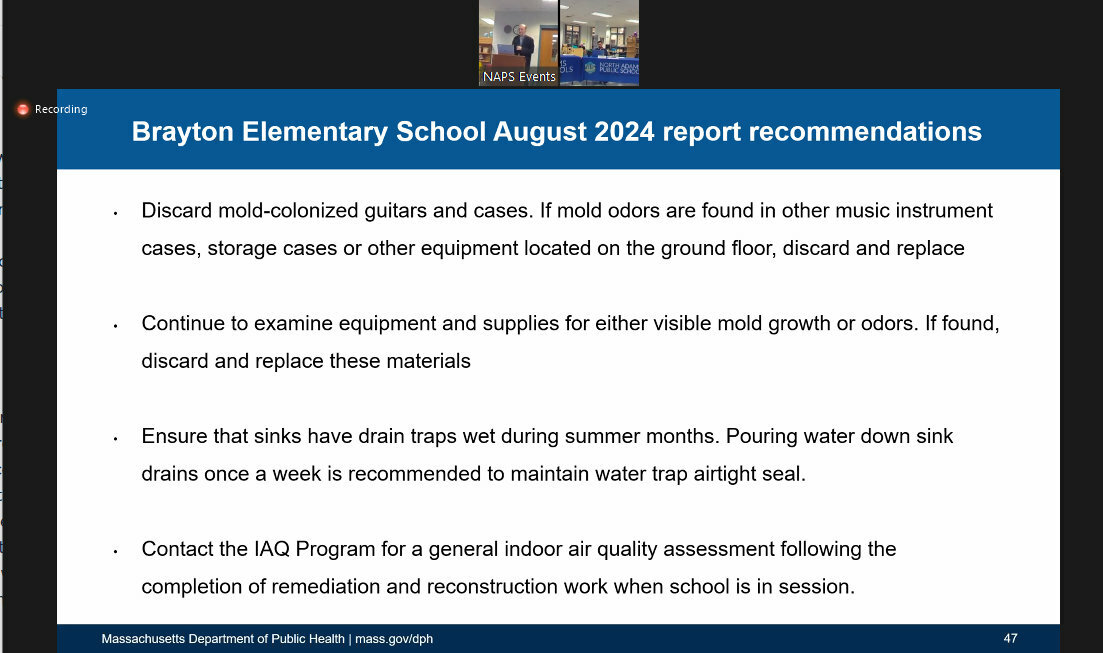
He also recommended that the facilities department run the faucets on a weekly basis during the summer because it's been found that sinks can release sewer gases and moisture if the water in their traps dry out if they're not used.
There's no working safety standards for mold because the symptoms run a gamut of different things that can be caused by a host of other issues, Feeney said.
"When we look at the building, we're looking at it not from a worker safety standard. We look at it from a standard of whether or not people and individuals in the general public can be in the building," he said, adding the most important thing is to identify the issue and "either clean it if it's cleanable, or remove it if it isn't."
Tags: air quality, Brayton School, mold,