Clark Art Presents Symposium on Guillaume Lethiere
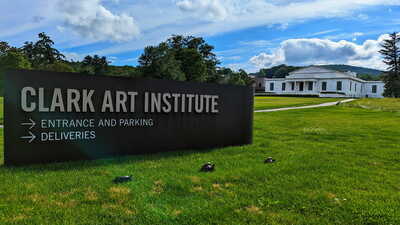 |
WILLIAMSTOWN, Mass. — The Clark Art Institute presents a one-day symposium on Friday, Sept. 27 in celebration of Guillaume Lethière.
The exhibition, organized in partnership with the Musée du Louvre, is the first to investigate Lethière's extraordinary career. This free event takes place from 9:30 am–6:30 pm in the Manton Research Center auditorium.
The symposium invites scholars and the public to examine Lethière’s body of work together, and to contextualize the presence and reception of Caribbean artists in France in the late eighteenth and early nineteenth centuries. The event is moderated by Olivier Meslay, Hardymon Director at the Clark; Esther Bell, deputy director and Robert and Martha Berman Lipp Chief Curator at the Clark; and Sophie Kerwin, doctoral student in art history at the Bard Graduate Center, New York, New York.
Speakers and presentations include:
Frédéric Régent (maître de conférences and directeur de recherche, Université Paris 1 Panthéon-Sorbonne, Paris) on “Guillaume Lethière: The Exceptional Trajectory of a Free Person of Color”
C. C. McKee (assistant professor of the history of art, Bryn Mawr College, Pennsylvania) on “Lethière’s Allegorical Confines: Indemnity, Colonialism, and African Diasporic Fantasies”
Meredith Martin (professor of art history at New York University and the Institute of Fine Arts, New York, New York) on “Colonial Networks: Remapping the ‘Paris’ Art World in the French Antilles”
Remi Poindexter (Ph.D. candidate, The Graduate Center, CUNY, New York, New York and University Fellow in Art History at the University of North Carolina, Asheville, North Carolina) on “Picturesque Plantations: Jenny Prinssay’s Construction of a French Caribbean Idyll”
Francesca Alberti (Director of the Department of Art History at the Académie de France in Rome–Villa Medici and professor of Art History at the Université de Tours and the Centre d’Études Supérieures de la Renaissance, Tours, France) on “Guillaume Lethière’s Roman Years”
Richard-Viktor Sainsily-Cayol (multimedia visual artist and urban scenographer, Guadeloupe) on “From Neoclassicism to Preromanticism: Lethière, the Missing Link?”
Free and open to the public. For the full program schedule, visit clark.edu/events. Accessible seats available; for information, call 413 458 0524.
Tags: Clark Art,