Williamstown Housing Trust Faces Decision on Family Selection Process for New Development
WILLIAMSTOWN, Mass. — The board of the Affordable Housing Trust may face a decision about whether it's more important to follow the practice of its non-profit partner or the dictates of a state housing program.
Members of the board of Northern Berkshire Habitat for Humanity met with the trustees last week to explain a "mismatch" between its practice for selecting homeowners and the rules that govern the commonwealth's Subsidized Housing Inventory.
The conflict came up because the AHT's intention is to have housing created on parcels it purchased back in 2015 count toward the town's inventory of affordable housing as classified by the state (formerly the Department of Housing and Community Development, now the Executive Office of Housing and Livable Communities).
Mary Morrison, Habitat's treasurer and family selection person, explained that the state requires a different marketing plan for subsidized units than that used by the local non-profit.
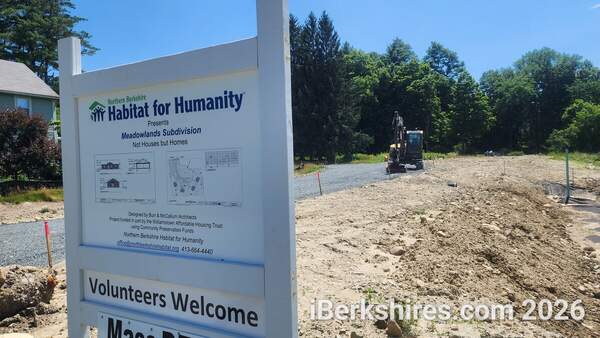
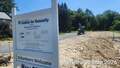
Northern Berkshire Habitat was able to work through the state process for a pair of homes it built on a formerly town-owned parcel at the corner of Cole Avenue and Maple Street. But the group hopes to use its preferred selection process for the four homes Habitat hopes to build in a subdivision off Summer Street.
"There are multiple points that are a misstep with our family selection process," Morrison told the AHT board. "One of them is we normally state a criteria that a family has to have lived in or worked in the Northern Berkshire area for at least a year, and our hope is they will stay in this area. We had to take that out [for the Cole and Maple homes]. We had to advertise this statewide, which obviously doesn't fit with something like sweat equity."
Part of the Habitat for Humanity model involves working with the family who ultimately will be a home's first occupant to collaborate with other volunteers in the construction process. That's more practical for an owner-occupant who already lives in the area during the construction phase.
"Another misfit is they require us to calculate a sales price up front," Morrison said. "We have to include that in our advertisement for families. We normally advertise saying we will calculate an affordable mortgage that will not exceed 30 percent of your income, and we give a range of monthly payments, but we don't estimate a sales price until the end of the project.
"With DHCD, we had to advertise the price at the beginning of the project."
Morrison said promoting a bottom line number before the home is built is confusing to prospective buyers, who are better served by focusing on the idea that Habitat for Humanity will work with them at closing to ensure an affordable monthly payment. And setting the price at the outset does not allow the nonprofit to consider spikes in material costs, as happened during the Cole and Maple project.
"[The commonwealth's model] is really designed for a conventional build where a developer builds the houses and then the marketing plan kicks in at the point where they're ready to be sold," Morrison said. "Habitat starts its marketing ... before we even start building. There are a lot of misfits with that marketing plan."
The commonwealth's method for designated housing as affordable is relevant to the town's goal of raising its Subsidized Housing Inventory. The most recent SHI on the state's website shows that, as of June 29, 2023, Williamstown had 213 SHI units out of 2,752 total year-round housing units — 7.7 percent.
A home still can be income-sensitive without going on the state's SHI. The issue is how important the state inventory piece is for the trustees.
"I think the issue for the Trust is going to be ... if you do a regular deed restriction as [Morrison] is talking about, that deed restriction doesn't get you onto the Subsidized Housing Inventory, probably, which has been a goal of the town," Trustee Andrew Hogeland said. "There are ways to do a deed restriction, but you're giving up the SHI count, and you're giving up on the state enforceability, and you have to do your own [deed restriction] documents.
"They're both achievable."
The trustees have some time to decide what marketing path they want to follow for the Summer Street subdivision.
Currently, that project is on hold pending an appeal by abutters to the Department of Environmental Protection.
In the meantime, a couple of current members of the trust board suggested at last week's meeting that, perhaps, Northern Berkshire Habitat's preference for Northern Berkshire residents could run contrary to a different town goal: diversification.
"In the state program, there is a way to ask for a local preference," Hogeland said. "At one point, I liked that. I may still do. But the folks at DHCD didn't like it.
"It means you're not having new people come in, and you're only choosing from your existing non-diverse population."
In other business at its Aug. 21 meeting, the AHT board acknowledged the coming departure of Hogeland, who currently fills the trustee slot allotted to a member of the Select Board. Hogeland earlier this summer announced that he and his wife are moving out of town, necessitating his resignation from the Select Board.
• Hogeland and Northern Berkshire Habitat for Humanity President Keith Davis informed the board that the non-profit and town have finalized a memorandum of understanding in place for maintenance of a rain garden at the Summer Street subdivision.
NBHFH's plan is to build the road needed to situate four single-family homes on the Summer Street parcel and have the road and associated infrastructure — like the rain garden — accepted as public property by the town, relieving the non-profit and eventual homeowners from any maintenance costs.
Trustee Thomas Sheldon reported to his colleagues about a recent visit by Department of Environmental Protection officials to the Summer Street site as part of the state agency's review of a neighbor's appeal of the permits issued by the town's Conservation Commission.
Sheldon said five or six residents of the neighborhood attended the DEP site visit.
"Most of the concerns I heard had to do with water flow, which was understandable," Sheldon said.
• Finally, the AHT board unanimously voted to allocate $3,480 toward the removal of some trees on the edge of its Summer Street lot. The trees in question are on property lines, and neighbors who share the trees with the trust have agreed to reimburse part of the cost of the trees' removal, Hogeland said.
Tags: affordable housing, affordable housing trust,