Williamstown Planners Talks Housing Development, Water Protection
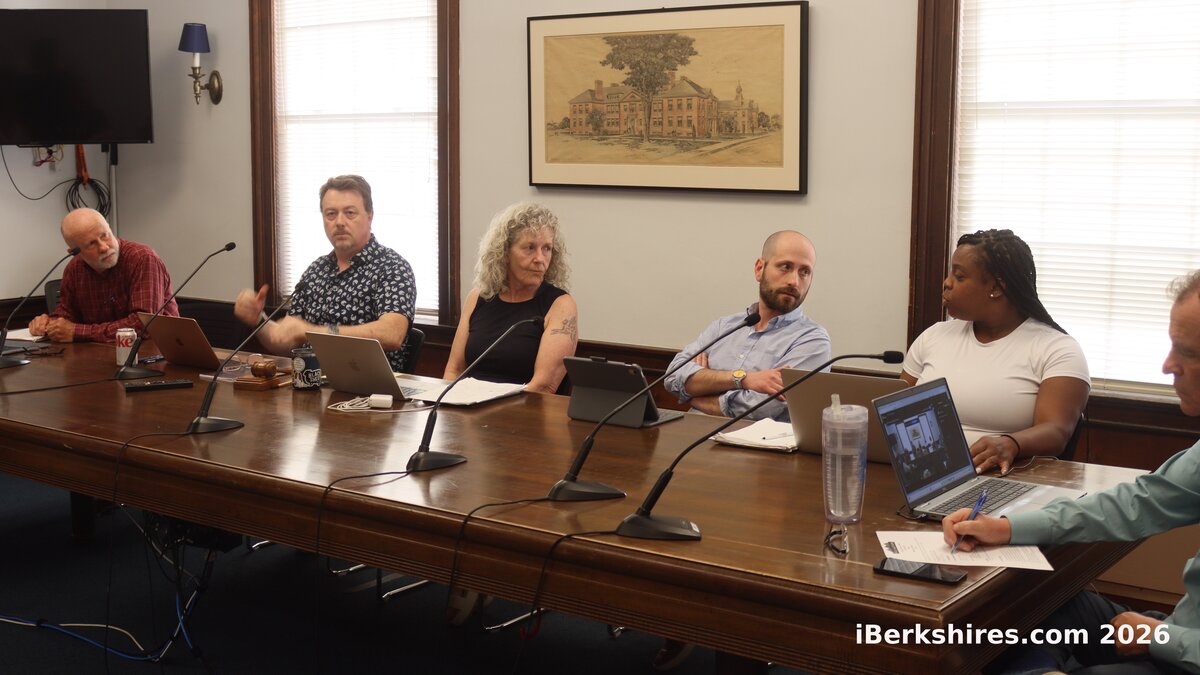
WILLIAMSTOWN, Mass. — The Planning Board last week talked about balancing housing and land conservation in the rural parts of town and protecting the aquifer that supplies drinking water to most of the town's inhabitants.
The bulk of the meeting was dedicated to discussing projects that the board wants to work on in the year ahead, including initiatives in a couple of areas — short-term rentals and housing lot sizes — that have been on the board's radar for years and one new initiative that was brought to the board by a member of town's staff.
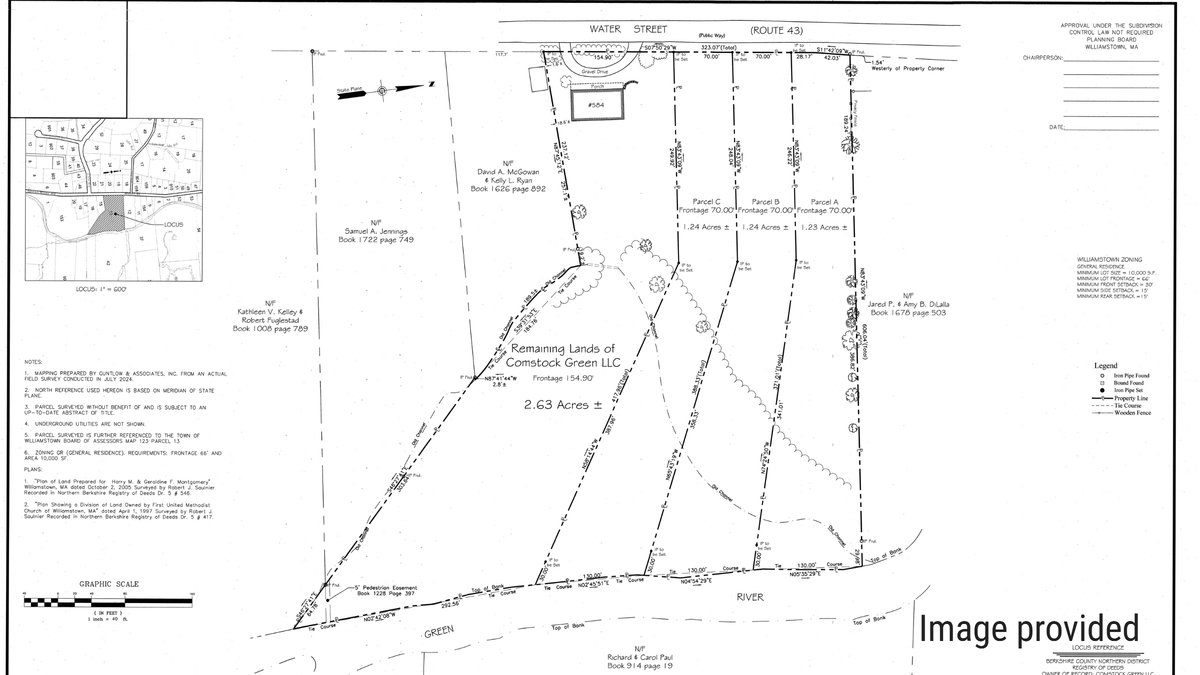
The meeting began with the approval of a subdivision on Water Street.
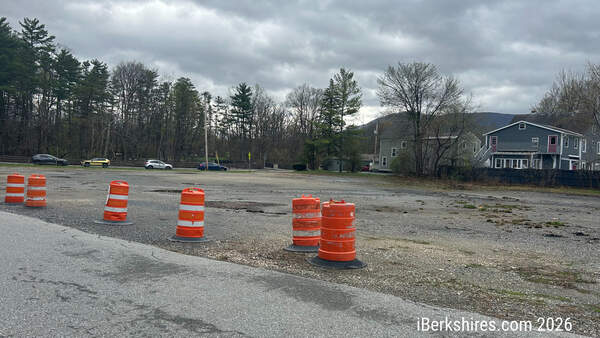
The owner of the former Grange Hall site sought and received the board's approval to subdivide the property into four lots, in accordance with the bylaw. Three new housing lots of about 1 1/4 acre each with 70 feet of frontage will be carved out of the lot, where the owner last year gave up on a proposal that would have created 16 units of mixed-income housing after neighbors threatened an appeal of the Chapter 40B development.
Planners Kenneth Kuttner and Roger Lawrence later gave their colleagues on the board a presentation about how the town could implement an open space residential development bylaw that would couple conserved land with smaller lot sizes for homes.
Currently in RR2, the town's largest rural residential district, homes are permitted on a minimum lot size of 2 1/2 acres.
Kuttner and Lawrence have been studying whether Williamstown could follow the path of other towns in the commonwealth and allow smaller home lots on a single parcel if the majority of that parcel is left undeveloped.
Kuttner showed the board a series of slides with examples of how an OSRD bylaw could be crafted, starting with what he called a "vanilla" plan that took a hypothetical 13-acre lot and put 7.5 acres in conservation, determined 2.5 acres were not developable and dedicated 3 acres to four housing lots of 3/4 acres apiece.
If the same 10.5 acres of developable land was subdivided under the current zoning, it still would yield four housing lots, but each residential lot would be three times larger and there would not be the 7.5-acre conserved lot.
That would accomplish the objectives of an OSRD regulation: preserving natural areas and enabling the development of smaller, lower-cost housing, Kuttner said.
He also showed the board a more extreme OSRD scheme that would somewhat mimic the cottage court development bylaw that town meeting approved last May for the General Residence district.
That plan, on a hypothetical 12.5-acre parcel, would use the same 2.5-acre piece for residences and set aside the same 7.5 acres for conservation. But this time, it would allow 12 "cottage" sized homes clustered on the 2.5-acre piece.
That would equate to about 1.2 housing units per acre of land or 0.83 acres per unit, a far cry from the 2.5-acre large lot zoning currently in place in the district.
Lawrence emphasized that the pair are not ready to make a formal proposal of a bylaw to the board. They're still in the exploratory phase.
And they recognized that there are inherent constraints on development in RR2, namely septic capacity for housing lots. Kuttner suggested that the denser housing plans might work if it was allowable to use part of the conserved land for a septic field, but that, too, would require further study.
Kuttner and Lawrence came to their colleagues to see whether the OSRD proposal was worth continued exploration, and the other three Planning Board members agreed that it was.
Among the issues that were raised by the rest of the board — in addition to septic service — were whether and how the denser housing development could be screened and how to address the increased paved area for longer driveways to accommodate homes grouped together on a parcel.
In general, though, the board was supportive of devoting more time to developing some sort of OSRD proposal.
Lawrence talked about the use of such a proposal to prevent the kind of land subdivision that the board was forced to approve earlier in the evening.
"In my view, this is a failure of planning," Lawrence said of the approved subdivision. "It's a failure because this [existing] meadow is valued by everybody. It's part of our rural heritage. It's valued by me when I drive to Pittsfield. I'd rather drive this way because I can see a beautiful meadow, and that gladdens my heart.
"What we're going to see [on the north end of the former Grange lot] is three houses, and they're going to be 40 feet wide, because they need to subtract 30 feet [for side setbacks], and they lots are only 70 feet wide. … That meadow doesn't have to go away if we had an imaginative development model, and we don't have it."
Public Works Director Craig Clough appeared before the Planning Board on Tuesday to ask it to consider developing a bylaw that would safeguard the town's drinking water.
Clough said the town recently received a permit application to drill a geothermal well in a water resource district. The geothermal system would involve a closed loop underground that holds a mixture of water and propylene glycol.
"Propylene glycol, while considered less toxic than other antifreeze agents, still poses a risk to our water supply if it were to leak into the aquifer," Clough wrote in a memo to the Planning Board.
"We're just starting to get these requests from the residential side," Clough told the board on Tuesday. "This one that was requested by permit was going 500 feet deep. We all know you can't do that in the center of town, because you're going to have a big problem. This one, being up on a hillside, 1,100 feet above sea level, they had room to drill down and not hit our aquifer, but that's in a recharge district."
Clough said currently there is no language in the town bylaw addressing where geothermal wells can be placed or how they need to be maintained.
"Twenty-three gallons [of propylene glycol] in one system is not a lot, right?" Clough said. "But if we get 30, 40 of these systems all on a hillside, 10 years down the road or whatever — I don't know how long these things last. It's a closed loop system, but what if it were to leak. There are too many what-ifs in my mind.
"If they sell the house 20 years from now, what if that person doesn't want to use [geothermal], or it stops working and they say, 'Ah, the heck with it.' We've still got the system in our recharge district. I'm just thinking of the future."
Planning Board member Cory Campbell agreed to work with Town Planner Andrew Groff on assembling a working group to study the issue and advise the full board on what a potential bylaw could include.
Tags: geothermal, housing,