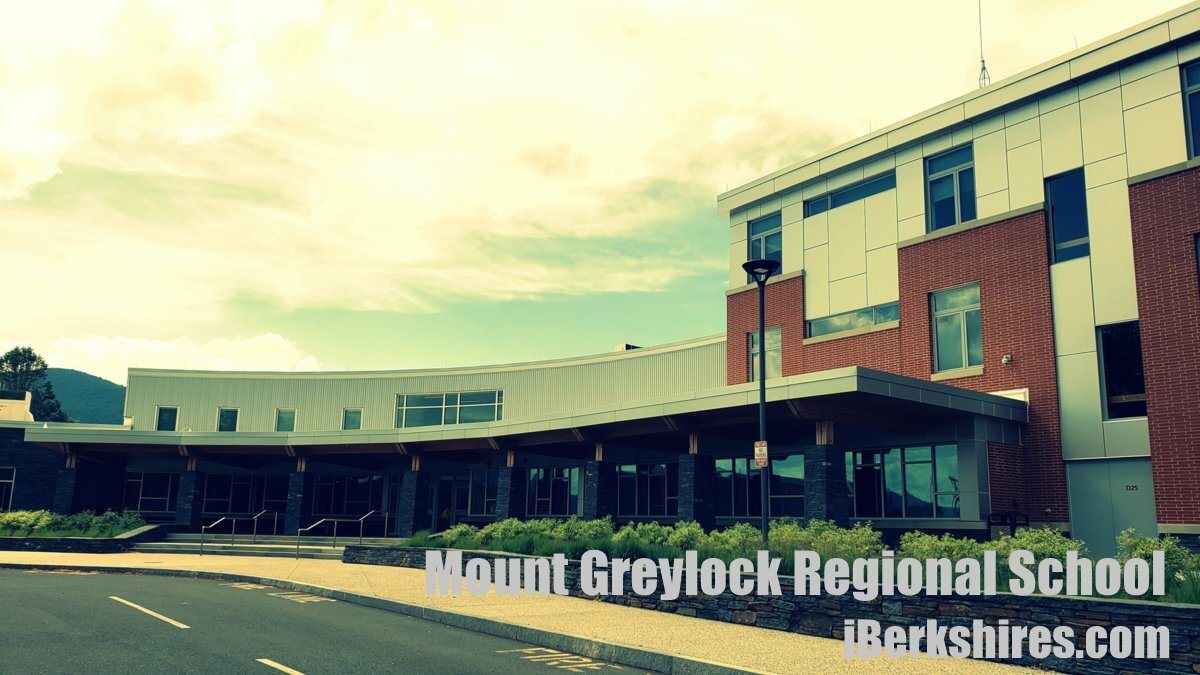
Mount Greylock School Committee Taking Two Years to Find Superintendent
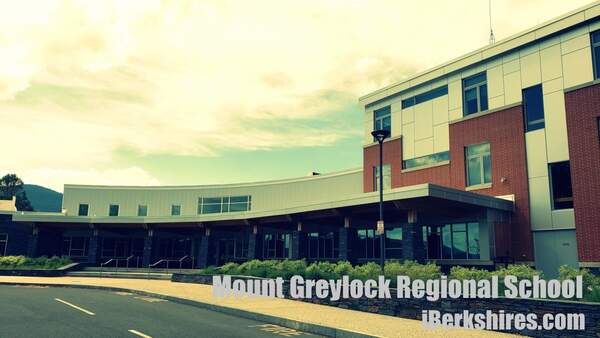
WILLIAMSTOWN, Mass. — The last time the Mount Greylock Regional School District looked for a permanent superintendent, the search process lasted 20 days.
This time, the School Committee wants to take two years.
On Thursday, the committee decided on a vote of 6-0 to formally begin a search for a new superintendent in the fall of 2025 with hopes of having a top executive for the district in place by the start of the 2026-27 academic year.
The committee formalized a course of action that first was developed in a July 11 in-person meeting with officials from the Massachusetts Association of School Committees.
On Thursday, the committee reviewed some of the issues raised at the July meeting.
"We peppered them with questions about the length of searches, the ideal timing for searches and what might be the best process for our district and the unique challenges of our district," Carolyn Greene said. "A two-year process might set us up to really represent ourselves as a strong district. It allows us a little more time to have listening tours and a little more community input on what a search process would look like and what the ideal candidate would look like."
Greene added that members of the School Committee already were committed this year to work on a couple of ad hoc subcommittees: one addressing curriculum development and another focused on an audit of the district's efforts to promote diversity, equity and inclusion.
There was a concern raised that adding a Superintendent Search Committee on top of those commitments and the regular day-to-day School Committee tasks — approving a budget for fiscal year 2026, developing district policies, etc. — would be a big ask for the seven-person volunteer committee.
"That seemed like it might lean us toward the two years," Greene said. "Getting this work done this year and engaging in the superintendent search process the following year might be a better timing for the district and the School Committee."
Jose Constantine expressed some hesitancy about not moving forward with a search this year.
He argued that some members of the community may be uneasy with a protracted interim superintendency and suggested that, by waiting, the district could miss out on an ideal candidate who is on the market this year.
He also suggested that the Lanesborough-Williamstown district already could, "represent [itself] as a strong district."
"We recently had a superintendent we all were excited to have lead our district," Constantine said, referring to Jason McCandless, who announced his resignation in the spring. "It was a person that our community, I would say resoundingly, really supported and who articulated goals for our district that I think resonated. I don't think we need to start from scratch. I think we know who we are and know what we aspire to be.
"All of that said, acknowledging the significant work the two subcommittees will be engaged in, that resonates with me as well. The idea that we're overtaxing a volunteer committee, that does resonate with me and makes me more open to the idea of … committing to a two-year search."
The last three "permanent" superintendents in the district each has left in the middle of a contract.
It took the School Committee about three weeks to identify McCandless and hire him away from the Pittsfield Public Schools in 2020.
He was hired after the committee interviewed three candidates over the course of two days at the end of July. Those interviews started 19 days after Kimberley Grady announced on July 11 that she was leaving the district, a move that came after a series of closed-door School Committee meetings where it was mentioned that "the majority of [the School Committee was] not supportive" of Grady, and during which the committee discussed a succession plan in violation of the Open Meeting Law.
The circumstances of McCandless' departure are different in one significant respect.
In 2020, when Grady resigned, the district already had an interim superintendent in place. Robert Putnam was hired on July 6, 2020, as an interim superintendent to serve while Grady was on a medical leave. His appointment came about a month after the closed-door meeting where the committee's lack of support for Grady was discussed.
Putnam at the time was retired; it is common for retirees to serve in interim posts. And his tenure was, by design, short-lived.
This time, the interim superintendent is Joseph Bergeron, who served as the district's finance director and later assistant superintendent under McCandless.
On Thursday, Bergeron told the School Committee that he was ready to serve at least two years in the interim role. In fact, he indicated that a two-year interim period would allow him to back fill the business manager work he was doing as assistant superintendent in a way he might not if the plan was to have a new superintendent by the end of the coming school year.
"If it were to be two years, I would very happily identify a way to carve out what would probably be a finance and business operations role and identify someone who could grow into that role and hopefully be a long-term part of the district," Bergeron said.
"I would approach a single year as a sprint. I would approach what would become a two-year, year and a half type role as one that is more methodical in how to fill gaps. The two-year is less wearing in some ways."
The addition of another finance person to the central office would not break the budget, Bergeron explained. The FY25 spending plan already has lines for a superintendent and assistant superintendent — two jobs currently being done by him.
As for the succession plan, the committee decided unanimously (with one member, Steven Miller, absent) to wait until fall 2025 to begin the process of finalizing a job description, posting the opening and screening applications.
But the process of determining what the committee wants in a successful candidate can begin now, Greene said.
"Many School Committees hold public forums," she said. "If there's an issue the community is concerned about or something the committee wants to present or the administration wants to present, we could call a public forum. We don't have to run it like a meeting. If it was in person, we could do breakout sessions in small groups and have a committee member at each table. Or if it was on Zoom, we could do breakout rooms.
"Another way to do it is to commit as individual School Committee members to hold office hours or coffee hours and talk to the community. … Yes, we need to be out there listening to folks about what they're thinking."
Tags: MGRSD, superintendent,