Clark's Newest Exhibit Re-examines Edgar Degas' Works
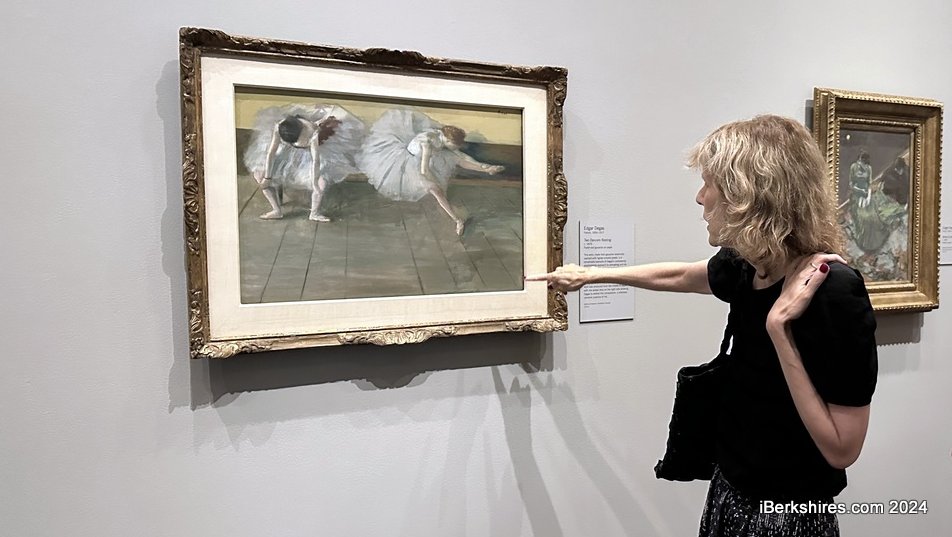
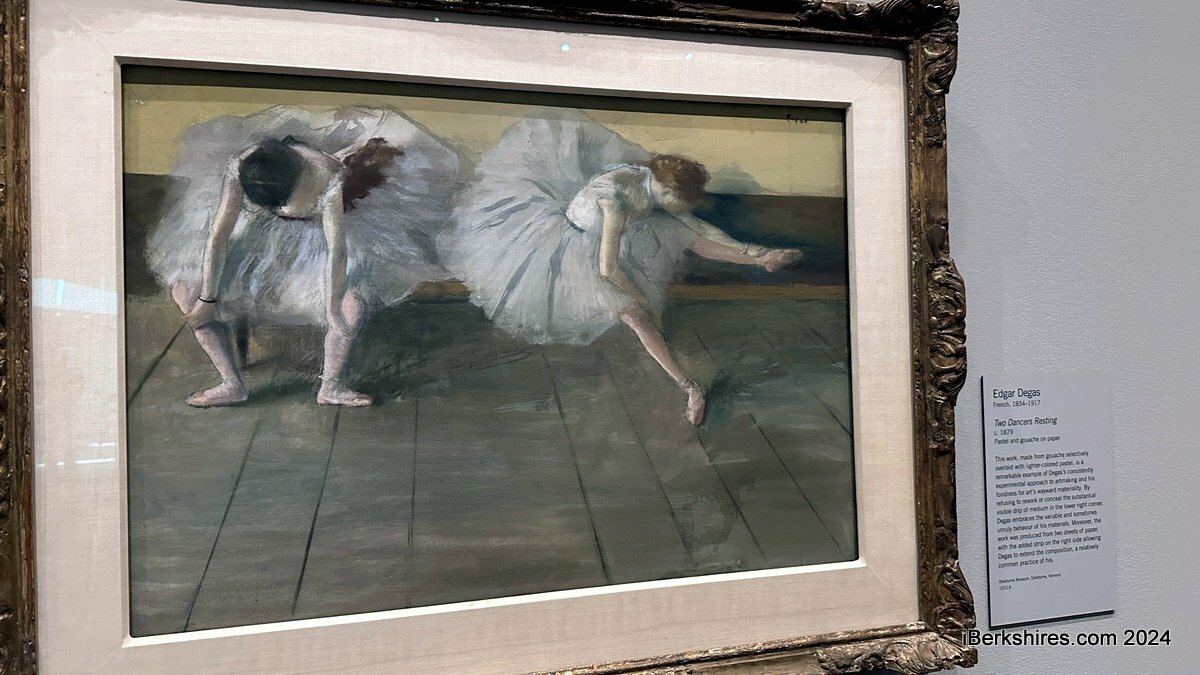
Guest curator Michelle Foa points out the pigment splatter on 'Two Dancers Resting.'
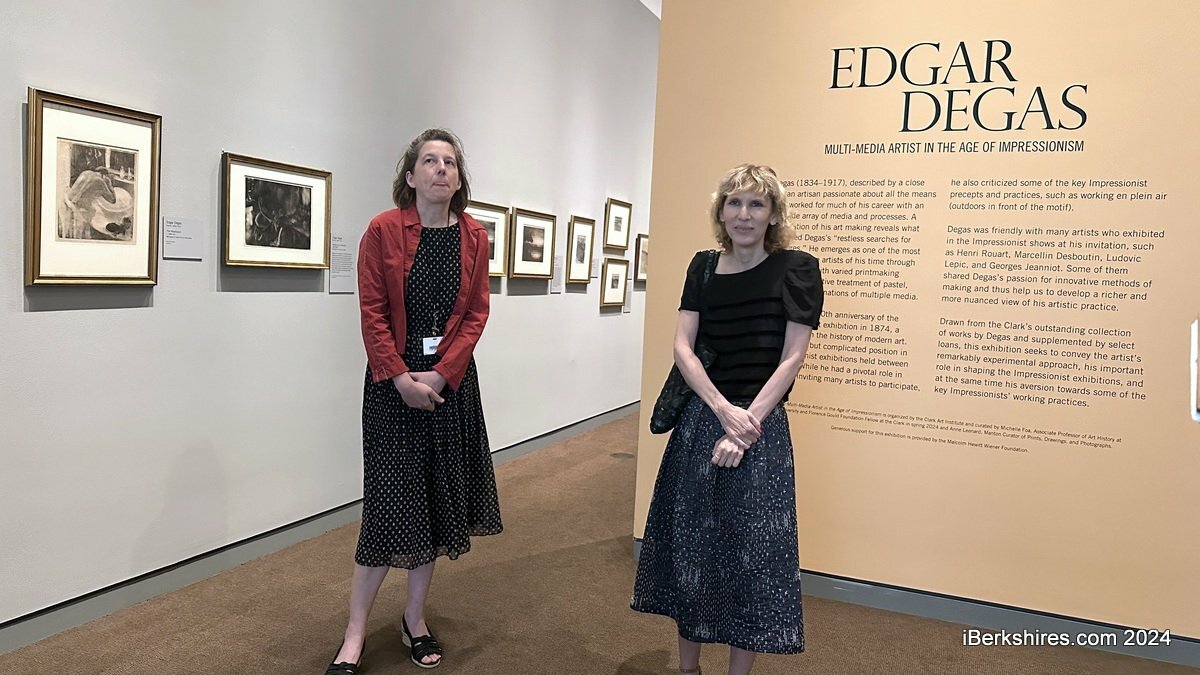
The exhibit, "Edgar Degas: Multi-Media Artist in the Age of Impressionism," coincides with the 150th anniversary of the first impressionist exhibition, which was held in Paris in 1874.
The exhibit in the Manton Research Center runs through Oct. 6.
"So it's an ideal time to be re-examining Degas' work given his central place in that exhibition, given his role in inviting some of the participants to the show and bringing them in," guest curator Michelle Foa said.
It is really fitting for The Clark to have this exhibit because of its rich collection of works from Robert Sterling Clark's personal collection, Anne Leonard, Manton Curator of prints, drawings, and photographs, said.
"This show is two-thirds from our collection and one-third's loans. Most of what you'll see on the walls is permanent collection of the Clark," Leonard said.
"And one reason for that is that Sterling Clark was really in on the ground floor for collecting the Degas."
Before the museum was founded, Clark was on the ground in Paris and was present for the series of four studio sales following Degas' death in 1917, she said.
Clark had his pick of those things left in Degas' atelier and made some excellent choices, Leonard said.
The exhibit brings to life Degas's focus as an artist, his social circle, his complicated relationship with the Impressionist movement, and his dedication to exploring and experimenting with a wide range of materials and techniques.
Degas did not have a broad range of motifs that he worked with, mostly focusing on dancers, bathers, and a few other recurring subjects, Foa said.
Instead, he constantly reworked and revisited the same core motifs using different media and techniques, such as monotype printing, pastels, lithography, charcoal drawing, and even photography later in his career, she said.
This can be seen clearly in his "Leaving the Bath" and "After the Bath" series. The "Leaving the Bath" series had more than 22 different states as Degas continued to rework and refine the composition but was never fully satisfied, Leonard said.
A unique aspect of the exhibit is the inclusion of one of Degas' canceled copper plates. The plate for the "Mary Cassatt at the Louvre: The Etruscan Gallery" comes from the Mr. and Mrs. Paul Mellon collection at the National Gallery of Art.
The plate sits in front of two etchings of "Mary Cassatt." Degas added a scratched score loan to prevent unauthorized reproductions and protect his intellectual property.
The plate serves as a "wonderful artifact" that gives a direct connection to Degas' process and allows visitors to see what was used to create the prints shown in the exhibition, Leonard said.
Some of the pieces in the exhibit show Degas' relationship with the material he uses and demonstrate his open-minded and experimental approach.
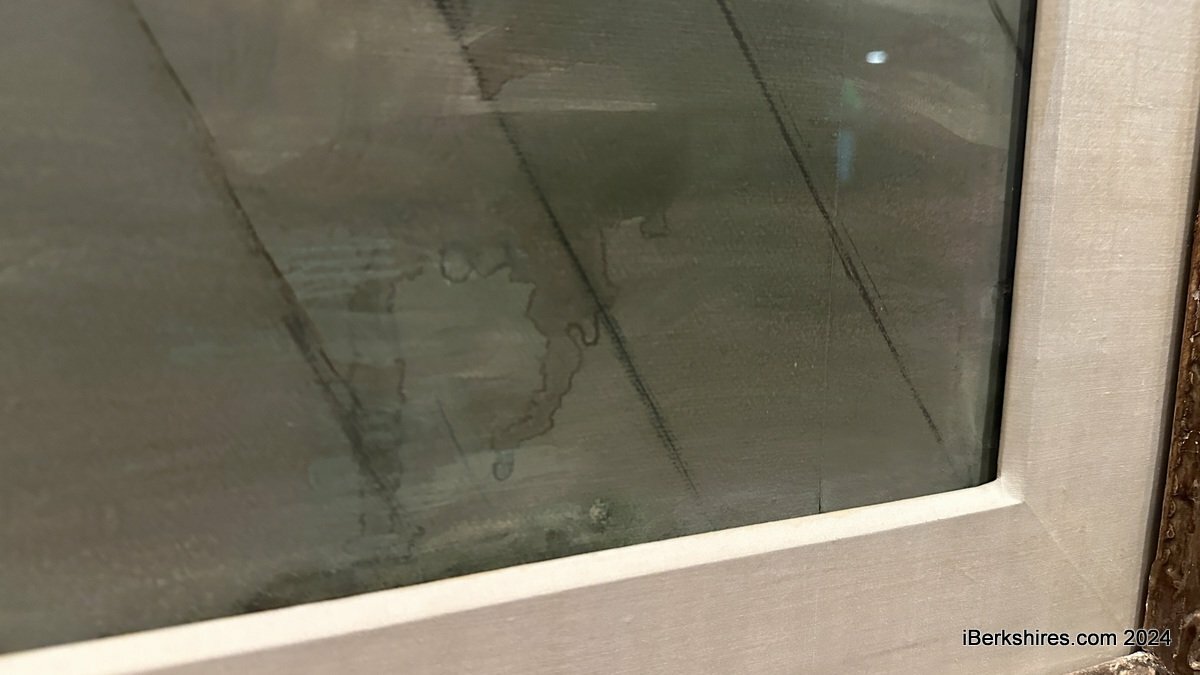
The pastel "Two Dancers Resting" is just one example of this. In the bottom right-hand corner of the painting is a visible liquid pigment splatter left behind in his work, which speaks to his broad attitude toward art and the materials he used, Foa said.
It also demonstrates his embrace of the unpredictable and uneven aspects of the materials he worked with, she said.
"Rather than covering that up or reworking it, he left it there. So, I think it tells us something quite important about his unusual, unique attitude towards materials: that they have an agency of their own and that part of his practice was kind of working within that rather than trying to master his materials and overcome and completely control them," Foa said.
Foa said she is especially partial to "this lovely work," which was loaned to the museum by the Shelburne Museum because it is also a good example of him combining more than one medium in his works because it is pastel and gouache.
"And it wasn't unusual for him to build the works out of multiple media, the results of which were often quite unstable. But in this case, this one seemed relatively stable," Foa said.
The Clark is very fortunate to have this pastel part of the exhibit because it is very difficult to borrow pastels from other institutions, Leonard said. Most museums use caution when loaning pastels because the materials are pliable.
The Clark's pastel, "Entrance of the Masked Dancers," never leaves the building, so the fact that "other institutions and private collectors were willing to part with theirs for a few months was very, very precious to us," Leonard said.
Another aspect never explored before was the connection between Degas and engineer, art collector, and painter Henri Rouart. Degas was very close with Rouart for most of his adult life.
This can be seen in the "Leaving the Bath" and "Two Dancers in the Wings" pieces due to the use of a carbon rod when creating the works, Foa said.
What was never discussed until Foa wrote about it is that the carbon rod brings together Degas' innovation and Rouart's innovation in ways that have never been recognized before, Foa said.
Rouart was heavily involved in refining and manufacturing carbon rods. Degas' use of carbon rods in his work demonstrates his deep interest in Rouart's innovative work and his desire to connect his artistic innovation with Rouart's technological innovation.
"For him to take such an unusual media that had absolutely nothing to do with art making and incorporate it into his process … I think speaks to the much larger narrative of the show, in which his kind of almost endless appetite for different ways to produce pictures," she said.
Tags: art exhibit, Clark Art,