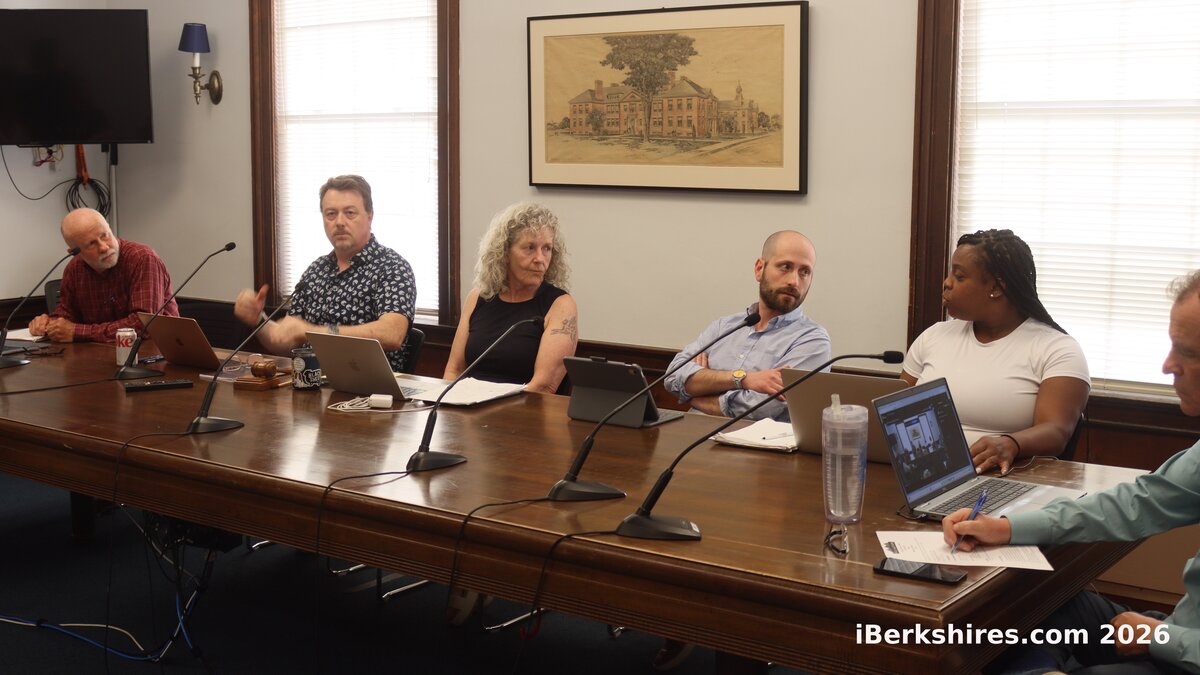
WILLIAMSTOWN, Mass. — The Mount Greylock Regional School Committee on Thursday voted to ban cell phones and other "student-owned technology devices" in the district's three schools starting in September.
The committee responded quickly to enact a new district-wide policy after former Superintendent Jason McCandless this spring requested the change for the elementary schools and middle high schools.
The policy created with input from administrators, the buildings' School Councils and the Student Council at Mount Greylock prohibits students from having personal electronic devices in their possession from the start of classes in the morning until the final bell of the day.
At Mount Greylock or Lanesborough Elementary School, students may store such devices in their lockers. At Williamstown Elementary School, if a pupil absolutely needs a phone, smart watch, etc., at the end of the day, front office personnel will be able to hold the device during the school day, interim Superintendent Joseph Bergeron said.
Principals in all three schools can make exceptions under the policy for devices students need for educational or medical purposes — for example, a student whose continuous glucose monitor transmits data on their blood sugar through a smart phone.
Bergeron and two members of the School Committee's Policy and Governance Subcommittee told their colleagues in a special, single-item meeting that feedback from the community has been largely positive to the idea of generally banning cell phones and other devices.
"The input we've received from parents and guardians, I believe, was 100 percent … in favor, which is pretty remarkable," Bergeron said. "On the student side, a lot have been in favor. Some have been … relieved that some of this burden will not be on them anymore.
"Some of the [student support] is with a reservation in that they're hesitant not to be in close touch with everyone all the time. Some students have expressed a desire to use their devices for academic purposes or to listen to music to drown out the sound of other people in the hallways. Those are areas we're trying to navigate through the Chromebooks we've issued. Or, in situations where those are not ideal, we want to hear that so we can upgrade or equitably bring different software."
Bergeron said some students did say they thought the policy would be an infringement on their independence.
Some students argued for a "tiered" approach where older students would access to their phones in the high school and argued that, particularly for juniors and seniors, it makes sense to teach students how to responsibly use technology as they prepare to enter the real world rather than deny them access to technology altogether.
"Our response has been that this is not meant to be punitive," Bergeron said. "This is meant to create environments where in-person interaction, in-person learning is paramount. … The other side of our response is if we were to have gradual changes dependent on age, that would put a dent in some of the key positive aspects of the policy. When no student has a device, the fear of missing out on things that your, for example, older peers are in on dissipates."
Most of the six School Committee members present at Thursday's meeting enthusiastically supported the new policy.
Ursula Maloy, while saying that her own children were against the idea, said the new policy is "long overdue."
"I think the kids will be relieved when it gets to this point and nobody has a phone in school, so it's not like you're the only one without your phone," Maloy said. "You get to just do your school thing and talk to your friends and talk to your teachers and not be constantly 'Snapping' or 'TikToking' or whatever else it is they do.
"I think they're actually going to like it."
Steven Miller asked the committee to commit to revisit the policy two or three months into the school year in case there were any unintended consequences that resulted from the change in the district. Bergeron agreed that he and Chair Christina Conry would add an agenda item for the November School Committee meeting for Bergeron to give a report on implementation of the policy.
Miller ultimately abstained in the 5-0-1 vote to adopt the new policy. Curtis Elfenbein did not attend the meeting.
If you would like to contribute information on this article, contact us at info@iberkshires.com.
Your Comments
iBerkshires.com welcomes critical, respectful dialogue. Name-calling, personal attacks, libel, slander or foul language is not allowed. All comments are reviewed before posting and will be deleted or edited as necessary.
No Comments
Puppets Teach Resilience at Lanesborough Elementary School
By Breanna SteeleiBerkshires Staff
The kids learned from puppets Ollie and a hermit crab.
LANESBOROUGH, Mass. — Vermont Family Network's Puppets in Education visited the elementary school recently to teach kids about being resilient.
Puppets in Education has been engaging with young students with interactive puppets for 45 years.
Classes filtered through the music class Thursday to learn about how to be resilient and kind, deal with change and anxiety, and more.
"This program is this beautiful blending of other programs we have, which is our anxiety program, our bullying prevention and friendship program, but is teaching children the power of yet and how to be able to feel empowered and strong when times are challenging and tough," said program manager Sarah Vogelsang-Card.
The kids got to engage with a "bounce back" song, move around, and listen to a hermit crab deal with the change of needing a new shell.
"A crab that is too small or too big for its shell, so trying to problem solve, having a plan A, B and C, because it's a really tough time," Vogelsang-Card said. "It's like moving, it's like divorce of parents, it's changing schools. It's things that children would be going through, even on a day to day basis, that are just things they need to be resilient, that they feel strong and they feel empowered to be able to make these choices for themselves."
The resiliency program is new and formatted little differently to each of the age groups.
"For the older kids. We age it up a bit, so we talk about harassment and bullying and even setting the scene with the beach is a little bit different kind of language, something that they feel like they can buy into," she said. "For the younger kids, it's a little bit more playful, and we don't touch about harassment. We just talk about making friends and being kind. So that's where we're learning as we're growing this program, is to find the different kinds of messaging that's appropriate for each development level."
This programming affirms themes that are already being discussed in the elementary school, said school psychologist Christy Viall. She thinks this is a fun way for the children to continue learning.
"We have programs here at the school called community building, and that's really good. So they go through all of these strategies already," she said. "But having that repetition is really important, and finding it in a different way, like the puppets coming in and sharing it with them is a fun way that they can really connect to, I think, and it might, get in a little more deeply for them.
Vogelsang-Card said its another space for them to be safe and discuss what's going on in their life. Some children are afraid because maybe their parents are getting divorced, or they're being bullied, but with the puppets, they might open up and disclose what's bothering them because they feel safe, even in a larger crowd.
"When we do sexual abuse awareness that program alone, over five years, we had 87 disclosures of abuse that were followed up and reported," she said. "And children feel safe with the puppets. It makes them feel valued, heard, and we hope that in our short time that we're together, that they at least leave knowing that they're not alone."
Bedard Brothers also gave the school five new puppets to use. Viall said the puppets are a great help for the students in her classroom, especially in the younger grades.
"Every year, I've been giving the puppets to the students. And I also have a few of the puppets in my classroom, and the students use them in small groups to practice out the strategies with each other, which is really helpful," she said. "Sometimes the older students, like sixth graders, will put on a puppet show. They'll come up with a whole theme and a whole little situation, and they'll act it out with the strategies for the younger students. It's really cute, they've done it with kindergarteners, and the kids really like it."
Vogelsang-Card said there are 130 schools in Vermont that are on the waiting list for them to come in. Lanesborough Elementary has been the only Massachusetts school they have visited, thanks to Bedard Brothers.
"These programs are so critical and life-changing for children in such a short amount of time, and we are the only program in the United States that does what we do, which is create this content in this enjoyable, fun, engaging way with oftentimes difficult subjects," she said. "Vermont is our home base, but we would love to be able to bring this to more schools, and we can't do this without the support of community, business funders or donors, and it really makes a difference for children."
The fourth-grade students were the first class to engage with the puppets and a lot of them really connected with the show.
"I learned to never give-up and if you have to move houses, be nervous, but it still helps," said William Larios.
"I learned to always add the word 'yet' at the end," said Sierra Kellogg, because even if she can't do something now, she will be able to at some point.
Samuel Casucci was struck by what one of the puppets talked about. "He said some people make fun of him if he dresses different, come from different place, brings home lunch, it doesn't matter," Samuel continued. "We're all kind of the same. We're all kind of different, like we have different hairstyles, different clothes. We're all the same because we're all human."
"I learned how to be more positive about myself and like, say, I can't do this yet, it's positive and helpful," said Liam Flaherty.
The students got to take home stickers at the end of the day with contact information of the organization.
Students got to showcase their art at the Clark Art Institute depicting their relationship with the Earth in the time of climate change. click for more
The 100th annual meeting will be held on March 10, 2027, the Community Chest's birthday (there will be cake, he promised) and a gala will be held at the Clark Art Institute on Sept. 25, 2027.
click for more