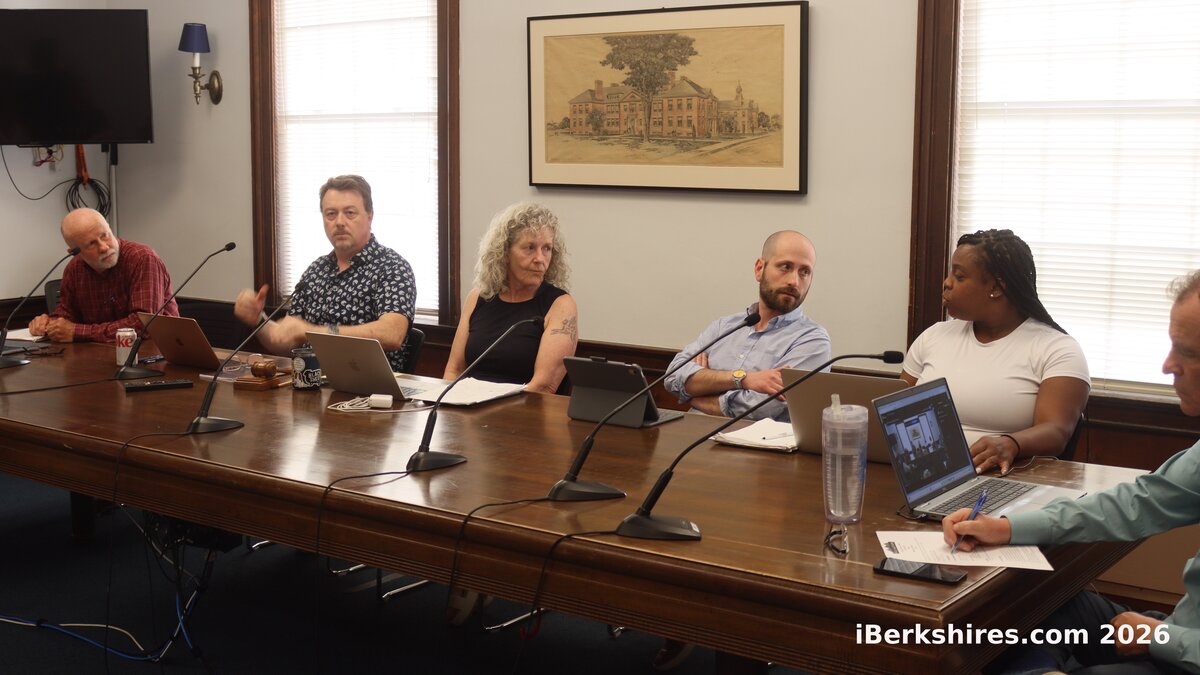
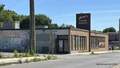
WILLIAMSTOWN, Mass. — The board of the town's Affordable Housing Trust on Wednesday agreed in principle to a plan to address an issue that has been a sticking point for a proposed subdivision on Summer Street.
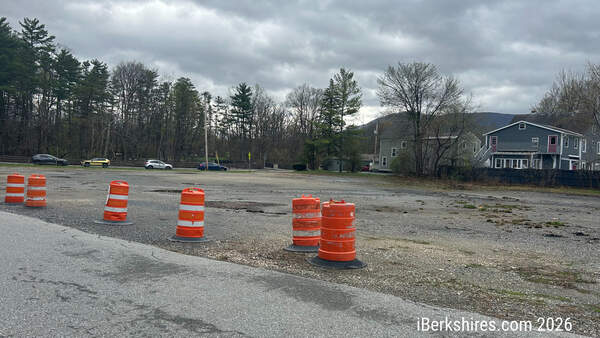
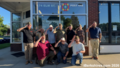
The AHT has been working with Northern Berkshire Habitat for Humanity to develop a 1.75-acre parcel with four houses and an access road.
Part of the plan Habitat developed with civil engineer Guntlow and Associates is a rain garden that would be part of the subdivision's stormwater management plan.
Among the issues raised by critics of the subdivision is the question of who ultimately would be responsible for maintaining the rain garden. It is one of the items mentioned in an abutter's appeal to the Massachusetts Department of Environmental Protection, which Summer Street resident Jeffrey Parkman has asked to review an order of conditions issued by the town's Conservation Commission.
On Wednesday, Affordable Housing Trust Chair Thomas Sheldon laid out for his colleagues a proposed memorandum of understanding between the town and Northern Berkshire Habitat for Humanity.
Under the terms of the MOU, the non-profit would maintain the rain garden — or detention basin — for three years after it becomes operational. At the end of that three-year period, the town would inspect the basin to make sure it is "in good repair and is functioning as designed," and, if it is, the town would accept the rain garden as part of the right of way associated with the access road and take responsibility for its maintenance going forward.
The MOU stipulates that the town's determination of functionality, "will not be unreasonably withheld."
If the town decides the rain garden does need repair "to provide that the retention basin will function as designed" at the end of the three-year period, Habitat for Humanity would make those repairs, and the Affordable Housing Trust agrees to contribute "up to $1,000" toward that maintenance and repair."
"When the requested maintenance and repairs are finished to the reasonable satisfaction of the Town, it will accept responsibility for the retention basin and will be solely responsible for any future maintenance and repair," the two-page MOU reads in part.
On Wednesday, one of the abutters who has challenged Habitat's proposal to develop the site reminded the trustees why the issue of rain garden maintenance is so important.
"It's been a sore point for everyone because no one has said who's definitely going to take over maintenance," said Kayla Falkowski, whose home at the corner of Summer Street and North Hoosac is located downhill of the town-owned parcel. "The answer has been, 'We're hoping the town will' [take responsibility].
"If it's not maintained, we're flooded out, the Parkmans are flooded out. It will breed mosquitoes, and West Nile virus is running rampant right now in Berkshire County."
The trustees voted 6-0 to authorize Hogeland to finalize and sign the MOU, as long as it stays substantially the same as the version presented on Wednesday evening. One member of the board, Dan Gura, was absent from Wednesday's meeting.
The memorandum of understanding has lines for signatures from the town manager, director of the Department of Public Works, Northern Berkshire Habitat for Humanity's president and Hogeland, the chair of the board of the AHT.
On Wednesday, Hogeland also updated the board on the status of a grant agreement between the trust and Habitat. Under terms of the agreement he is negotiating on behalf of the town board, the trust will give the non-profit $60,000 toward completion of the road once Northern Berkshire Habitat finds a contractor and another $60,000 toward completion of the first house in the subdivision.
Northern Berkshire Habitat's financial model is to fund the building of each house with proceeds from the sale of a house to the first homeowners. Once built, all four houses are planned to be deed restricted and affordable to residents making up to 60 percent of the area median income.
In other business on Wednesday, the trustees voted unanimously to award a $15,000 grant to a new homeowner under the trust's DeMayo Mortgage Assistance Program.
Dawn Lampiasi of Adams Community Bank told the board that the grant will allow the income-qualified homeowner to avoid paying private mortgage insurance on the home, allowing the new resident to avoid about $14,000 in increased payments over the first 10 years of the mortgage.
If you would like to contribute information on this article, contact us at info@iberkshires.com.
Your Comments
iBerkshires.com welcomes critical, respectful dialogue. Name-calling, personal attacks, libel, slander or foul language is not allowed. All comments are reviewed before posting and will be deleted or edited as necessary.
No Comments
Puppets Teach Resilience at Lanesborough Elementary School
By Breanna SteeleiBerkshires Staff
The kids learned from puppets Ollie and a hermit crab.
LANESBOROUGH, Mass. — Vermont Family Network's Puppets in Education visited the elementary school recently to teach kids about being resilient.
Puppets in Education has been engaging with young students with interactive puppets for 45 years.
Classes filtered through the music class Thursday to learn about how to be resilient and kind, deal with change and anxiety, and more.
"This program is this beautiful blending of other programs we have, which is our anxiety program, our bullying prevention and friendship program, but is teaching children the power of yet and how to be able to feel empowered and strong when times are challenging and tough," said program manager Sarah Vogelsang-Card.
The kids got to engage with a "bounce back" song, move around, and listen to a hermit crab deal with the change of needing a new shell.
"A crab that is too small or too big for its shell, so trying to problem solve, having a plan A, B and C, because it's a really tough time," Vogelsang-Card said. "It's like moving, it's like divorce of parents, it's changing schools. It's things that children would be going through, even on a day to day basis, that are just things they need to be resilient, that they feel strong and they feel empowered to be able to make these choices for themselves."
The resiliency program is new and formatted little differently to each of the age groups.
"For the older kids. We age it up a bit, so we talk about harassment and bullying and even setting the scene with the beach is a little bit different kind of language, something that they feel like they can buy into," she said. "For the younger kids, it's a little bit more playful, and we don't touch about harassment. We just talk about making friends and being kind. So that's where we're learning as we're growing this program, is to find the different kinds of messaging that's appropriate for each development level."
This programming affirms themes that are already being discussed in the elementary school, said school psychologist Christy Viall. She thinks this is a fun way for the children to continue learning.
"We have programs here at the school called community building, and that's really good. So they go through all of these strategies already," she said. "But having that repetition is really important, and finding it in a different way, like the puppets coming in and sharing it with them is a fun way that they can really connect to, I think, and it might, get in a little more deeply for them.
Vogelsang-Card said its another space for them to be safe and discuss what's going on in their life. Some children are afraid because maybe their parents are getting divorced, or they're being bullied, but with the puppets, they might open up and disclose what's bothering them because they feel safe, even in a larger crowd.
"When we do sexual abuse awareness that program alone, over five years, we had 87 disclosures of abuse that were followed up and reported," she said. "And children feel safe with the puppets. It makes them feel valued, heard, and we hope that in our short time that we're together, that they at least leave knowing that they're not alone."
Bedard Brothers also gave the school five new puppets to use. Viall said the puppets are a great help for the students in her classroom, especially in the younger grades.
"Every year, I've been giving the puppets to the students. And I also have a few of the puppets in my classroom, and the students use them in small groups to practice out the strategies with each other, which is really helpful," she said. "Sometimes the older students, like sixth graders, will put on a puppet show. They'll come up with a whole theme and a whole little situation, and they'll act it out with the strategies for the younger students. It's really cute, they've done it with kindergarteners, and the kids really like it."
Vogelsang-Card said there are 130 schools in Vermont that are on the waiting list for them to come in. Lanesborough Elementary has been the only Massachusetts school they have visited, thanks to Bedard Brothers.
"These programs are so critical and life-changing for children in such a short amount of time, and we are the only program in the United States that does what we do, which is create this content in this enjoyable, fun, engaging way with oftentimes difficult subjects," she said. "Vermont is our home base, but we would love to be able to bring this to more schools, and we can't do this without the support of community, business funders or donors, and it really makes a difference for children."
The fourth-grade students were the first class to engage with the puppets and a lot of them really connected with the show.
"I learned to never give-up and if you have to move houses, be nervous, but it still helps," said William Larios.
"I learned to always add the word 'yet' at the end," said Sierra Kellogg, because even if she can't do something now, she will be able to at some point.
Samuel Casucci was struck by what one of the puppets talked about. "He said some people make fun of him if he dresses different, come from different place, brings home lunch, it doesn't matter," Samuel continued. "We're all kind of the same. We're all kind of different, like we have different hairstyles, different clothes. We're all the same because we're all human."
"I learned how to be more positive about myself and like, say, I can't do this yet, it's positive and helpful," said Liam Flaherty.
The students got to take home stickers at the end of the day with contact information of the organization.
Students got to showcase their art at the Clark Art Institute depicting their relationship with the Earth in the time of climate change. click for more
The 100th annual meeting will be held on March 10, 2027, the Community Chest's birthday (there will be cake, he promised) and a gala will be held at the Clark Art Institute on Sept. 25, 2027.
click for more