On a IV-II Vote, Mount Greylock Keeps Latin Program

By Stephen DravisiBerkshires Staff
Print Story | Email Story
WILLIAMSTOWN, Mass. — A divided Mount Greylock Regional School Committee on Tuesday voted to restore the middle-high school's Latin program for the 2024-25 academic year and beyond.
 
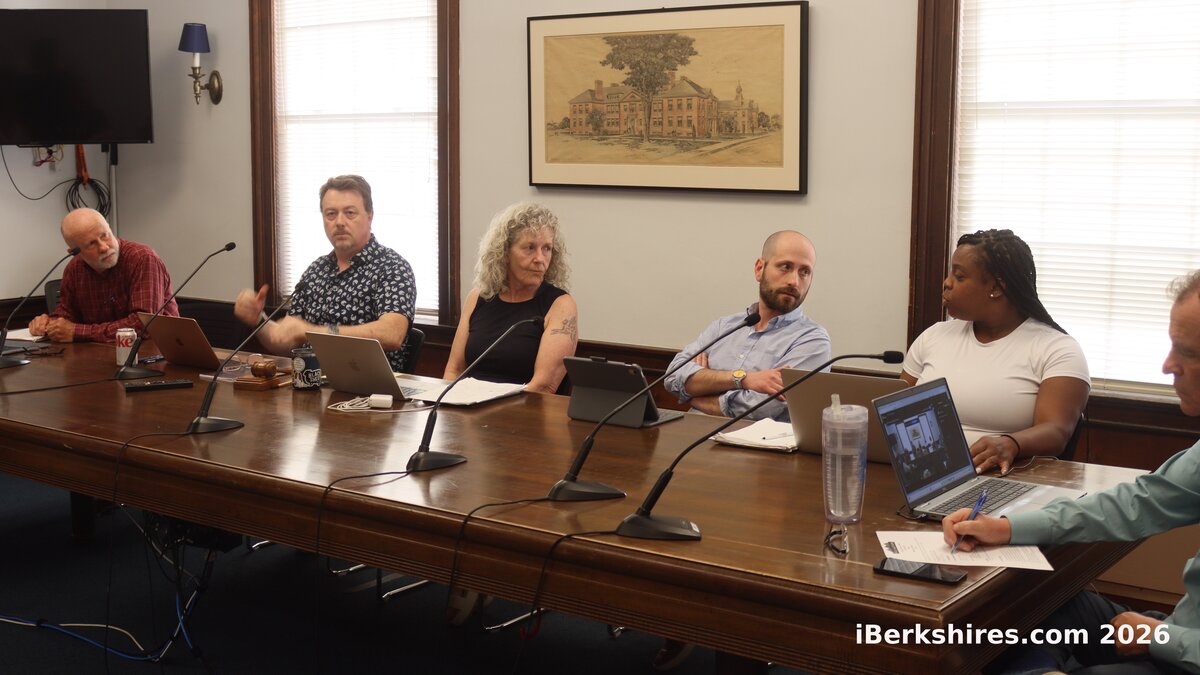
Six members of the committee attended the special meeting called last week to decide on whether to keep Mount Greylock a two-world language school or only offer Spanish to incoming seventh-graders starting in the fall.
 
Steven Miller moved at the outset of Tuesday's session that the School Committee utilize more or less $66,000 from the committee's reserves to close a funding gap for fiscal year 2025 and commit to funding Latin until at least next year's seventh-graders have the opportunity to take Advanced Placement Latin, presumably in their senior year of 2029-30.
 
Miller was joined by Jose Constantine, Curtis Elfenbein and Ursula Maloy in voting in favor of the plan. Christina Conry and Carolyn Greene voted against Miller's motion.
 
Conry noted that in the school year that just ended, Mount Greylock had just 58 students enrolled in Latin across six different grade levels (an average of just fewer than 10 per grade), as opposed to 300 students studying Spanish.
 
Prior to this spring's announcement that the school would not offer Latin 7 (for seventh-graders) or Latin 8 in 2024-25, there were 15 students signed up for the former and just 10 for the latter.
 
Historically, over the last nine years, Mount Greylock's student population studying the classic language went from 103 in 2015-16 to 58 last year, with a spike of 148 in the 2018-19 academic year, according to figures the administration provided the School Committee on Tuesday.
 
Before voting on the only item on the agenda for the special meeting, members of the committee reiterated many of the same arguments they raised in last Thursday's monthly meeting and referenced the many emails and direct appeals that community members have made to preserve Latin.
 
Both Miller and Constantine emphasized the process by which the administration arrived at the decision to trim the Latin program after a budget shortfall emerged subsequent to its passage by the School Committee in March.
 
"I think — just my opinion — that any curricular decision needs to involve our Student Councils, our parents and caregivers, our students and our community members," Constantine said. "The way this decision was made did not allow for any discussion.
 
"It could be incoming years that, via our budget process, we're faced with choices we have to make. But making those decisions without consulting community members and parents and caregivers is just not the way to do it."
 
Greene and Conry both characterized Tuesday's vote as a painful decision, and each said they would have liked to be able to support continuing the Latin program if budget realities allowed.
 
"Keeping one Latin [full-time equivalent teaching position, or FTE] for what was 57 Latin students last year and would have been 43 students this coming year requires that the three teachers who are teaching the rest of our students teach Spanish each teach additional classes" Greene said. "It is difficult to justify resources for a single teacher while already overtaxing our Spanish teachers.
 
"One Latin FTE forces three extended contracts in Spanish. Or, put another way, we need 3.6 Spanish FTEs, with only three instructors, in order to provide one FTE in Latin in Latin. That's the $65,000 we're talking about — three extended contracts and the administrative and guidance work it's going to require to reverse course right now."
 
Interim Superintendent Joseph Bergeron told the committee that, typically, one teacher in middle-high school instructs between 100 and 125 students over the course of a school year.
 
"Latin was one area where a teacher was serving students in the 40s and 50s total," Bergeron said.
 
That is partly why Latin came on the chopping block when the administration was faced with a budget hole brought about by lower than expected savings from retirements and departures, which fell short of the projections the district made this winter.
 
Maloy, who did not attend Thursday's meeting where about a dozen people addressed the School Committee urging it to save the Latin program, said she did read the many emails the panel received.
 
"I do think after giving this a lot of thought, I like [Miller's] position of committing to fund this for the year and incoming students and taking a more holistic approach to what we should or should not fund in the future," Maloy said. "I'd like to agree with funding it for this year … and take another look next year at what we should do for the long term."
 
Bergeron, just before the vote, pointed to a feature of the motion on the table that would, in theory, prevent the district from having a full discussion of future options for at least five more budget cycles.
 
"One thing that I caution you with the motion that is on the floor: You would be placing Latin into a position that no other subject is in in terms of being protected for many years," Bergeron said. "And if you're faced with a couple of hundred thousand dollars in budget deficit, to somehow have taken Latin off the discussion table that we should be having at the School Council level — I don't understand how that decision would be responsible."
 
Miller shot back that guaranteeing the availability of Latin is the "only responsible thing we can do" for parents thinking of enrolling their rising seventh-graders in Latin 7 for the 2024-25 school year.
 
After the 4-2 vote to deplete the district's reserves to keep the language program alive, Bergeron said that Mount Greylock's guidance department was prepared for such a decision and would immediately start reaching out to the families of rising seventh- and eighth-graders to talk about their new options.

Tags: languages,   MGRS,   
If you would like to contribute information on this article, contact us at info@iberkshires.com.

Puppets Teach Resilience at Lanesborough Elementary School

By Breanna SteeleiBerkshires Staff

The kids learned from puppets Ollie and a hermit crab.

LANESBOROUGH, Mass. — Vermont Family Network's Puppets in Education visited the elementary school recently to teach kids about being resilient.

Puppets in Education has been engaging with young students with interactive puppets for 45 years.  

The group partnered again with Bedard Brothers Chevrolet, which sponsored the visit. 

Classes filtered through the music class Thursday to learn about how to be resilient and kind, deal with change and anxiety, and more.

"This program is this beautiful blending of other programs we have, which is our anxiety program, our bullying prevention and friendship program, but is teaching children the power of yet and how to be able to feel empowered and strong when times are challenging and tough," said program manager Sarah Vogelsang-Card.

The kids got to engage with a "bounce back" song, move around, and listen to a hermit crab deal with the change of needing a new shell.

"A crab that is too small or too big for its shell, so trying to problem solve, having a plan A, B and C, because it's a really tough time," Vogelsang-Card said. "It's like moving, it's like divorce of parents, it's changing schools. It's things that children would be going through, even on a day to day basis, that are just things they need to be resilient, that they feel strong and they feel empowered to be able to make these choices for themselves."

The resiliency program is new and formatted little differently to each of the age groups.

"For the older kids. We age it up a bit, so we talk about harassment and bullying and even setting the scene with the beach is a little bit different kind of language, something that they feel like they can buy into," she said. "For the younger kids, it's a little bit more playful, and we don't touch about harassment. We just talk about making friends and being kind. So that's where we're learning as we're growing this program, is to find the different kinds of messaging that's appropriate for each development level."

This programming affirms themes that are already being discussed in the elementary school, said school psychologist Christy Viall. She thinks this is a fun way for the children to continue learning. 

"We have programs here at the school called community building, and that's really good. So they go through all of these strategies already," she said. "But having that repetition is really important, and finding it in a different way, like the puppets coming in and sharing it with them is a fun way that they can really connect to, I think, and it might, get in a little more deeply for them.

Vogelsang-Card said its another space for them to be safe and discuss what's going on in their life. Some children are afraid because maybe their parents are getting divorced, or they're being bullied, but with the puppets, they might open up and disclose what's bothering them because they feel safe, even in a larger crowd. 

"When we do sexual abuse awareness that program alone, over five years, we had 87 disclosures of abuse that were followed up and reported," she said. "And children feel safe with the puppets. It makes them feel valued, heard, and we hope that in our short time that we're together, that they at least leave knowing that they're not alone."

Bedard Brothers also gave the school five new puppets to use. Viall said the puppets are a great help for the students in her classroom, especially in the younger grades. 

"Every year, I've been giving the puppets to the students. And I also have a few of the puppets in my classroom, and the students use them in small groups to practice out the strategies with each other, which is really helpful," she said. "Sometimes the older students, like sixth graders, will put on a puppet show. They'll come up with a whole theme and a whole little situation, and they'll act it out with the strategies for the younger students. It's really cute, they've done it with kindergarteners, and the kids really like it."

Vogelsang-Card said there are 130 schools in Vermont that are on the waiting list for them to come in. Lanesborough Elementary has been the only Massachusetts school they have visited, thanks to Bedard Brothers. 

"These programs are so critical and life-changing for children in such a short amount of time, and we are the only program in the United States that does what we do, which is create this content in this enjoyable, fun, engaging way with oftentimes difficult subjects," she said. "Vermont is our home base, but we would love to be able to bring this to more schools, and we can't do this without the support of community, business funders or donors, and it really makes a difference for children."

The fourth-grade students were the first class to engage with the puppets and a lot of them really connected with the show.

"I learned to never give-up and if you have to move houses, be nervous, but it still helps," said William Larios.

"I learned to always add the word 'yet' at the end," said Sierra Kellogg, because even if she can't do something now, she will be able to at some point.

Samuel Casucci was struck by what one of the puppets talked about. "He said some people make fun of him if he dresses different, come from different place, brings home lunch, it doesn't matter," Samuel continued. "We're all kind of the same. We're all kind of different, like we have different hairstyles, different clothes. We're all the same because we're all human."

"I learned how to be more positive about myself and like, say, I can't do this yet, it's positive and helpful," said Liam Flaherty.

The students got to take home stickers at the end of the day with contact information of the organization.

View Full Story

More Williamstown Stories